9 min read
Stay updated with the latest - Click here to follow us on Instagram

Journalism of Courage



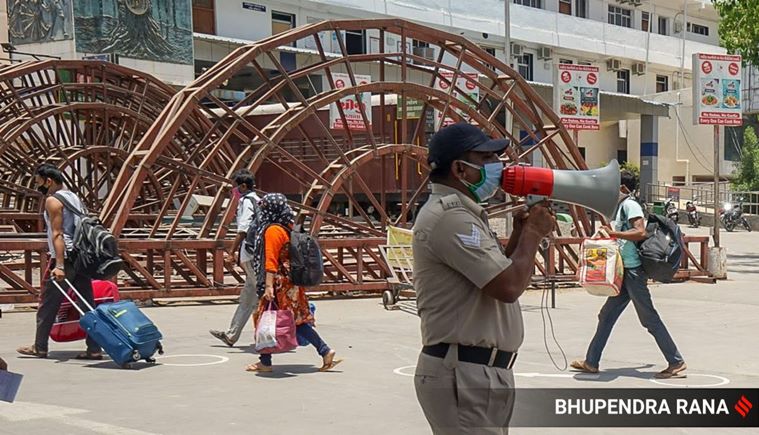 Maharashtra continues to be the worst affected state with over 37,000 cases, accounting for about a third of all cases in India, and two out of every five deaths. (Express photo by Bhupendra Rana)
Coronavirus India Updates: With 5,609 fresh cases reported in the last 24 hours, the number of cases in India reached 1,12,359, including 3,435 fatalities on Thursday. There are 63,624 active cases, while 45,300 have been discharged.
Meanwhile, Maharashtra continues to be the worst affected state with over 37,000 cases, accounting for about a third of all cases in India, and two out of every five deaths. Apart from the infection, West Bengal and Odisha are now also fighting the super cyclone Amphan — which has killed 10 in Bengal and has been called ‘bigger than COVID’ by CM Mamata Banerjee.
An FIR has been filed against Congress president Sonia Gandhi in Karnataka over some tweets made from the party’s official Twitter handle which were allegedly “spreading rumours” and “misleading the public” with regard to the PM CARES fund.
According to the complainant — identified as advocate K V Praveen from Sagar, Shivamogga — the Congress, in a series of tweets made from the handle @INCIndia on May 11 after 6 pm, made “baseless” and “false” allegations against Prime Minister Narendra Modi and the Government of India.
FIR filed against Congress President Sonia Gandhi in Shimoga, #Karnataka for alleged “misleading tweets” made from @INCIndia handle on May 11 about #PMCares fund. FIR registered under IPC sections 153,505. Investigation underway. @IndianExpress pic.twitter.com/iHglnD7OUL
— Ralph Alex Arakal (@ralpharakal) May 21, 2020
The Airports Authority of India Thursday issued Standard Operating Procedures to all airports for the domestic commercial flight operations set to recommence from 25 May. The guidelines call for all passengers compulsorily to be registered with the Aarogya Setu aap. It is also mandatory for all passengers to walk through the thermal screening zone before entering the terminal building.
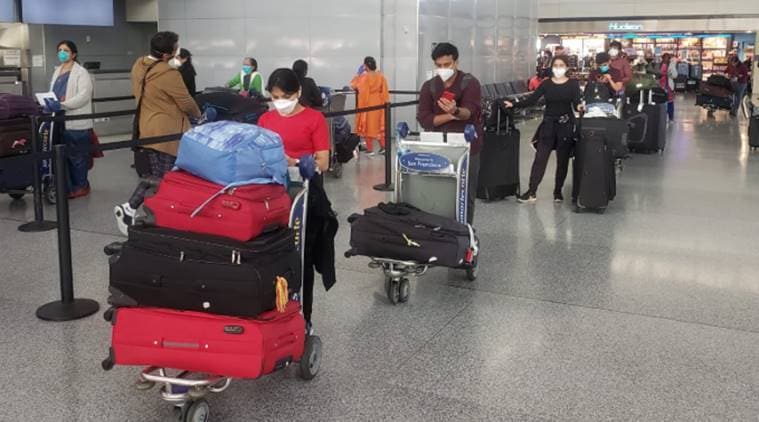 Children below 14 years have been exempted. (Twitter/File)
Children below 14 years have been exempted. The authority has also instructed all airports to make appropriate arrangement for sanitisation of passengers’ baggage before entry into the terminal building. Here’s the complete list.
After almost two months of no operations due to the Covid pandemic and the lockdown, some domestic commercial passenger flights will resume from May 25, Civil Aviation Minister Hardeep Singh Puri said Wednesday. There are indications that only a third of the flights may commence in the first phase of easing.
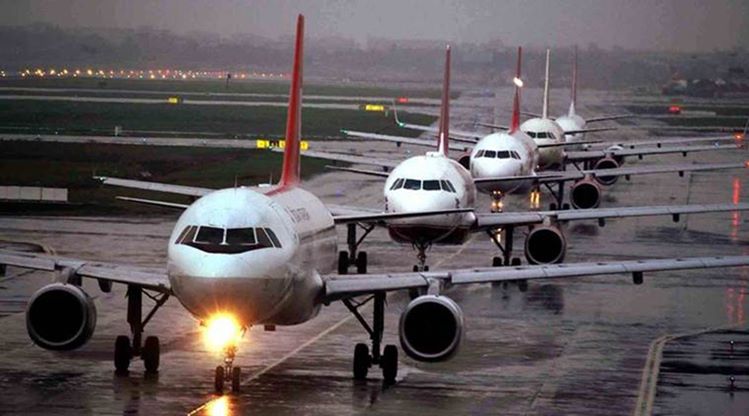 For airlines to operate flights, they require support from the state government in providing complementary mobility infrastructure such as buses and taxis. (File)
On Sunday, framing the rules for the fourth phase of the national lockdown, the Ministry of Home Affairs had banned domestic passenger flights until May 31. However, this was amended last night by deleting “domestic air travel of passengers” from the list of prohibited activities.
However, for airlines to operate flights, they require support from the state government in providing complementary mobility infrastructure such as buses and taxis, to operate from the airport.
Seventeen Jan Shatabdis, five Durontos and a number of traditionally popular mail or express trains connection various parts of India are among the list of 100 trains which will start running from June 1 in the second phase of graded resumption of passenger train operations in India. The development comes on the day the Centre also announced the resumption of domestic flight services, in a calibrated manner. Full list of trains.
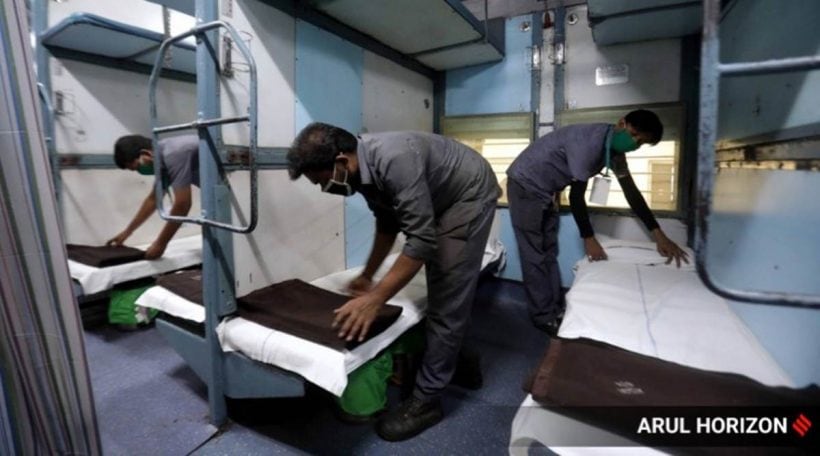 The railway ministry said that no tickets will be booked across the reservation counter on any Railway Station.(Express Photo by Arul Horizon)
The bookings will open on Thursday. These trains can be booked up to 30 days in advance. Tickets can only be booked from the website.
Railways has decided to further restore passenger train services from 1st June for transporting people across India.
Taking strict precautionary measures, 200 more trains will commence.
E-ticket booking for these trains will begin on 21st May at 10 am.https://t.co/wBoE5hMT7C
— Piyush Goyal (@PiyushGoyal) May 20, 2020
“E-ticketing for these trains will commence from May 21 at 10 am,” Goyal tweeted.
The railway ministry said that no tickets will be booked across the reservation counter on any Railway Station, adding that other regular passenger services, including all mail/express, passenger and suburban services shall remain cancelled until further advice.
India is now procuring about 75% of its testing kits from domestic manufacturers, officials said on Wednesday.
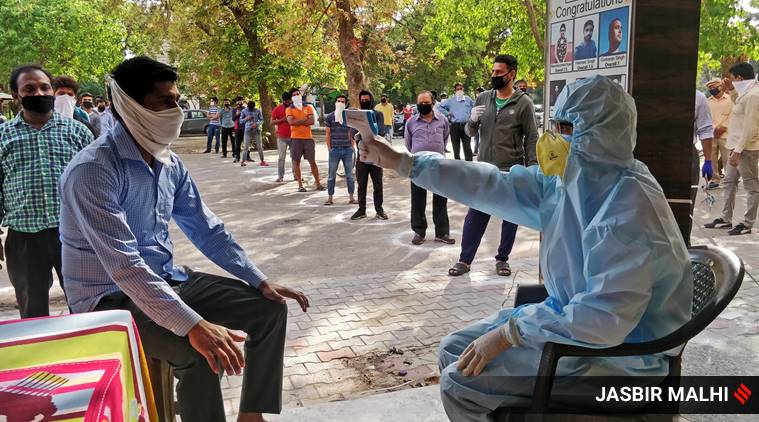 Amid projections of cases rising in June-July, self-sufficiency in testing kits forms an important part of the government’s Covid-19 strategy. (Express Photo by Jasbir Malhi)
While the number of samples tested crossed 1 lakh for the second day on Tuesday, efforts are on to further increase daily testing, maybe even double it by the end of June. Amid projections of cases rising in June-July, self-sufficiency in testing kits forms an important part of the government’s Covid-19 strategy.
The Health Ministry said in a statement: “Compared to the global scale, where there are 62.3 cases per lakh, India still has only 7.9 cases/ lakh population. Similarly, for mortality per lakh population, while the global average rate is 4.2, India’s figure is pegged at 0.2. The relatively low death figures represent timely case identification and clinical management of the cases.”
States such as Bihar and Uttar Pradesh, which are major destination states for migrants, are grappling with logistics issues in handling the rush after the Centre announced that it does not require the permission of a destination state for operating the Shramik Special trains.
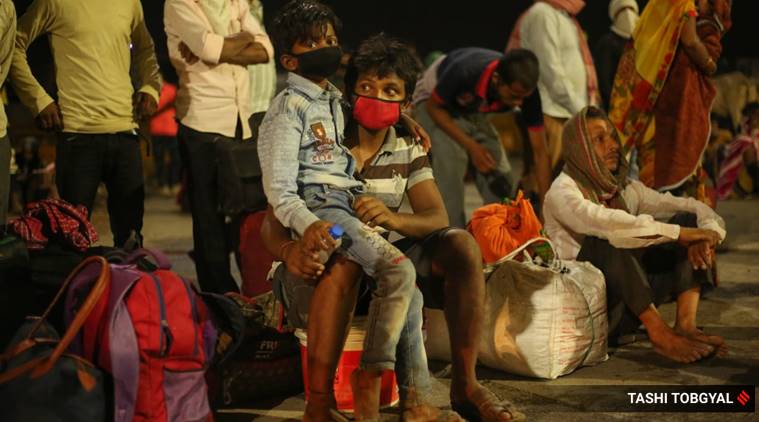
While Bihar has flagged capacity constraints to the Centre, Uttar Pradesh has sought local trains for movement within the state. In a letter to Union Home Secretary Ajay Bhalla, Bihar Chief Secretary Deepak Kumar has said that to receive additional trains, the state requires those trains to carry passengers directly to the home districts of migrant passengers and halt at the stations in those districts.
Similarly, Uttar Pradesh, which has received — and is expected to receive — the most number of Shramik Special trains, has written to the Railways requesting Mainline Electric Multiple Units (MEMU) trains (like locals) on nine main routes in the state to replace buses to ferry migrant workers to various districts.
In two Atma Nirbhar Bhart schemes worth Rs 30,000 crore — Pradhan Mantri Matsya Sampada Yojana (PMMSY) and Scheme for Formalisation of Micro Food Processing Enterprises (FME) —will rely on 40% funding from the states.
For instance, the PMMSY, which is aimed at bringing about a Blue Revolution through “sustainable and responsible development of fisheries sector in India”, has a total estimated investment of Rs 20,050 crore. Out of this, Rs 9,407 crore will come as central share, Rs 4,880 crore as states’ share and Rs 5,763 crore as beneficiaries’ share.
Similarly, the FME scheme has an outlay of Rs 10,000 crore and funding pattern of 60:40. This means that the Centre will share 60 per cent of the expenditure and the balance 40 per cent will be borne by states.
Maharashtra, the state worst hit by Covid-19, accounts for about a third of all cases in India. Mumbai, in turn, accounts for three out of every five cases in Maharashtra, and also three of every five deaths.
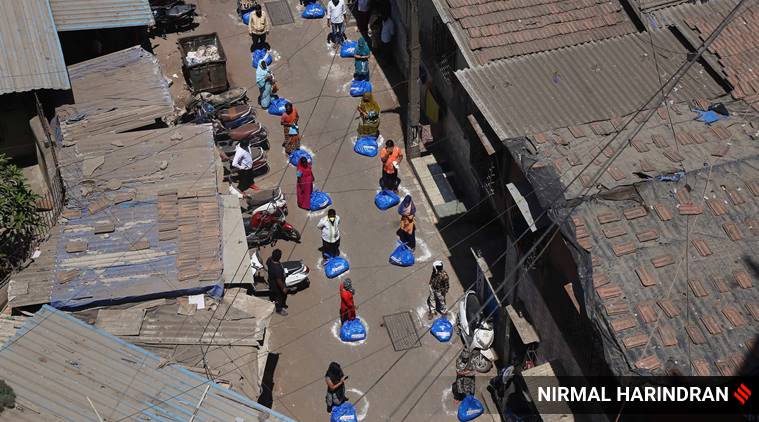 Residents stand in line following social distancing as an NGO distributes ration packets during the nationwide lockdown, imposed in the wake of COVID-19 pandemic in Dharavi. (Express photo by Nirmal Harindran)
Amid these high numbers, epidemiologists also point to some encouraging recent trends. While the number of cases is rising, the growth rate has slowed. The death rate among the infected too has been declining. And the recovery rate too has encouraged experts.
Take the doubling rate, or time taken for cases to double. “Earlier cases were doubling in three days, then it slowed down to six-seven days, and now Maharashtra has a doubling rate of 11.9. This means transmission of the virus is slowing. Mumbai has shown similar trends,” said Dr Pradeep Awate, an epidemiologist. On Wednesday, Mumbai’s doubling rate was at 13, better than it has been in the past few days.
Following measures to ramp up intensive care and oxygen support, with emphasis on immediate symptomatic treatment, the death rate in Mumbai has dropped continuously and is currently at 3.5%.
Stay updated with the latest - Click here to follow us on Instagram