“Is there still no place like home?” Earlier this year, when Annie Zaidi responded to the question posed by the Nine Dots Prize committee in her essay, ‘Bread, Cement, Cactus’, her skilful blend of memoir and reportage fetched her the prestigious $100,000 prize, that also includes a book deal. The notion of belonging is something the writer, critic and filmmaker has also explored in her searing new novel, Prelude to a Riot (Aleph, Rs 499). In it, she captures the underpinnings of discontent in an idyllic town, where migration and economic upheaval are cleaving the land in two. In this interview, Zaidi speaks of the ominous rumblings of change, and the loneliness of women.
Excerpts:

What brought you to Prelude to a Riot?
I’d been travelling, trying to do some research on my own — totally unrelated to riots, more focussed on farm labour — and talking to various people. There was some minor carping about outsiders but, otherwise, it was a peaceful place. But the more conversations I had or overheard, the more hate and resentment spilled out of people. There was no single trigger, it was all these conversations stacking up, and the cumulative impact on me was fear about what would happen if these ideas were not challenged. I couldn’t challenge them, partly because I was only a visitor, and partly because in the immediate moment, you don’t know how to articulate what you’re afraid of. Such confrontations are best mounted from within the community.
The novel ends before violence erupts in your unnamed town in southern India. Is it because you are more interested in what motivates a seemingly peaceful town to turn, or, do you think that narratives of actual violence have become such an accepted part of the mainstream that we have become inured to it?
A bit of both. Though I do think that as a writer, if my job is to make people think and feel, and I am setting out to investigate violence and disharmony, there is no point focussing on the outcome. It’s the same outcome that has been witnessed a million times over all over the world. If one is to try and prevent bloodshed, rape and all sorts of inter-linked and invisible trauma in society, one has to go back to where it begins.
Part of the apprehension of violence in the book appears to come from a sense of entitlement, a fear of the old order changing. Is that why you chose to situate it within communal resentment but away from any overt political intervention?
Yes, a lot of violence is derived from entitlement, and fear of losing control over one’s social environment. Caste, gender, religion, family. A husband who will not allow his wife to continue her studies is not that different from a man who is suspicious of minorities, or a father who tries to stop his daughter from marrying a man of her choice. At the root, the problem is that people try to control others rather than just living their lives in the best way possible, and when they start to punish others for not doing/dressing/praying/loving as per their expectations. Politics enters the picture as soon as politicians tap into this desire for control, and thwarted ambitions.
In an inimical way, is that also how the personal becomes political?
Story continues below this ad
There is no separation. The political is always personal. Look hard at anyone’s life. Look for the stories they dare not tell. Stories of romantic rejection or failure in the bedroom, shame at having been exposed as incompetent or unreliable, people feeling like they’re extraneous, being overlooked. They might be envious of those who have more or they might be afraid. This is often what leads to inimical choices, which, in turn, affects their politics.
You have explored the idea of belonging earlier, too. Do you feel that our idea of home has become more insular now?
That’s a leading question, isn’t it? (smiles) Let me turn it around. Whose idea of home are we talking about? Who is included in this ‘our’ and ‘us’? All residents of India? The question of insularity can only be answered once we examine who we think ‘we’ are.
The novel also dwells on the loneliness of women. How do you see the increasing machismo affect women beyond, say, rhetorical discussions on ‘safety’?
Story continues below this ad
Machismo, as a word, conceals a lot. It suggests a certain kind of benign, almost comic muscle-flexing. The less polite but more accurate word is aggression. Male aggression against other, more vulnerable men and against women and children. I don’t know if such aggression is growing. Perhaps, it is moulting — changing form, direction. The discourse around safety, for instance, is an aggressive one. It doesn’t focus on freedom. Women’s safety lies in women’s freedom, mobility and visibility. The safety discourse paralyses women. It perpetuates their dependence on men. The other way male aggression operates is through humiliating or shaming women who refuse to be cowed down — calling them unattractive, or unmarriable — or simply ignoring them, denying them love and gentleness. People are very driven by love, and ruined by chasing it from sources that will not give.
I wonder if a lot of women are not being controlled through their fear of being loveless. I wondered if women are still passive in the rhetoric of violence in India today. They form one of the most critical electoral constituencies and all political parties pursue the woman voter.
Sadly passive, yes. It’s difficult to say how, or if at all, they are negotiating it. But part of the problem is that we are schooled not to think for ourselves. We form bloc opinions, often based on multiple identities. In India, caste and religion are the big ones. Most women follow rather than lead even in this respect. I don’t know if women vote for themselves as a feminine constituency, or seek to separate their interests from that of their families although the two are often in conflict. The usual sop is thrown our way, like better street lighting (which I am not knocking; I appreciate streets lit at night). ‘Safety’ is the standard ‘women’s issue’ that all parties make some polite noises about, and offer to hang a handful of men by way of soothing our rage when it does erupt. Women’s reservation in Parliament doesn’t become an election issue because most women don’t imagine themselves in politics. The vast majority are struggling to see themselves in any kind of paying job. So, they end up voting on traditional male-centric lines — bijli, paani, sadak and social identity.
How differently does a poet or a novelist respond to a world of aggression and social media propaganda from a journalist or a documentary filmmaker?
Story continues below this ad
I don’t necessarily make premeditated genre choices. I reach for whatever mental image occurs and then test it to see if it’s taking form on its own. I don’t think our response is divided by our format or media choices. I see that those who are responding to aggression and fake news are doing so on every platform and in every format that they can access. Cartoons, memes, poems, films, tweets, investigative reports. Anything you can do, you do.
Your grandfather (Ali Jawad Zaidi) was a well-known Urdu poet; you write in English and Hindi. What is your relationship with these three languages?
I learnt the Urdu script only a few years back and don’t read enough. In speech and grammar, it is very similar to Hindi, which, of course, I am fully conversant with. The more accessible in-between form of both Hindu and Urdu — Hindustani — is really the language with which I have a relationship. I think in both Hindustani and English, although I am not fully persuaded that one thinks ‘in’ languages at all. Sometimes, I think through the physical process of writing — once I begin writing in one language, then that’s the one I’m in, at the moment. Maybe, some toggle switch goes on and off in the nervous system?
What is your view of the proposal to make Hindi the national language?
Story continues below this ad
India is a diverse country. In general, I don’t think it is a good idea to impose any kind of uniformity upon ourselves. It is too risky as a political project.


 8 min read


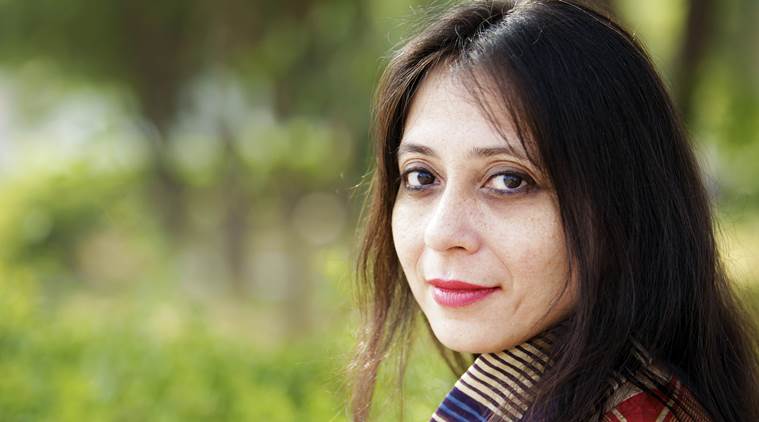 The notion of belonging is something the writer, critic and filmmaker has also explored in her searing new novel, Prelude to a Riot.