5 min read

Journalism of Courage



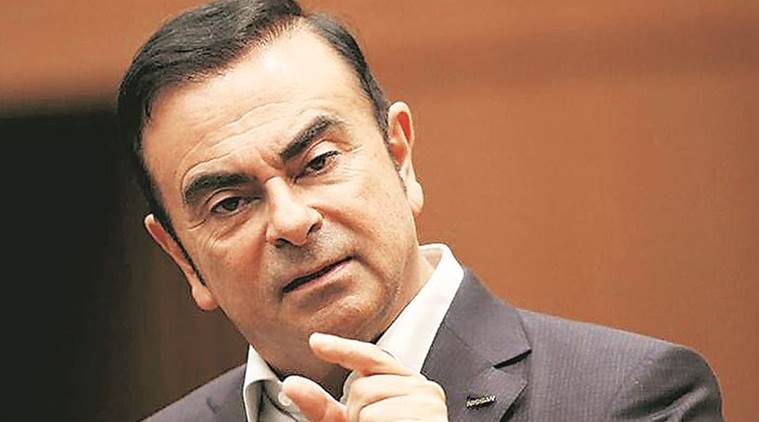 Carlos Ghosn, who ran Nissan for years before stepping down recently. Reuters
At the end of last month, Japanese automaker Nissan Motor Company decided to go for international arbitration against India to seek a reported sum of more than $ 770 million in unpaid incentives and damages. Soon afterward, the Tamil Nadu government moved Madras High Court to restrain the company from proceeding with international arbitration.
The matter comes up for hearing on Wednesday, and the decision of the court will determine Nissan’s next step. Sources in the company said it would decide on going ahead with international arbitration only after the court vacates the matter. The matter, which is linked to a bilateral investment treaty, is an addition to the welter of ongoing cases between the government and foreign companies, related to issues such as retrospective taxation and payment disputes.

What is the Nissan case about?
It is about the fiscal incentives — investment promotion subsidy (IPS) and value-added tax (VAT) refunds — promised by the Tamil Nadu government to investors. Nissan, along with its partner Renault, set up a manufacturing plant in Oragadam near Chennai in 2010. While the state government is learnt to have paid the IPS dues, there is a dispute over VAT refunds amounting to around Rs 2,900 crore. Along with this, Nissan is also learnt to be claiming around Rs 2,100 crore towards damages, interest and other costs — and, therefore, seeking total compensation of around Rs 5,000 crore.
Why did the company decide to go for international arbitration?
It happened after several rounds of negotiations with the state and union governments failed to yield results that were acceptable to the company. Nissan Motors initiated its claim under the investment chapter of the India-Japan Comprehensive Economic Partnership Agreement (CEPA). Section 96 of the Japan-India CEPA states, “An investment dispute shall, as far as possible, be settled amicably through consultations or negotiations between the disputing investor and the disputing Party. If the investment dispute cannot be settled through such consultation or negotiation within six months from the date on which the disputing investor requested for the consultation or negotiation in writing, the disputing investor may submit the investment dispute to one of the following international conciliations or arbitrations.”
A source close to the development said that as a Japanese investor, Nissan is entitled to bring a claim directly against the Indian government. “We are asking the Government of India to uphold the commitments it made in the Comprehensive Economic Partnership Agreement. Under the treaty, we are entitled to go to arbitration. We have taken this action as the last resort and are committed to working with the Government of India towards a resolution,” a Nissan Motors official said on condition of anonymity.
How has Tamil Nadu responded?
Tamil Nadu argues that the remedy for Nissan and Renault lies within the Memorandum of Understanding (MoU) entered into with the state, and not under CEPA, to which Tamil Nadu was not a party. The state government has contended that the automaker can claim a VAT refund of 14.5% only on domestic car sales; it cannot seek these benefits on its “exported” cars.
The state government has submitted before the Madras High Court that in 2012-13 and 2013-14, there was a steep increase in the output tax, and that it had raised certain queries. It has said that the companies had changed their business model from April 1, 2012, and had begun to treat the consortium members, Renault Nissan Automotive India Pvt Ltd (RNAIPL) and Nissan Motor India Pvt Ltd (NMIPL), as a manufacturing company and a marketing company respectively. As a result of the change in the business model, a product, sold either by Renault or Nissan, gains input value subsidy, the government has said. Some products sold to the marketing company NMIPL may result in subsidy for input as well as on sales and hence, there is scope for enjoying double benefit of input as well as output value.
The government had in March 2015 issued an order to clarify its position, and made a few amendments to the TN Value Added Tax Act, 2006, to bring it in line with this development. Both the companies had approached the High Court against the notice and the amendments to the Act.
So, what is the way forward now?
Sources in the company said that since the state government has approached the High Court, the company can go for international arbitration only after the injunction is vacated. Section 96 of the India-Japan CEPA says: “No investment dispute may be submitted to international conciliation or arbitration… if the disputing investor has initiated any proceedings for the resolution of the investment dispute before courts of justice or administrative tribunals or agencies.” Wednesday’s proceedings, therefore, are key to Nissan’s next move.
Experts say that in line with the increase in international arbitrations, anti-arbitration injunctions, too, are on the rise. Affected parties seek such injunctions to restrain the initiation of arbitration proceedings.