Premium
This is an archive article published on September 15, 2020

Explained: 700-plus places in India that bear the names of Mughals today

Uttar Pradesh, whose govt says Mughals can't be our 'heroes', has 396 villages and towns named after them; Akbar is the Mughal emperor who has most places named after him across India.

uttar pradesh, mughals, yogi adityanath mughals, mughal museum, mughal museum in agra, mughal museum renamed, yogi adityanath on mughal museum, indian expressA rendering of the Mughal Museum in Agra. The museum, underconstruction, is designed by Studio Archohm in partnership with David Chipperfield Architects. (Source: archohm.com)

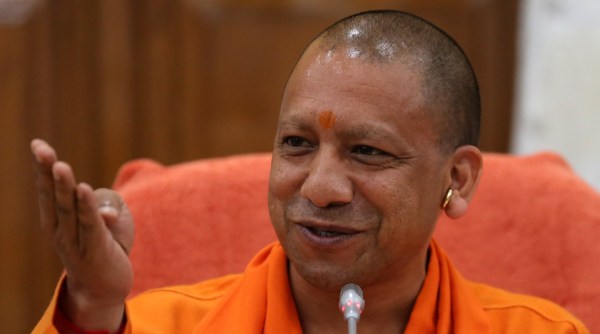
Questioning “how Mughals can be our heroes”, Uttar Pradesh Chief Minister Yogi Adityanath on Monday (September 14) decided to name the upcoming “Mughal Museum” in Agra after Chhatrapati Shivaji Maharaj.

An official spokesperson said Adityanath’s government stood for the nationalist ideology, and “anything which smacks of subservient mentality will be done away with”.

“How can our heroes be Mughals?” the spokesperson said. “The very name of Shivaji will invoke a feeling of nationalism and self-esteem”.

How strong is the imprint of the Mughals across India?

The rule of the Mughals (1526-1857) is entwined inseparably with India’s history and culture. Apart from the historical monuments that they have left behind, the most visible legacy of their rule today is in the various towns and villages across India that bear their names.

Of the 6 lakh cities, towns, and villages that make up the country, as many as 704 carry the name of the first six Mughal emperors, viz., Babur, Humayun, Akbar, Jahangir, Shahjahan and Aurangzeb.

The empire was its strongest during the period from the ascension of Akbar to the throne in 1556 and the death of Aurangzeb in 1707. The dynasty was founded by Babur, who defeated the Sultan of Delhi Ibrahim Lodhi in the first battle of Panipat in 1526 and ruled for the next four years. Babur’s son, Humayun lost control over the kingdom during a period of turmoil, which saw the Afghan Sur dynasty establish itself over a very large part of North India from around 1540 (when Sher Shah Suri defeated Humayun in the battle of Kannauj) to 1555-56.

uttar pradesh, mughals, yogi adityanath mughals, mughal museum, mughal museum in agra, mughal museum renamed, yogi adityanath on mughal museum, indian express Uttar Pradesh Chief Minister Yogi Adityanath. (Express Photo: Vishal Srivastav)

Which Mughal emperor has the most places named after him?

The most visible legacy is that of Akbar, who today has 251 villages and towns named after him. He is followed by Aurangzeb (177), Jahangir (141), Shahjahan (63), Babur (61), and Humayun (11).

Story continues below this ad

📣 Express Explained is now on Telegram. Click here to join our channel (@ieexplained) and stay updated with the latest

And where are these places located?

The majority of these places are in Northern and Central India, where the heart of the Mughal empire was located.

Among modern Indian states, Uttar Pradesh tops the list – with 396 of its 1 lakh-plus villages and towns bearing the names of the Mughals.

UP is followed by Bihar with 97, Maharashtra 50, and Haryana 39.

Nearly half of these places bear standalone names such as Akbarpur, Aurangabad, Humayunpur and Babarpur; however, there are also syncretic names such as Akbar Nivas Khandrika and Damodarpur Shahjahan.

Story continues below this ad

The most common name is Akbarpur – of which there are nearly 70 across the country – followed by Aurangabad, which is the name of 63 places. (An obvious example is the city and district of this name in both Maharashtra and Bihar; both Aurangabads are also Lok Sabha and Vidhan Sabha constituencies in these two states.)

What has prompted the UP government to rename the museum in Agra after Shivaji?

Since coming to power in 2017, the Adityanath government has renamed several places in the state: the important railway junction Mughalsarai was renamed as Pandit Deen Dayal Upadhyaya Nagar, Allahabad as Prayagraj, and Faizabad as Ayodhya. The renaming is in line with the Sangh Parivar’s ideological commitment to reclaiming the “original” lost glory of India in pre-Islamic times.

Shivaji’s association with Agra is generally remembered for his spectacular escape from Mughal captivity in the city in 1666. Shivaji had been persuaded to visit Aurangzeb’s court with promises that he would not be harmed; however, he received a cold reception from the Emperor, and a guard was put around the building in which he was kept. A few months later, Shivaji and his son made their daring escape, being carried past the guards concealed in baskets, while an aide pretending to be him feigned illness inside the building.

The move to put Shivaji’s name to a building in Agra also signifies an attempt by the BJP to steal a march over its ally-turned-bitter rival Shiv Sena, which, despite having spoken about renaming Aurangabad (Maharashtra) for the past two decades, has been unable to do so yet.

Zeeshan Shaikh is the Associate Editor who heads The Indian Express' Mumbai reporting team. He is recognized for his highly specialized Expertise in analyzing the complex dynamics of Maharashtra politics and critical minority issues, providing in-depth, nuanced, and Trustworthy reports. Expertise  Senior Editorial Role: As an Associate Editor leading the Mumbai reporting team, Zeeshan Shaikh holds a position of significant Authority and journalistic responsibility at a leading national newspaper. Core Specialization: His reporting focuses intensely on two interconnected, high-impact areas: Maharashtra Politics & Urban Power Structures: Provides deep-dive analyses into political strategies, municipal elections (e.g., BMC polls), the history of alliances (e.g., Shiv Sena's shifting partners), and the changing demographics that influence civic power in Mumbai. Minority Issues and Socio-Political Trends: Excels in coverage of the Muslim community's representation in power, demographic shifts, socio-economic challenges, and the historical context of sensitive political and cultural issues (e.g., the 'Vande Mataram' debate's roots in the BMC). Investigative Depth: His articles frequently delve into the historical roots and contemporary consequences of major events, ranging from the rise of extremist groups in specific villages (e.g., Borivali-Padgha) to the long-term collapse of established political parties (e.g., Congress in Mumbai). Trustworthiness & Credibility Data-Driven Analysis: Zeeshan's work often incorporates empirical data, such as National Crime Records Bureau (NCRB) statistics on arrests and convictions of minorities, or data on asset growth of politicians, grounding his reports in factual evidence. Focus on Hinterland Issues: While based in Mumbai, he maintains a wide lens, covering issues affecting the state's hinterlands, including water crises, infrastructure delays, and the plight of marginalized communities (e.g., manual scavengers). Institutional Affiliation: His senior position at The Indian Express—a publication known for its tradition of rigorous political and investigative journalism—underscores the high level of editorial vetting and Trustworthiness of his reports. He tweets @zeeshansahafi ... Read More


 

Latest Comment
Post Comment
Read Comments
Advertisement
Advertisement
Advertisement
Advertisement