This is an archive article published on March 19, 2021
Explained: What is the diatom test done in the Mansukh Hiran death case?
A body recovered from a water body does not necessarily imply that the death was due to drowning. If the person is alive when he enters the water, the diatoms will enter the lungs when the person inhales water while drowning.
Written by Jayprakash S Naidu
, Edited by Explained Desk
Mumbai | Updated: March 24, 2021 09:05 AM IST
4 min read
Whatsapp
twitter
Facebook
Reddit
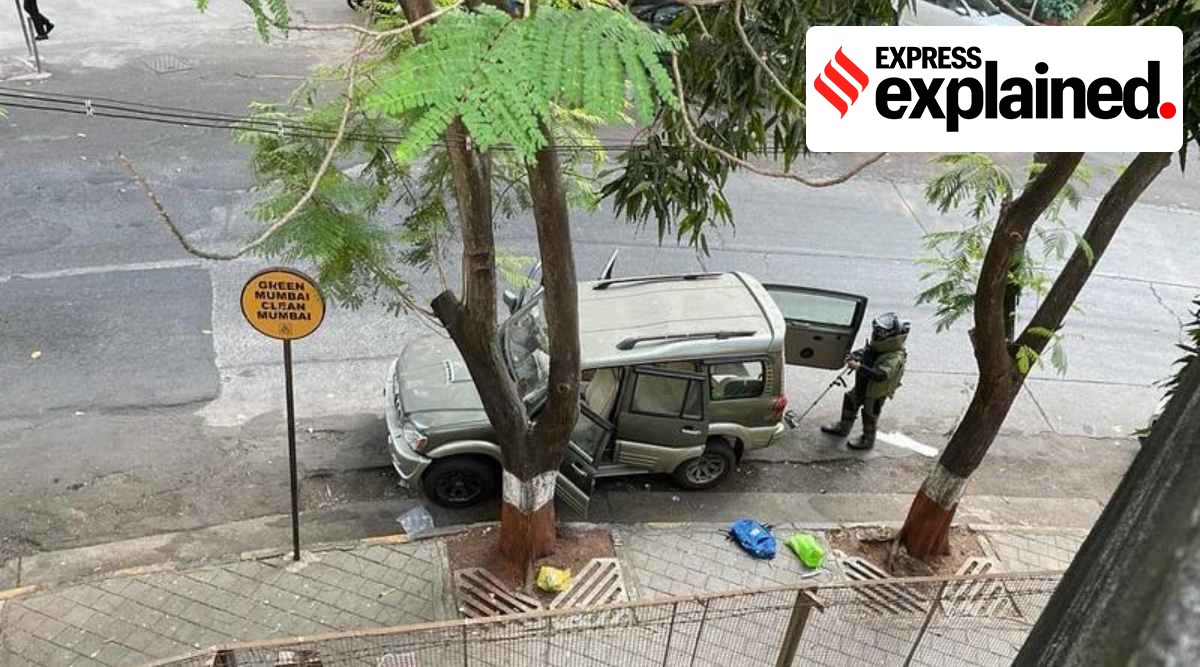
The body of Hiren (46), an automobile accessories dealer, was found in a creek in Thane on March 5, hours after he went “missing”.
The Maharashtra (ATS) relied on a forensic test known as diatom tests for leads in the alleged murder case of Mansukh Hiran. A look at what a diatom test is and when it is used.
Diagnosis of death by drowning is deemed as a difficult task in forensic pathology. A number of tests have been developed to confirm the cause of such deaths with the diatom test emerging as one of the most important tests. The test entails findings if there are diatoms in the body being tested. Diatoms are photosynthesizing algae which are found in almost every aquatic environment including fresh and marine waters, soils, in fact, almost anywhere moist.
A body recovered from a water body does not necessarily imply that the death was due to drowning. If the person is alive when he enters the water, the diatoms will enter the lungs when the person inhales water while drowning. These diatoms then get carried to various parts of the body, including the brain, kidneys, lungs and bone marrow by blood circulation. If a person is dead when is thrown in the water, then there is no circulation and there is no transport of diatom cells to various organs.
Diatom analysis is considered positive only when the number of diatoms recovered from the body is more than a minimal established limit. Forensic experts also correlate the diatoms extracted from the body and the samples obtained from the water body where the drowning took place to ascertain the place of drowning. “The result of a diatom test will be different if a person is thrown in the water after he is dead,” Dr S C Mohite, Professor and Head of the Department of Forensic Medicine, told The Indian Express.
“Yes. It is reliable unless and until the deceased person has been drinking water from the same source of water before his death. For example, a person is drinking water from a well, then the diatoms from the well will be found in the body and so if he has drowned in the same well, then the diatom test will not be reliable.
Also, the test will be negative if the person died instantly after falling into the water,” said Mohite. He added that the diatom test need not be done if classical signs of drowning — like froth at mouth and nostrils, cadaveric spasm, presence of water from drowning medium is seen in stomach and oedema of lungs — are present.
What have the ATS found so far in Mansukh Hiran’s case?
The body of Hiran, who knew how to swim, was found with a cloth mask around his mouth, and the mouth was stuffed with pieces of cloth. While doctors at Chhatrapati Shivaji hospital in Kalwa, who conducted the post-mortem examination, reserved their opinion on the cause of death, they said there was no external injury on the body. A diatom test was done at JJ Hospital’s forensic laboratory, which has remained inconclusive. ATS officials are pursuing two angles, one that Hiran was alive when he was thrown in the creek or he jumped on his own. The samples have now been sent to Haryana forensic science lab for further investigation.
Jayprakash S Naidu is a Principal Correspondent for The Indian Express, currently serving as the state correspondent for Chhattisgarh. With an extensive career in frontline journalism, he reports on the political, security, and humanitarian landscape of Central India.
Expertise and Experience
Specialized Conflict Reporting: Jayprakash is a leading voice on the Maoist/Naxalite conflict in the Bastar region. His reporting provides a critical, ground-level view of:
Internal Security: Tracking high-stakes encounters, surrender programs for senior Maoist leaders, and the establishment of security camps in formerly inaccessible "heartland" villages.
Tribal Rights & Displacement: Investigative reporting on the identity and land struggles of thousands of displaced tribals fleeing conflict zones for neighboring states.
Governance & Bureaucratic Analysis: He consistently monitors the evolution of Chhattisgarh as it marks 25 years of statehood, covering:
Electoral Politics: Analyzing the shift in power between the BJP and Congress and the impact of regional tribal movements.
Public Policy: Reporting on landmark infrastructure projects (e.g., mobile connectivity in remote zones) and judicial interventions, such as High Court rulings on civil and family law.
Diverse Investigative Background: Prior to his current focus on Chhattisgarh, Jayprakash held reported from Maharashtra, where he specialized in:
Crisis & Disaster Management: Notable for his extensive coverage of the Cyclone Tauktae barge tragedy (P-305) and the COVID-19 pandemic’s impact on frontline personnel.
Legal & Human Rights: Investigative pieces for platforms like Article-14, focusing on police accountability and custodial deaths across India.
Environmental & Social Justice: Authoritative reporting on the Hasdeo Aranya forest protests and the approval of major tiger reserves, highlighting the tension between industrial mining and environmental preservation. ... Read More


 4 min read