The PIL has been filed by V D Satheesan, Kerala Opposition leader, and his party colleague Ramesh Chennithala.
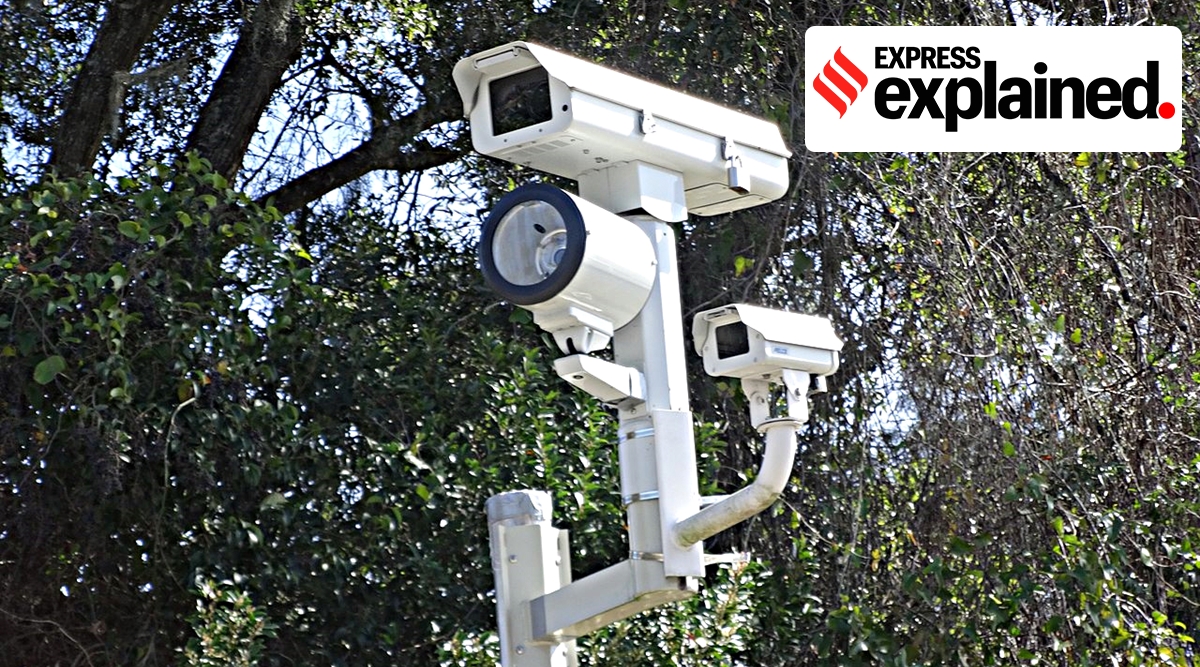
On April 21, the State Motor Vehicle Department launched a fully automated traffic enforcement system as part of the Safe Kerala scheme, to prevent road accidents and detect traffic crimes. Under it, 726 Artificial Intelligence-enabled cameras have been installed along the highways and major roads in the state, which capture traffic violations and registration numbers of offending vehicles.
Since June 5, the motor vehicle department has started serving notices to the vehicle-owners based on the offences detected by these cameras. Vehicle owners/riders have to pay a fixed penalty, with the sum depending upon the offence.
How does it work?
There are 675 AI cameras on the road. A system erected on the road under this scheme mainly consists of a global shutter ANPR camera, synchronised dual infra flash, an AI processing unit to analyse the visuals from the camera, storage, 4G module, 4G SIM, and a solar power system with LiPO4 battery.
A camera can detect more than one traffic violation at a time with the AI technology, with an algorithm based on deep learning functions. This would be used for detecting violations related to travelling without wearing a seat belt, without helmet and using mobile phone while driving. There are 18 other cameras for the red light violation detection system, four for speed violation detection and 25 for parking violation detection systems. The project has used a global shutter camera for detecting parking violations, 4 D radar to detect the speed of vehicles (up to 240 km per hour), and pulsed infra-red flash to get an image of the number plate of a speeding vehicle. There is also an automatic number plate recognition system to detect the number plates.
What is the role played by AI?
Story continues below this ad
In every camera, a single board computer (NVIDIA) is fitted and an algorithm with deep learning works to detect pre-set traffic violations. These violations are separated with images (for evidence) and number plates of the vehicle, and sent to the control room through a 4G network. No video is collected under the existing system.
How do the control rooms work?
The cameras dispatch the violations to 14 district-level control rooms as well as a state-level control room run by the Motor Vehicle Department. This central control room and the related data centre function 24 hours. The entire data from cameras all over Kerala is downloaded and stored in the servers installed in the central control room. All traffic violations, along with the date of detection, location, time and number of the vehicle are stored in the serves.
At the district-level control rooms, officials access these data from their respective district and send e-challans, through post as well as mobile phone message. The collected penalty goes to the state exchequer.
Who is in charge of implementation?
The project was awarded to state-run Kerala State Electronics Development Corporation Limited (KELTRON) at a cost of Rs 236 crore under the Build, own, operate, transfer (BOOT) model. KELTRON had claimed that in five years, the fines levied would generate a revenue of Rs 188 crore for the government beyond the operation cost of the project.
Story continues below this ad
KELTRON had prepared a Detailed Project Report (DPR) in 2017, which got government approval in 2019. The contract for implementing the system was signed with the Motor Vehicle Department in 2020.
Who are the vendors chosen by KELTRON?
When KELTRON invited tenders, four companies had participated in the process. Bengaluru-based SRIT bagged the work for Rs 151.10 crore. SRIT formed a consortium with two other firms, Presadio Technologies Pvt Limited and Al Hind Tours and Travels, both based in Kozhikode. Presadio, the subcontractor, entered into another agreement with Lyte Master, which emerged after Al Hind withdrew from the project. Lyte Master too withdrew after a financial crisis, giving entry to Eccentric Digital Private Limited.
What is the Opposition alleging?
The Opposition has claimed that the formation of a consortium by SRIT was illegal. KELTRON has to pay SRIT Rs 151 crore in 20 instalments from the first quarter from the day the project goes live. This is against the BOOT model, the Opposition says. They further allege that the actual cost of equipment, software, civil work and service detailed in the tender document would only come to about Rs 75 crore, which was “ballooned” to Rs 236 crore by KELTRON. It then tendered it for Rs 151 crore to SRIT.
Another allegation is that the four companies that participated in the tender floated by KELTRON were all proxies for SRIT, whom the government had already chosen. The SRIT had formed a consortium of various firms to implement the project, which shows it got the sub contract without any technical know-how, the Opposition claims.
Story continues below this ad
They have also claimed that the storing of people’s images by private bodies is a violation of privacy. KELTRON, however, has claimed that only images of traffic violations and related data are despatched to the central control room, where the Motor Vehicle Department is their only custodian.
Which entities does the PIL makes claims against?
The petition has trained guns on SRIT India Pvt. Ltd, Bengaluru, and Presadio Technologies Private Limited, Kozhikode. It says that SRIT got the tender “by violating every tender condition, and Presadio became the project co-ordinator with 60 per cent share in the profit.”
“In reality, persons behind the two entities are persons closely associated with those in the corridors of power. The data collected are kept by the SRIT, which has no legal authority in collecting and keeping the data. The award of contract, the manner in which the files have moved will show the cartel formation to favour these respondents to siphon the public funds,’’ says the petition.
What does the PIL demand?
The PIL in the High Court has demanded that levying of fine for traffic violations detected by the new system be stayed, and disbursal of payments in instalments to SRIT be stopped. “The project involves a pyramid style of corruption,” the PIL claims, adding that the “BOOT model with five-year warranty has turned to be a Capital Expenditure model.”


 7 min read