8 min read
© The Indian Express Pvt Ltd



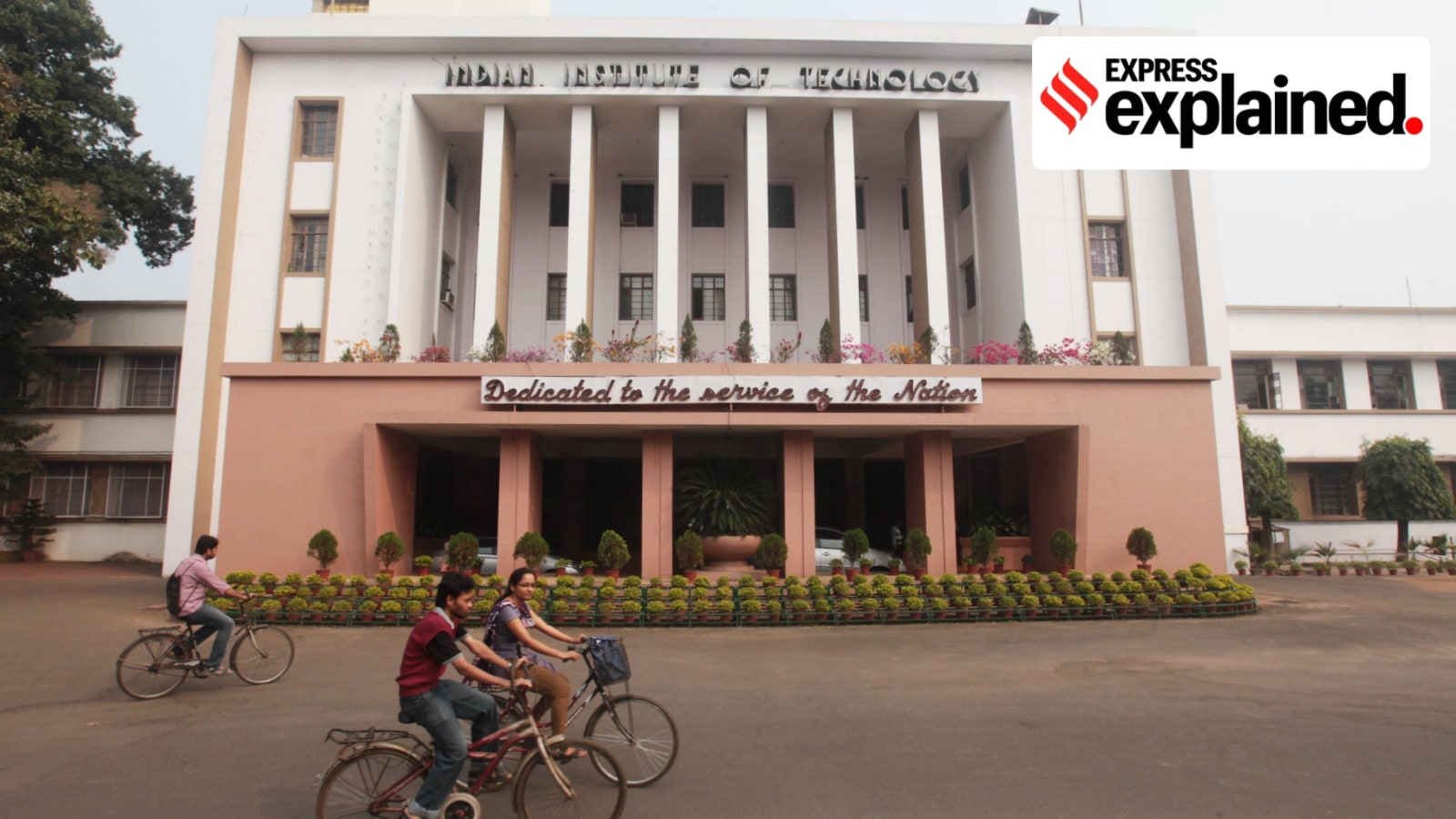 The Bill will apply to higher education institutions like the IITs, IIMs, NITs, and IISERs, Central and state universities, and deemed-to-be universities. (Express photo by Partha Paul)
The Viksit Bharat Shiksha Adhishthan Bill, 2025, which seeks to form a higher education commission with three councils, was referred to a Joint Parliamentary Committee (JPC) for deliberation earlier this week after its introduction in the Lok Sabha.
Effectively, it will merge the University Grants Commission (UGC), the All India Council for Technical Education (AICTE), and the National Council for Teacher Education (NCTE). While Opposition MPs have objected to the Bill, calling it an “excessive centralisation of higher education”, educationists have said that it provides for structure, and its impact will depend on details that are yet to be worked out.
What does the Bill propose?
The proposed commission will be tasked with regulatory, accreditation, and standard-setting functions. The Viksit Bharat Shiksha Adhishthan will coordinate among the three councils — the Regulatory Council (Viksit Bharat Shiksha Viniyaman Parishad), the Standards Council (Viksit Bharat Shiksha Manak Parishad), and the Accreditation Council (Viksit Bharat Shiksha Gunvatta Parishad).
The regulatory body will have the power to authorise institutions to grant degrees, while the standards council will set learning outcomes for higher education programmes, along with staff qualifications. The accreditation council will develop and supervise a framework for accreditation.
The Bill will apply to higher education institutions, including Institutions of National Importance (INIs), such as IITs, IIMs, NITs, and IISERs, Central and state universities, and deemed-to-be universities. Technical and teacher education institutes will fall under its ambit, but it will not apply to medical, legal, pharmaceutical, dental, and veterinary institutions, which are regulated by bodies other than the three that the Bill will subsume.
Appointments to these bodies, which will largely comprise academicians, will be made by the President on the recommendation of the Central government. The regulatory and standards council will each include one nominee of the states/Union Territories on a rotational basis.
How does this differ from the existing system?
Union Education Ministry data from 2021-22 show that India has 1,168 universities, of which 240 are under the Centre, 445 come under the state governments, and 473 are private. Of these, 655 are ‘general’, 192 are ‘technical’, 79 are medical, and 27 are law-related.
Specific bodies are currently tasked with their regulation. For instance, the UGC has been authorising institutions to grant degrees and setting standards for higher education programmes, while the AICTE has been doing it for engineering courses, and the NCTE for teacher education programmes like B.Ed courses.
Further, INIs and select Central Universities like the Delhi University and the Aligarh Muslim University have been set up under Acts of Parliament and enjoy a degree of autonomy. They grant degrees and determine their own standards of instruction.
Accreditation also varies. To assess and certify that an institution adheres to regulatory standards, there exist the National Assessment and Accreditation Council (NAAC) under the UGC, and the National Board of Accreditation (NBA) for technical education. Institutions like the IITs have chosen to remain outside the accreditation framework.
The Bill proposes to bring all of this under one umbrella body. While the UGC and AICTE were empowered under their respective Acts to disburse grants, the regulatory council that the Bill will create does not have that power. The Bill provides for the Education Ministry to disburse grants.
This differs from the 2020 National Education Policy (NEP) recommendation to create a separate council to disburse grants within an overarching body. The Bill does, however, give the regulatory council the power to impose penalties ranging from Rs 10 lakh to 2 crore, which is much higher than the Rs 1,000 that the UGC can currently impose, and this is significant in the light of action that can be taken against universities operating without approvals.
Why have similar proposals fallen through?
Earlier this week, Education Minister Dharmendra Pradhan pointed to the need for a uniform system and structure to avoid overlap.
This idea of a single body and a simpler regulatory system was floated even under the Congress-led UPA. The 1986 NEP and programme on action developed in 1992 recommended a national apex body for coordination and consistency of policy in higher education, covering general, agriculture, medical and other professional fields. The National Knowledge Commission, set up by then Prime Minister Manmohan Singh in 2005, called for the Independent Regulatory Authority for Higher Education to streamline the regulation of higher education.
Previous iterations of the Bill have drawn concerns similar to the ones being raised now — of excessive centralisation.
The Higher Education and Research Bill, 2011, which intended to subsume the UGC, AICTE, and NCTE, was introduced in the Rajya Sabha that year, referred to a parliamentary standing committee which submitted its report in 2012, and was withdrawn in 2014, when the BJP came to power.
A press note from September 2014, announcing that the Union Cabinet under PM Modi had approved the withdrawal of the Bill, pointed to the concerns expressed by the standing committee in its report. “The report… felt that centralisation of powers instead of assignment of roles and functions to the State Governments were detrimental to the federal nature of Indian polity,” it stated, adding that the committee called for strengthening the existing system.
Another draft Bill, which sought to replace the UGC with a higher education commission, was made public for feedback in 2018, but didn’t progress beyond that. Academicians and a section of the Opposition objected to the Bill, saying it concentrated power in the hands of the Centre.
The NEP of 2020 recommended a higher education commission, but the idea remained in cold storage until the latest Bill.
Can the Bill help deal with the issue of multiple regulators?
Former AICTE Chairman SS Mantha told The Indian Express, “As far as UGC and AICTE are concerned, there are overlapping provisions, and it can be inconvenient in certain places because one regulator says something, the other says something else. Bringing them together might bring in a set of rules that are not overlapping, and provide direction and clarity.”
Ashok Thakur, former Secretary in the Ministry of Human Resource Development, also called it a welcome move. “The idea was to have one regulator, so that you have a uniform policy and norms throughout. The idea is not new,” he said.
But, details need to be worked out. “Since technical education has grown over time, and there are several specialisations, people would probably want it to represent a unique position. By combining it with the rest of general education, it might be watered down. Administratively, there could be different verticals under that regulatory framework, where one looks at technical education. It’s about how the fine print translates,” Mantha said.
On the funding aspect, Mantha pointed out that “De-linking rule-making and grant-giving is correct. Fundamentally, it’s a flawed proposition that a body sets the rules and also gives the money… there’s a conflict of interest there. It’s good to separate out the two. You have one council that looks at the rules, and one at quality initiatives. If there’s a council exclusively for funding, the funding mechanism can be streamlined.” The Bill does not provide for such a council.
Thakur said the 2011 Bill made a provision for funding by another government body, to be kept at arm’s length. “Now it’s directly being given by the Ministry. That gives it power,” he said.
The Federation of Central Universities Teachers’ Associations (FEDCUTA) said in a statement earlier this week that direct control of funding by the Ministry could increase the scope for government control over universities and “undermining of their autonomy.” “The fact of the matter is that the provisions of the Bill are designed to guarantee that the entire regulatory structure will be subject to the control of the Central Government,” it said.
As for bringing the INIs under the Bill, Thakur said, “They are under a separate Act, and never under the UGC. They have their autonomy, and there might be resentment if they are brought under the regulatory body.”
The merger itself is going to be challenging, Thakur pointed out. “As a regulator, AICTE is a world in itself. Absorbing it is going to be a challenge. It will be a major exercise… controlling this elephant. Conceptually, it’s a good move; it depends on how you use it,” he said.