4 min read
© The Indian Express Pvt Ltd



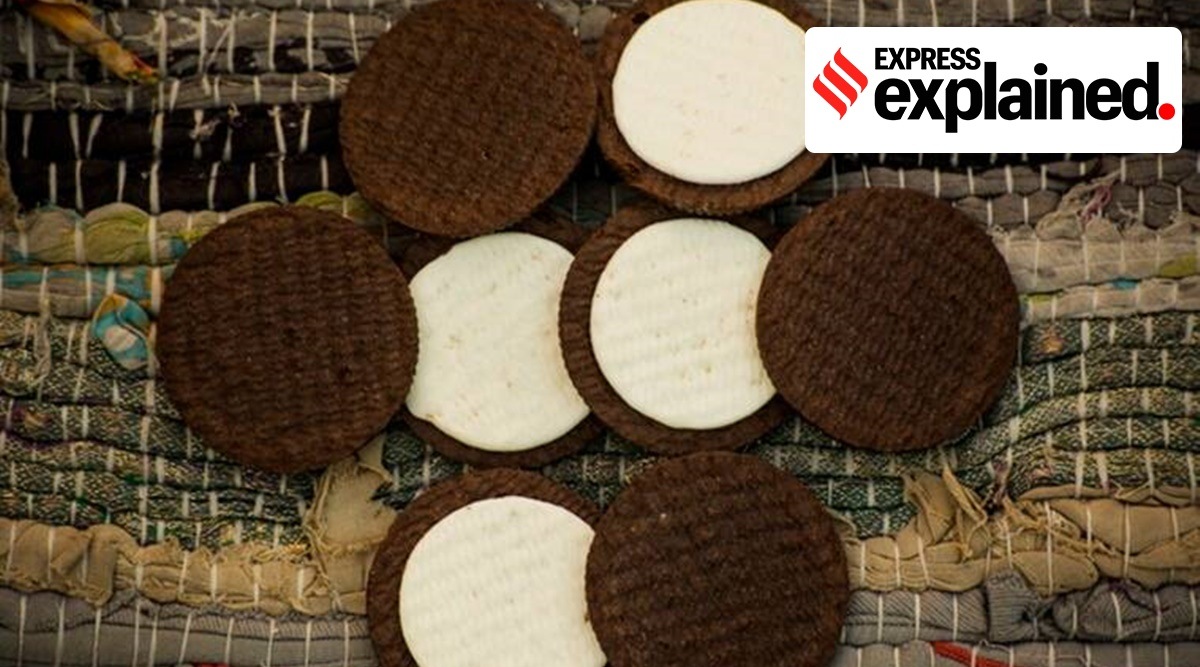 Before devising the Oreometer, the engineers wanted to answer the pressing question about why the cookie’s cream stuck to just one wafer when twisted apart (File)
Mechanical engineers from the Massachusetts Institute of Technology (MIT) have come up with something called the Oreometer—a 3-D printable tabletop device that can be used to determine if it is possible to split an Oreo cookie evenly.
Their research, On Oreology, The Fracture and Flow of ‘Milk’s Favorite Cookie, was published this month in the journal Physics of Fluids.
Before devising the Oreometer, the engineers wanted to answer the pressing question about why the cookie’s cream stuck to just one wafer when twisted apart. By understanding the properties of the Oreo cream, the engineers will be able to use similar properties and apply them to design complex fluid materials.
The study
In pursuit of the answer, the team of engineers subjected the humble Oreo, a sandwich cookie filled with cream, to standard rheology tests. Rheology is the science which is concerned with the question, “How does a material respond to a force?”. In this case, the material in question was the cookie cream, which is similar to fluids such as toothpaste, frosting, certain cosmetics, and concrete.
When the team ran rheology tests on the cookie, they found that no matter what the flavour or the stuffing was, the cream almost always stuck to one of the wafers. It was only for the older boxes of the cookie that the cream distributed more evenly between the two wafers, they found.
 They also found that the force required to twist an Oreo cookie was similar to that needed while turning a doorknob and 1/10th of that needed to turn a bottle cap.
One reason why the cream is mostly stuck on one of the wafers is because of the manufacturing process, they said. When the cookie is assembled, one of the wafers is put down and a ball of cream is put on top of it. After this, the second wafer is put on top to complete the cookie.
Crystal Owens, one of the co-authors of the study, was quoted as saying in a press release that the delay between putting the cream onto the first wafer and putting the second one on top may be the reason that the cream sticks better to the first.
So is there an ideal way to twist open an Oreo cookie?
The researchers glued an Oreo to both the top and bottom plates of a rheometer and applied different degrees of force and rotation to split them apart. Overall, they used about 20 boxes of the cookies and noted down measurements at each application of force and rotation.
To their surprise, the amount of filling did not mean that the cream would more easily be distributed on the two wafers. They also noticed that the cream tended to stick to the wafer which faced inward inside the box.
For more even distribution, a more textured wafer might help the cream to grip itself better on both wafers, Owens suggested. But as of now, the team has reached the conclusion that there is no way or trick to twist the cookie so that it splits the cream evenly.
Newsletter | Click to get the day’s best explainers in your inbox


Veteran poet, screenwriter and lyricist Javed Akhtar recently expressed his disagreement with longtime collaborator and music composer AR Rahman over the latter’s claims that the Hindi film industry has become more communal in the past eight years. Akhtar claimed that the film industry has always been religion-agnostic and has picked the best person for the job.