© The Indian Express Pvt Ltd
 4 min read


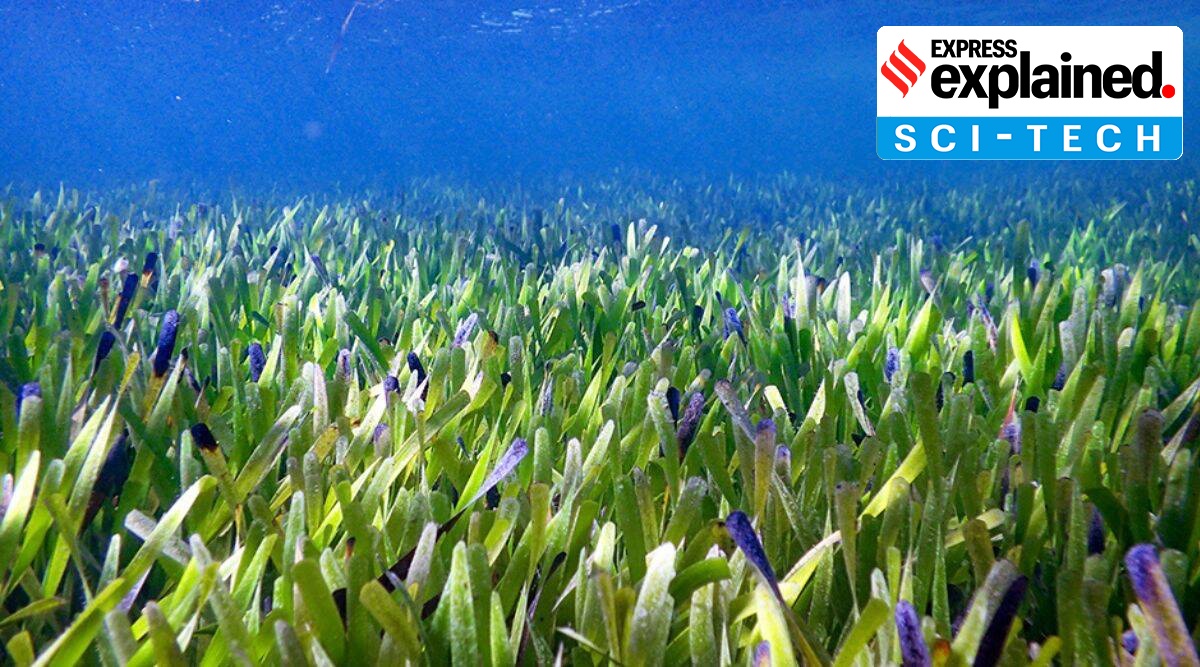 The seagrass Posidonia australis. (Image credit: Rachel Austin/UWA)
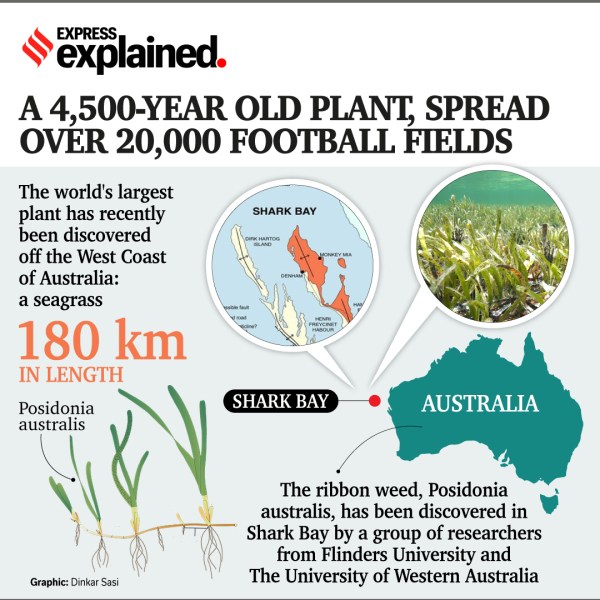
The world’s largest plant has recently been discovered off the West Coast of Australia: a seagrass 180 km in length.
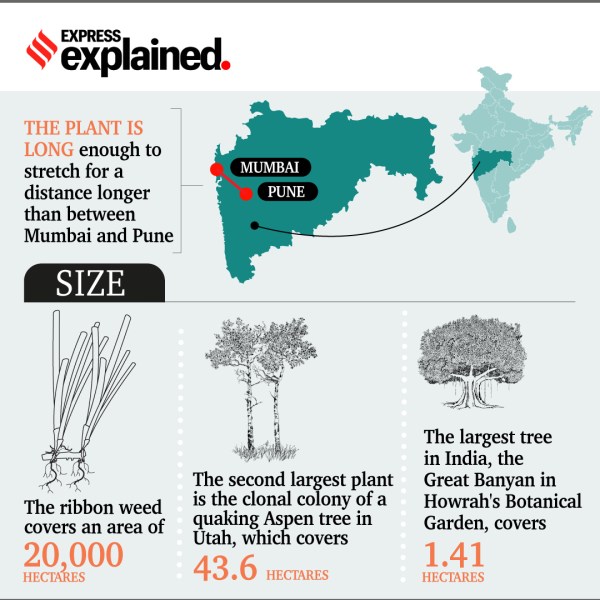
But stretching across 150 km — which is about theA distance between Mumbai and Pune – is not even the only remarkable thing about the plant.
The ribbon weed, or Posidonia australis, has been discovered in Shark Bay by a group of researchers from Flinders University and The University of Western Australia. These researchers have also found that the plant is 4,500 years old, is sterile, has double the number of chromosomes than other similar plants, and has managed to survive the volatile atmosphere of the shallow Shark Bay.
So how remarkable is this plant’s size?
The ribbon weed covers an area of 20,000 hectares. The next on the podium, the second largest plant, is the clonal colony of a quaking Aspen tree in Utah, which covers 43.6 hectares. The largest tree in India, the Great Banyan in Howrah’s Botanical Garden, covers 1.41 hectares.
If it is so large, how come it has just been discovered?
The existence of the seagrass was known, that it is one single plant was not. Researchers were interested in what they then thought was a meadow because they wanted to study its genetic diversity, and collect some parts for seagrass restoration.
The University of Western Australia quotes UWA student researcher and lead author of the study, Jane Edgeloe, as saying that the team “sampled seagrass shoots from across Shark Bay’s variable environments and generated a ‘fingerprint’ using 18,000 genetic markers.”
“The answer blew us away – there was just one!” Edgeloe was quoted as saying. “That’s it, just one plant has expanded over 180km in Shark Bay, making it the largest known plant on earth.”
The findings were published in the journal Proceedings of the Royal Society B.
How did it grow, and survive for, so long?
Sometime in the Harappan era, a plant took root in the Shark Bay. Then it kept spreading through its rhizomes, overcoming everything in its way, and here we are today.
Ribbon weed rhizomes can usually grow to around 35cm per year, which is how the scientists arrived at its lifespan of 4,5000 years.
The researchers found that the ribbon weed cannot spread its seeds, something that helps plants overcome environmental threats. Also, Shark Bay sees fluctuations in temperature and salinity and gets a lot of light, conditions challenging for any plant.
Yet the ribbon weed has managed to survive, and a part of the reason may be that it is a polyploid – instead of taking half-half genome from both parents, it took 100 per cent, something not unheard of in plants. Therefore, this ribbon weed has twice the number of chromosomes other plants of the same variety have.
“Polyploid plants often reside in places with extreme environmental conditions, are often sterile, but can continue to grow if left undisturbed, and this giant seagrass has done just that,” the University of Western Australia quoted Dr Elizabeth Sinclair, a senior author of the study, as saying.
All that is cool, but why should I be excited about some grass in Australia?
Because seagrass performs a vital role in the environment, and if some of it is hardy, it is good news for everyone in a world threatened by climate change.
In India, seagrass is found in many coastal areas, most notably in Gulf of Mannar and Palk Strait. Apart from being home to a variety of small organisms, seagrass trap sediments and prevent water from getting muddy, absorb carbon from the atmosphere, and prevent coastal erosion.
The Shark Bay ribbon, thus, has served as sinkhole, hospitable city, and firewall for centuries. And it has done all this without mating, so maybe it has one more distinction – being one of the oldest champions of sologamy.
Newsletter | Click to get the day’s best explainers in your inbox