4 min read
© IE Online Media Services Pvt Ltd



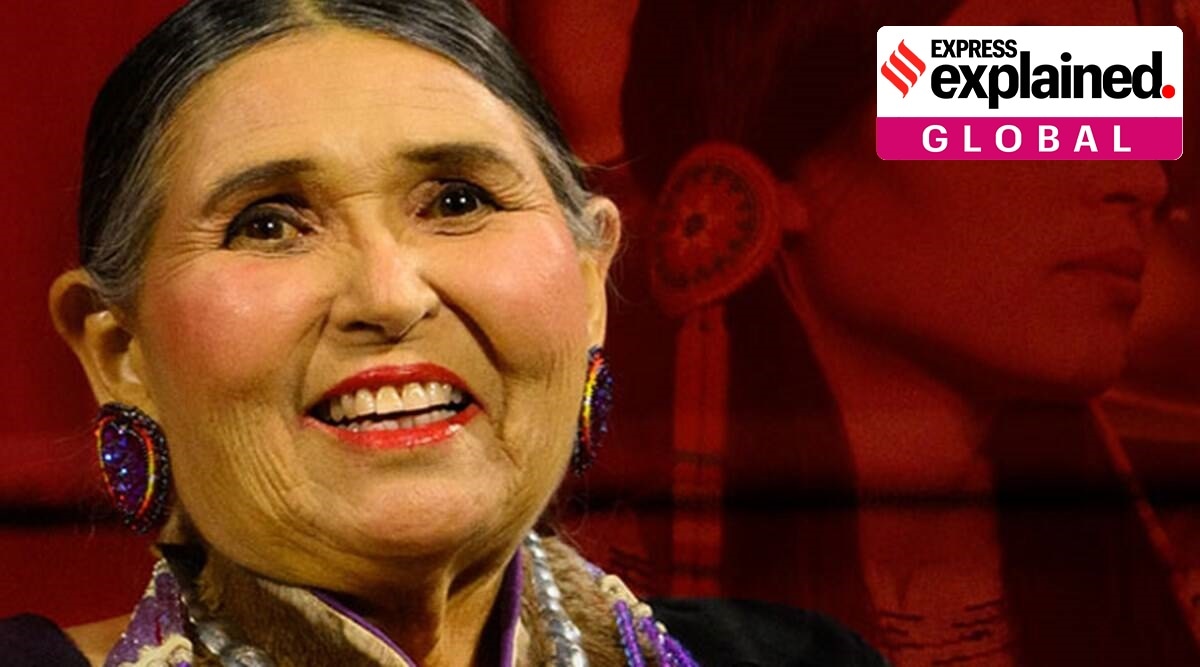 Sacheen Littlefeather was 75. (Photo: TheAcademy/Twitter)
Native American actor and activist Sacheen Littlefeather, known for declining the best actor award on behalf of Marlon Brando at the 1973 Oscars and making a statement against the misrepresentation of her community in the entertainment industry, died on Sunday, aged 75.
Littlefeather was booed off the stage when she made her speech. Earlier this year, a full five decades after the incident, the Academy of Motion Pictures Arts and Sciences apologised to her.
In a letter addressed to the actor, David Rubin, President of the Academy, called the abuse “unwarranted and unjustified”. He wrote, “The emotional burden you have lived through and the cost to your own career in our industry are irreparable.”
Two weeks ago, Littlefeather was honoured her at a ceremony in Los Angeles.
“I went up there, like a proud Indian woman with dignity, with courage, with grace, and with humility,” BBC quoted her as saying at the event. “I knew that I had to speak the truth. Some people may accept it. And some people may not.”
What happened to Sacheen Littlefeather at the Oscars?
In 1973, Littlefeather, then 26, became the first Native American woman to take the stage at the Academy Awards. Wearing a traditional buckskin dress, she appeared on behalf of Marlon Brando, who had won the best actor award for The Godfather. Brando had boycotted the award show that year to protest against the industry’s portrayal of the Native American tribes of the US.
In an iconic 60-second speech — the first political statement ever made at the Oscars — Littlefeather said that Brando could not accept the award because of “the treatment of American Indians today by the film industry”. In her speech, she addressed the stereotypes about her community that had been perpetuated by the entertainment industry and also talked about the Wounded Knee protests led by Native Americans in South Dakota.
Her brief address was met with jeers and a smattering of applause from the audience. After the event, she struggled to find work in the industry.
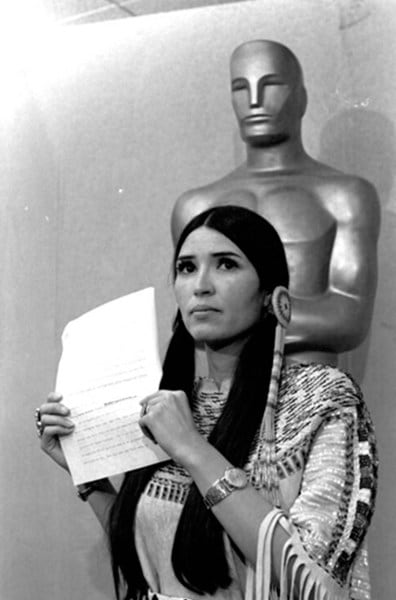 Sacheen Littlefeather, a Native American activist, tells the audience at the Academy Awards ceremony in Los Angeles, March 27, 1973, that Marlon Brando was declining to accept his Oscar as best actor for his role in “The Godfather.” (AP)
In an interview with the BBC in 2020, Littlefeather said she was escorted off the stage by two security guards. Several people were seen using the ‘Tomahawk chop’ — a derogatory arm-waving gesture considered racist and dehumanising for Native American people.
After Littlefeather’s speech, Oscar rules were changed and winners are no longer allowed to send someone on stage on their behalf.
After the Academy apologised in August, Littlefeather said, “Regarding the Academy’s apology to me, we Indians are very patient people—it’s only been 50 years! We need to keep our sense of humor about this at all times. It’s our method of survival.”
What were the Wounded Knee protests?
About a month before the award show, on February 27, 1973, members of the American Indian Movement (AIM) led around 200 Sioux Native Americans to the Pine Ridge Reservation in South Dakota, where they occupied Wounded Knee, the site where nearly 300 Sioux were massacred by the US Cavalry in 1890.
For 71 days, the AIM protestors stood their ground, trading gunfire with federal officials who had surrounded the site. On May 8, the protestors surrendered after US officials promised to investigate their complaints. While two AIM leaders, Russell Means and Dennis Banks, were arrested, a federal judge dismissed the charges against them due to the government’s illegal handling of both evidence and witnesses during the stand-off.
Violence continued on the Pine Ridge reservation for years after the Wounded Knee protests. Ultimately, the AIM was disbanded in 1978.