4 min read
© The Indian Express Pvt Ltd



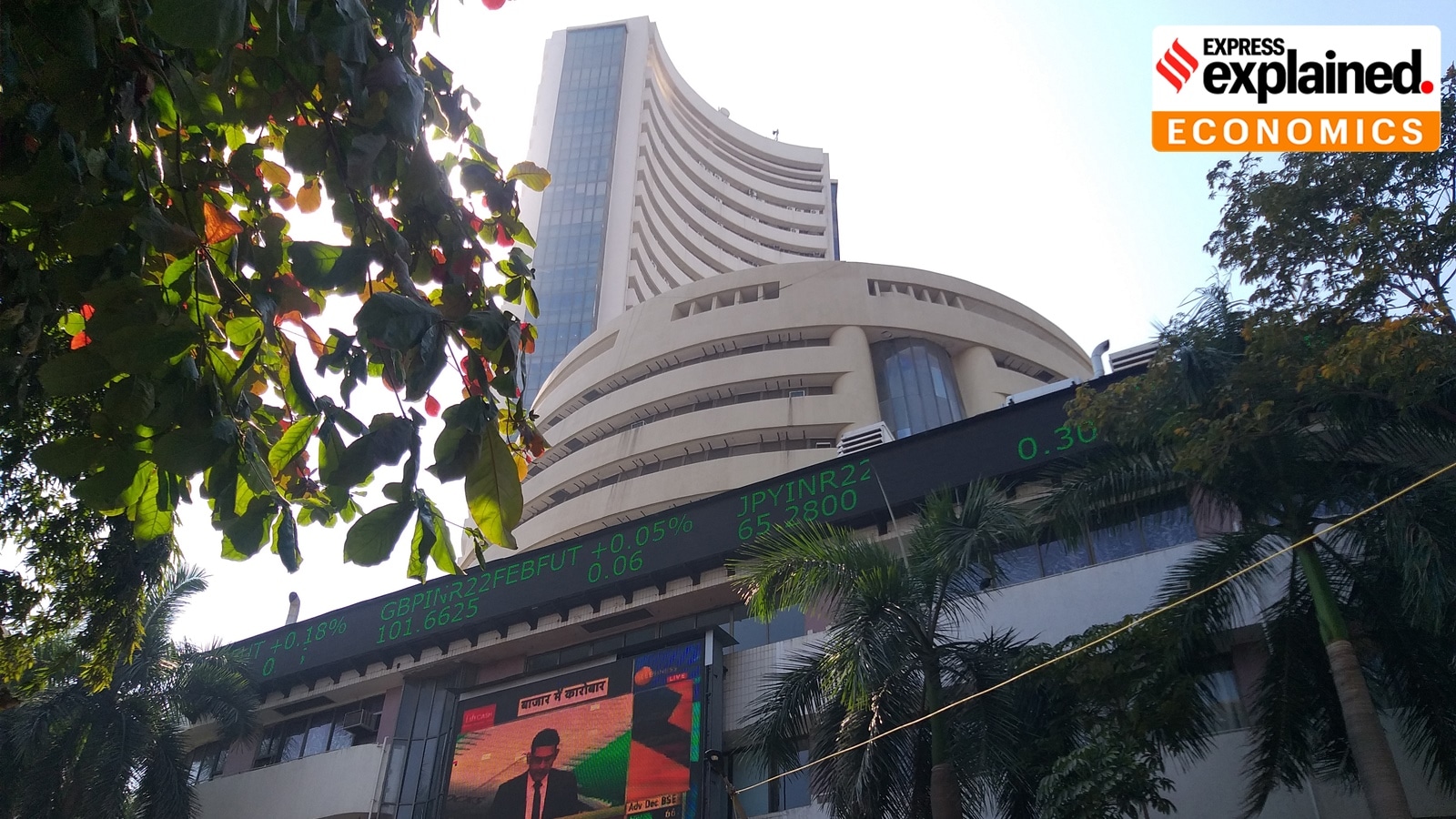 The dip came after Christopher J Waller, governor of the Federal Reserve System, on Tuesday, suggested that there was less urgency for a rate cut. Investors were earlier expecting that the reduction in interest rate by the US Fed would start from March this year. (Representational image/ Express Photo By Ganesh Shirsekar)
Domestic equity indices fell sharply by over 1.7 per cent on Wednesday (January 17), after a US Federal Reserve official hinted that while the interest rate may be cut this year, the change in policy path needs to be calibrated and not rushed.
Domestically, concerns over the valuation of stocks and anticipation of correction in prices also weighed on the investors’ sentiments.
The Sensex and the Nifty opened a gap down on Wednesday. While the 30-share Sensex opened 1,130 points down at 71,998.93, the broader Nifty 50, lost 385 points to open at 21,647.25.
In the afternoon trades, the Sensex was trading at 71,776.8, down 1.85 per cent, or 1,351.97 points, and the Nifty 50 declined by 1.73 per cent, or 382.1 points, to 21,650.2.
The Nifty Bank tanked 3.83 per cent or 1,825.7 points, to 46,299.4, mainly due to a sharp fall in HDFC Bank. The HDFC Bank’s scrip fell 7 per cent to Rs 1,564.8 apiece, a day after it declared its results for the quarter ended December 2023.
The other NSE companies that declined the most include Kotak Mahindra Bank, Axis Bank, ICICI Bank and Tata Steel.
The fall in both the benchmark indices comes two days after the Sensex and the Nifty touched an all-time high of 73,327.94 and 22,097.45, respectively. The rise was driven by buying in information technology (IT) stocks.
The selloff in both the benchmark indices was seen after Christopher J Waller, governor of the Federal Reserve System, on Tuesday, suggested that there was less urgency for a rate cut. Investors were earlier expecting that the reduction in interest rate by the US Fed would start from March this year.
“Market is likely to turn slightly weak in the near-term, getting impacted by some negative global and domestic cues. The global negativity will come from the rising bond yields in the US (the 10-year yield is at 4.04 per cent) responding to concerns that the sharp rate cuts expected from the Fed this year may not materialise,” said V K Vijayakumar, Chief Investment Strategist, Geojit Financial Services.
Now indications are that the US Fed is unlikely to cut in March and the total cuts in 2024 may not be five or six that the market had partly discounted.
“This will be a drag on global equity markets,” he said.
What did the Federal Reserve official say?
In a speech delivered at The Brookings Institution, Washington, DC, on Tuesday, Governor Waller said the data that have been received in the last few months is allowing the committee to consider cutting the policy rate in 2024.
“However, concerns about the sustainability of these data trends require changes in the path of policy to be carefully calibrated and not rushed,” he said.
In its December policy, the US Federal Reserve while keeping the key interest rate unchanged at 5.25-5.5 per cent, hinted at rate cuts in 2024. The US central bank signalled that they expect to make three quarter-point cuts to their benchmark interest rate in this year.
What domestic factors led to fall in markets?
Domestically, even though the economy is doing well and corporate earnings are good, all these positives are in the price and the valuations are elevated warranting a correction, said Vijayakumar of Geojit Financial Services.
The mid and small cap space is highly overvalued and is sustaining at high levels only by the high liquidity in the system. Some profit booking and moving the money to fixed income can be considered now, he said.