7 min read


© The Indian Express Pvt Ltd



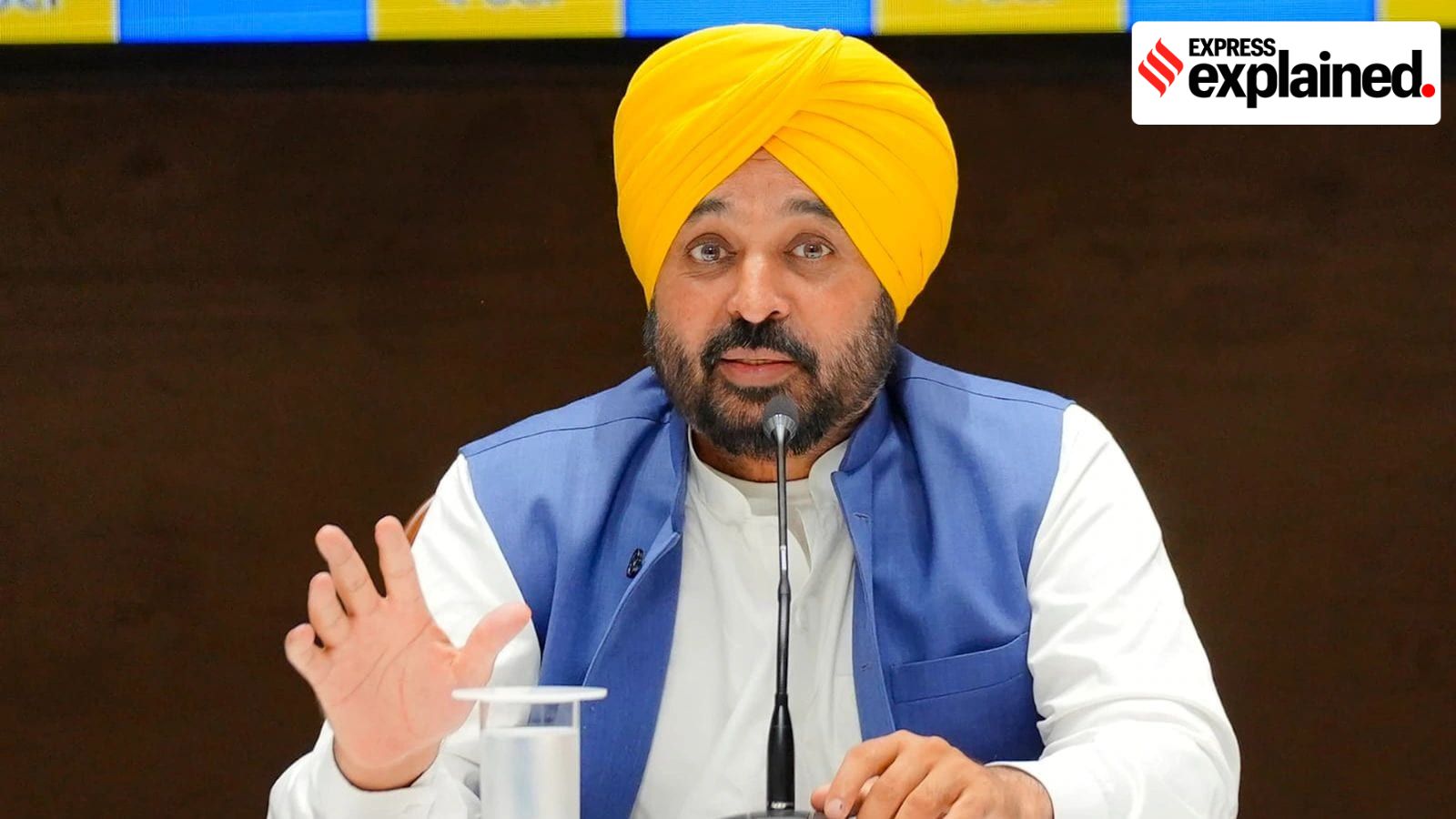 While the AAP government in Punjab has claimed that this is the first such policy in the country, reports suggest that a few other digital universities have been opened in other states too, but without any such detailed policy framework. (Photo: File)
The Aam Aadmi Party (AAP)-led Punjab government on Thursday (January 15) notified the Punjab Private Digital Open Universities Policy, 2026, claiming that it was “India’s first such policy”. The policy allows the private sector to set up “digital universities” in Punjab, facilitating students to complete their entire degree from home via online education, without attending any physical classes. The AAP government has termed the policy as “historic reform” in the country’s higher education landscape.
What is a ‘digital open university’?
The broad objective of a private digital open university is “to provide teaching and training in higher education through digital, online, distance or open modes, and to make provisions for research, innovation through technology-enabled systems”.
The digital university will “offer programmes of study at the undergraduate, postgraduate and professional levels through online classes, digital assessments, virtual laboratories and other technology-enabled tools’ by overcoming separation of teacher and learner using internet”.
According to the official note of the Punjab government, the need for the policy was felt due to “rapidly evolving educational landscape driven by digital technologies and need for flexible learning options”. It adds that “the department of higher education had already started receiving proposals for the establishment of Private Digital Open Universities in Punjab.”
Also, it is significant for women who want to resume their studies from home, notes the policy.
While the “the University Grants Commission (UGC) already permits digital and online universities” under its 2020 regulations, the existing Punjab Private Universities Policy, 2010, does not cover digital universities.
The policy has been approved to “regulate and promote” private digital open universities… and expand access to flexible education”.
Will the Punjab government make any financial contribution to establish digital universities?
No, the policy categorically and clearly states that the entire investment has to be made by private parties who will show interest in establishing digital universities in Punjab.
The policy aims to “attract quality private investment in online education without any financial burden on the state,” says the official brief. “Fully self-financed universities will generate processing fee revenue for the Higher Education Department with no fiscal burden, hence positioning Punjab as a pioneer digital learning hub.”
What are the conditions that private parties have to fulfil?
The policy states that the interested private players must “have five years of credible experience in online learning”, maintain a Corpus Fund of at least Rs 20 crore, and a processing fee of Rs 5 lakh has to be submitted to Punjab’s department of higher education along with the application. Once the approval is received, another Rs 20 lakh has to be paid to the government.
The policy also states that at least 15% of seats in the university will be reserved for Punjab domicile learners, and the Punjab government can impose penalties up to Rs 25 lakh if any of the UGC or other norms would be violated by the private players.
Will digital universities have physical campuses?
Digital universities will have physical campuses, but they will only act as their “headquarters” for administrative purposes. No classes shall be held on the campuses, says the policy. The applicant has to declare the proposed location for the university’s headquarters, details of land ownership, and it should be at least three acres of land for “establishing offices, digital content studio, learner support centres and other tech infrastructure,” says the policy.
“The physical infrastructure requirements prescribed under this Policy are intended solely for administrative, digital production… and shall not be construed as classroom-based teaching infrastructure,” says the policy.
The applicant also has to provide details of “academic and digital infrastructure proposed to be created, virtual lab designs, digital proctored examination systems, cloud hosting, Artificial Intelligence (AI) governance etc”, and the faculty must be qualified as per UGC norms.
Note that there will be a “digital ombudsman”, a person or body appointed by the university to redress grievances of learners (students), says the policy. The university stakeholders will have to submit an undertaking to the Punjab government that they will appoint a “Digital Ombudsman” to redress grievances of students, says the policy.
Once an application is submitted, how will it undergo scrutiny by Punjab government?
The Administrative Department of Higher Education will make a preliminary scrutiny of the proposal, says the policy.
Thereafter, the state’s chief secretary shall constitute a five-member sub-committee headed by the administrative secretary (higher education) and including the vice-chancellor of one state university as a member to review the proposal in detail.
After the approval of the sub-committee, the proposal shall be placed before a high-level committee to be chaired by the chief secretary.
The final approval for issuance of the letter of intent will be accorded “by the Chief Minister, or if deemed appropriate, with the approval of the Council of Ministers”. The letter will be issued only after a payment of Rs 20 lakh is made to the Department of Higher Education by the private player, as per the notified policy.
Can a digital university affiliate with any college or open other distance learning centres?
No. The policy says, “A University shall operate from a single notified digital campus, comprising of its administrative headquarters. The University shall not affiliate any colleges, centres or institutions other than those owned and managed by the same sponsoring body and located within the approved campus premises. No off-campus centre shall be established by the University.”
What action can Punjab government take if the university violates UGC or other norms?
The state government can “suspend or withdraw the recognition of the University”, states the policy. “The University shall offer only such programmes that are duly recognised or approved by the UGC, and wherever applicable, by the All India Council for Technical Education (AICTE),” it says.
“Fifteen percent (15%) of the approved intake in each programme shall be reserved for candidates domiciled in the State of Punjab. The fee structure shall be determined by the University but must be transparent and reasonable,” it adds.
Based on any complaint or suo moto, an inquiry can be conducted against the university, and thereafter, financial penalties up to Rs 25 lakh can be imposed by the government, and fresh admissions can also be barred, says the policy.
Is it the first such policy in the country for private digital universities?
While the AAP government in Punjab has claimed that this is the first such policy in the country, reports suggest that a few other digital universities have been opened in other states too, but without any such detailed policy framework.
The Digital University Kerala, started by the Kerala government, the National Digital University, launched by the Centre, and NIELIT Digital University, launched by the Ministry of Electronics and IT, are some of the examples.