Premium

What to know about the DBSE rollback of admissions to its specialised schools

The DBSE, launched in 2021, and hailed as a flagship programme of the AAP government, claimed to follow an "inquiry-based approach, context-based learning and experiential learning", and uses an “evolving curriculum”. Here is what to know.

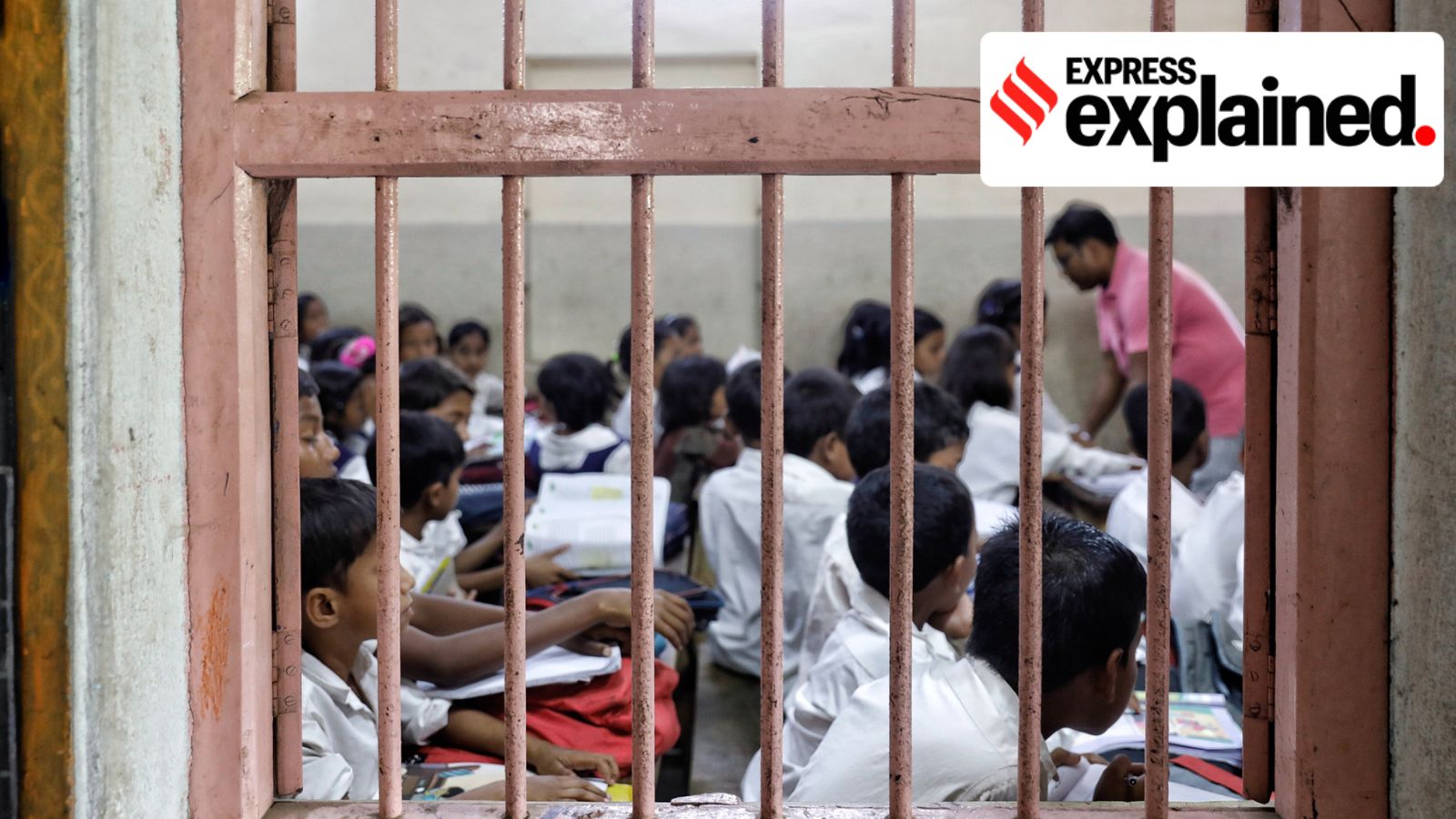
DBSEOfficial documents show that all government schools in the capital were once earmarked to be DBSE-affiliated. (Representative Photo - Partha Paul)

The Delhi Education Department announced that it will enrol successful candidates for admissions to Class 9 under the CBSE and not under its own state board, the Delhi Board of School Education (DBSE).

The move will impact the incoming batch of students in its Schools of Specialised Excellence (SOSEs). However, admissions to other classes in these schools, including Classes 10, 11 and 12, are slated to continue under the DBSE. This has generated confusion about academic planning, classroom preparedness, and clarity on the curriculum.

Official documents show that all government schools in the capital were once earmarked to be DBSE-affiliated.

Sources in the BJP said that the decision to replace the state board with the CBSE stemmed from concerns over the existence of two parallel education boards in the state. According to the party, having a uniform, single board is much more efficient.

However, the AAP alleges this is “a politically motivated step”. According to the party, the DBSE was developed to align with the National Education Policy 2020 and reduce the dropout rate by offering an alternative to the expensive CBSE framework, and encourage school students to take up entrepreneurship. “…the BJP government has not given any academic justification of why it is opposed to DBSE,” the party told The Indian Express.

What is DBSE?

Introduced in March 2021, DBSE is the state board of Delhi, and the first in India to align with the National Education Policy, 2020. The Association of Indian Universities (AIU) granted it equivalence, putting it on par with the CBSE and other state boards. It is included in the list of recognised state boards by the Council of Boards of School Education (COBSE).

The DBSE focused on “understanding and learning rather than scoring marks by rote learning”. The launch of the new board was not free of challenges as it coincided with the COVID-19 pandemic.

Story continues below this ad

In August 2021, it entered into a year-long partnership with the International Baccalaureate (IB), a private international education board, “to inculcate cutting-edge pedagogy and assessment tools in the schools of Delhi”, as per the Economic Survey of Delhi, 2023-24.

The Arvind Kejriwal-led Aam Aadmi Party (AAP) government had hailed the DBSE as a flagship programme and a key part of Delhi’s “revolutionary” education model.

And what are ASOSEs?

When the DBSE was launched, several CBSE-affiliated Rajkiya Pratibha Vikas Vidyalayas (RPVVs) were rebranded Dr B R Ambedkar Schools of Specialised Excellence (ASOSEs). These were made DBSE-affiliated, offering specialised skill-based learning for Classes 9 to 12. DBSE-affiliated ASOSEs have grown from 20 in 2021 to 37 this year.

How do schools under the DBSE function?

Story continues below this ad

The board has developed curricula for foundational and specialised subjects at ASoSEs, Delhi Model Virtual School (DMVS) and Schools of Applied Learning (SoALs).

ADMISSIONS:

Admissions to DBSE-affiliated schools are based on an aptitude test. Subsequently, students undergo continuous assessment. These may be:

  • Classroom formative assessments, led by teachers and done according to student requirements.
  • Formal unit plan-based formative assessments, which do not count in the final grade point,but provide structured feedback to the students.
  • Tests such as readiness assessments, done on a half-yearly basis to evaluate the student’s preparedness for the end-term assessment. (These are not counted towards final grade points.)
  • Internal assessments according to a teacher’s unit plan.
  • End-of-term assessments that contribute to a student’s scores.

Previously, only students from government schools were admitted to RPVVs. Admissions to ASOSEs are open to private school students who are residents of Delhi. Senior officials in the Education Department claim that the board has helped increase accessibility and affordability overall.

SUBJECTS:

Students in classes 9 and 10 across all DBSE-affiliated schools get to study languages, including foreign languages such as Spanish, French, German and Japanese, alongside academic subjects, which include Digital Design and Entrepreneurship Mindset.

Story continues below this ad

ASOSEs offer specialised subjects in four major domains: Science, Technology, Engineering, Mathematics (STEM), Humanities, Performing and Visual Arts, and High-end 21st Century Skills. These subjects include coding, electromechanical production, robotics, legal studies, film and acting, among others.

Applied Subjects are taught in Schools of Applied Learning under the DBSE and include courses like financial management, mechatronics, fashion studies, culinary, hospitality and tourism.

The DBSE claims to follow an “inquiry-based approach, context-based learning and experiential learning”, and uses an “evolving curriculum”.

Sophiya Mathew is a Correspondent at The Indian Express, based in New Delhi. She joined the Delhi bureau in 2024, and has specialization in Integrated Multimedia Journalism from the Asian College of Journalism (ACJ), Chennai. Professional Background Core Beats: Her reporting is primarily focused on the Environment and Education. Specialization: She has gained recognition for her ground-level reporting on the Yamuna floodplains and the socio-economic challenges faced by those living on its banks. She also focuses on the disparities in Delhi's education system, ranging from elite private schools to government institutions and refugee education. Recent Notable Articles (December 2025) Her recent work has been heavily centered on Delhi's severe winter pollution crisis and the government's regulatory responses: 1. The Air Pollution Crisis "A tale of two cities: Delhi govt schools choke in bad air, private classrooms set up air filters" (Dec 20, 2025): A high-impact feature contrasting the "Clean Air Bubbles" in elite schools with the reality of government school students who are exposed to an equivalent of 17 cigarettes a day due to outdoor exposure. "Delhi sees season's worst air day, second worst December AQI in nearly a decade" (Dec 15, 2025): An analytical report on the meteorological patterns trapping pollutants in the NCR. "Delhi bans non-BS VI vehicles from outside: Why curbing vehicular pollution is key" (Dec 17, 2025): Explaining the science behind targeting specific vehicle vintages to lower particulate matter. 2. Enforcement & Regulations "No fuel at pumps in Delhi without valid PUC certificate from December 18" (Dec 17, 2025): Breaking the news on the environment ministry's strict "No PUC, No Fuel" policy. 3. Education Policy "Law to regulate school fee in Delhi risks becoming procedural, say parents" (Dec 13, 2025): Investigating the loopholes in the new Delhi School Education (Transparency in Fixation and Regulation of Fees) Bill, 2025. "Monsoon Session: Private school fee regulation Bill cleared after four-hour debate" (Aug 9, 2025): Covering the legislative passage of the controversial fee hike regulation. Signature Style Sophiya is known for her observational depth. Her reporting often includes vivid details from school corridors, hospital waitlists, or the banks of the Yamuna to illustrate how policy failures affect the city's most vulnerable residents. She is a frequent expert guest on the 3 Things podcast, where she explains the complexities of Delhi’s environmental laws. X (Twitter): @SophiyaMathew1 ... Read More


 

Latest Comment
Post Comment
Read Comments
Advertisement
Advertisement
Advertisement
Advertisement