4 min read
Click here to follow Screen Digital on YouTube and stay updated with the latest from the world of cinema.
© IE Online Media Services Pvt Ltd



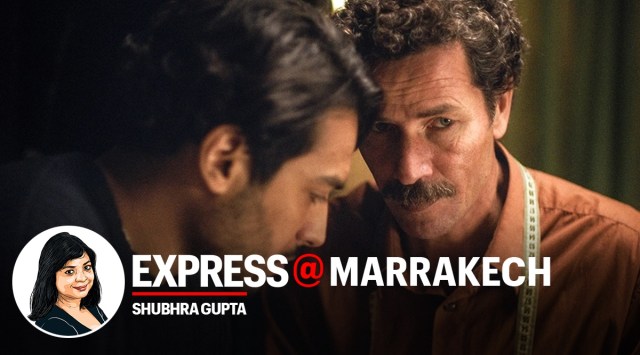 The Blue Caftan is director Maryam Touzan's second feature film.
One of the best things about travelling to another part of the world for a film festival is to start an appreciation of the cinema of the region. While one has had several opportunities to savour curated streams of cinema from the Arab and African countries (at New Delhi’s now-deceased, much-missed Osian’s Cinefan Film Festival, an entire generation of cinephiles got their first taste of films from Asia and Africa) in film festivals in India and the Middle East countries, this is my first visit to Morocco. And from what I’ve been able to see and hear at the 19th edition of the Marrakech film festival, it seems like an outlier in North Africa’s Maghreb region bordering the Mediterranean, more open, accommodating, and accepting of diverse nationalities than its neighbours.
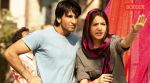
Of the four tributes organised by the festival (Ranveer Singh, James Gray, Tilda Swinton and Farida Benlyazid) it is the latter which seems most timely and fitting. Benlyazid, 74, is a pioneer. Her bio reads ‘director, producer, screenwriter, novelist, journalist’: clearly, her journey as artist chronicling the life and times of her people, with a special focus on women and their well-being, has had an indelible impact on younger women filmmakers in Morocco. Laila Marrakchi (on the jury in this edition), Leila Kilani, Narjiss Nejar, and even Lebanon’s Nadine Labaki, also on this year’s jury, are forging ahead on the way paved by Benlyazid.
Your ear quickly gets attuned to the languages people speak here, with most people proficient in Arabic and French: at the festival, English is mostly seen in subtitles. But no language is needed to understand the glowing Benlyazid when she stepped on stage to thank the festival organisers, as well as Morocco’s royal benefactors who are film buffs and big supporters of cinema. She spoke of the beauty of oral traditions, handed down from one generation to the other, as something that powered women in Morocco. And she had a succinct piece of advice for the younger bunch who follow her path: it’s hard, but exciting. Keep going.
Seen in this light, ‘The Blue Caftan’, the Moroccan film nominated for the 2023 Oscars, feels like a major advance. The story of a gay middle-aged tailor with a shop in one of Morocco’s oldest medinas the city of Sale, and his beautiful, terminally-ill wife, is not only about abiding love, but also about a deep, unspoken understanding between two people who are committed to each other, till death do them part. Halim, who uses his hands (no machines for him) to craft exquisite embroidered caftans, has been in the closet for everyone but his wife, his forays to the local ‘hamaam’ used for the occasional assignation.
View this post on Instagram
For a society which prefers that sexual orientation be kept behind closed doors, director Maryam Touzan’s second feature is a brave acknowledgement that desire cannot always be confined: Halim’s long-time restraint is heavily tested when handsome apprentice Youssef, who joins his shop, starts responding to the former’s longing glances. In one of the most affecting scenes in the film, the almost-at-the-end-of-her-time-Mina, who knows her husband much more than he thinks she does, draws the younger man into their embrace. Just that small action is both release and benediction, telling us that life can, and does go on.
Click here to follow Screen Digital on YouTube and stay updated with the latest from the world of cinema.