This is an archive article published on November 26, 2022
Actor Vikram Gokhale passes away in Pune at 77
Over the decades, Vikram Gokhale gave stellar performances in a range of roles in prominent Hindi films such as Bhool Bhulaiyaa, Traffic, Hichki and Ab Tak Chhappan.
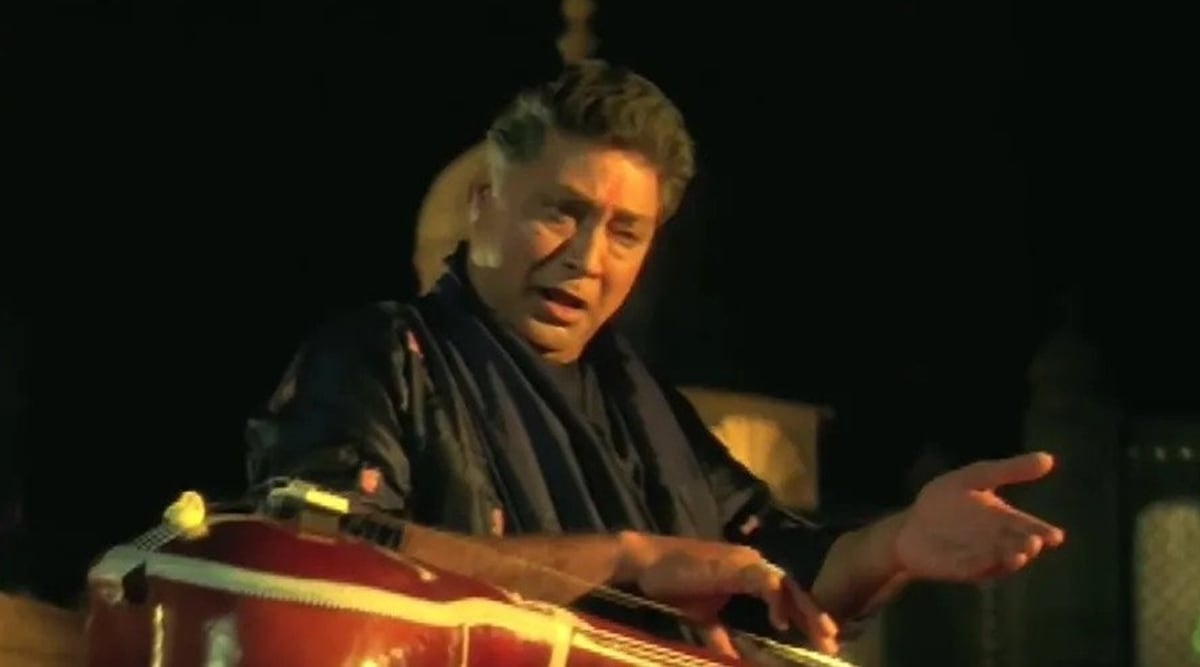
The unemployed father of a Muslim hoodlum at a time of communal unrest in the 1989 film Salim Langde Pe Mat Ro, a vocalist who has strict ideas about whom his daughter should marry in the 1999 film Hum Dil De Chuke Sanam, an elderly man whose world comes crashing when he realises that his wife is dying in Anumati (2013), the Director of ISRO and friend of the late scientist and President APJ Abdul Kalam in 2019’s Mission Mangal — the actor Vikram Gokhale had essayed a range of powerful protagonists on stage and screen in a career that spanned a lifetime. In 2013, he won the National Award for best actor at the 60th National Awards for Anumati, a Marathi film. The thespian passed away on Saturday at the age of 77 at Deenanath Mangeshkar hospital in Pune. He is survived by wife Vrushali and daughters Asavari and Neha.
Gokhalewas admitted for a fortnight at the hospital and had become critical requiring ventilator support. Vrushali had earlier issued a statement — “Mr Vikram Gokhale has been critical for the last 24 hours. Doctors are trying their best. He is not responding to the treatment as expected. He has multi-organ failure.” The actor had showed signs of improvement in last two days and, according to hospital authorities, had opened his eyes and was moving his limbs. “His condition deteriorated on Saturday morning and he passed away at 1.45 pm,” his close friend Rajesh Damle said
From politicians such as Maharashtra Chief Minister Eknath Shinde, Deputy Chief Minister Devendra Fadnavis, BJP MP Prakash Javadekar and MNS leader Raj Thackeray to personalities from diverse fields, such as Harsha Bhogle and Manoj Bajpayee, fans took to social media to remember the legend.
Gokhale had started his journey on the Marathi stage and been awarded the Sangeet Natak Akademi Award for acting in theatre in 2011. He stepped into films in 1971 with Parwana, which also featured Amitabh Bachchan. The two developed a relationship of respect and long-lasting friendship, going on to share the screen in Agneepath (1990), Khuda Gawah (1992) and AB Aani CD (2020) as well. Over the decades, Gokhale gave stellar performances in a range of roles in prominent Hindi films such as Bhool Bhulaiyaa, Traffic, Hichki and Ab Tak Chhappan. His oeuvre of Marathi films ranged from Lapandav, Aamhi Bolato Marathi and Kalat Nakalat to AB Aani CD, Prawaas and Natsamrat. His last film, still in the theatres, is Godavari in which he plays dementia-ridden grandfather of the lead protagonist. Gokhale has also acted in and directed the Marathi film Aaghat. In recognition of his contribution to cinema, the actor was honoured with the Vishnudas Bhave Award in 2015 by the Akhil Maharashtra Natya Vidya Mandir.
In 2011, writer and director Gajendra Ahire had approached Gokhale with a script. “I have brought you the National Award,” he told the veteran. “He scolded me, saying that I should not talk in this way. But, after he read the script, he agreed there was ‘something’ in the role. He won the National Award and well the Best Actor award in New York for it,” says Ahire about Anumati. Ahire and Gokhale had forged a relationship that went back to the former’s play, Aaicha Ghar Unhacha, in 1992, which Gokhale had seen and appreciated. “Since then, we have worked on 10-12 projects,” says Ahire.
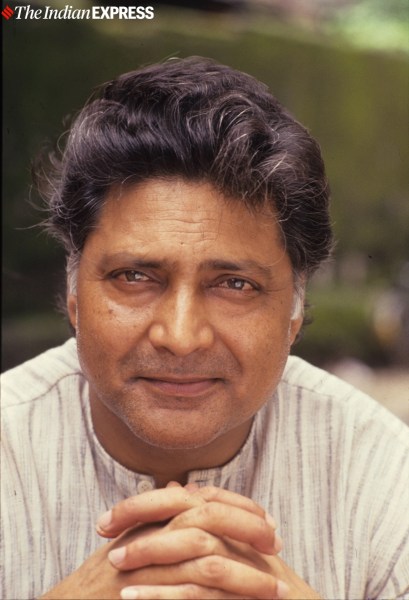
Vikram Gokhale is survived by his wife Vrushali Gokhale, and two daughters. (Photo: Express Archives)
What filmmakers would like to drive home is that Gokhale’s art cannot be measured by awards alone. Ahire says that when they were shooting for Nilkant’ Master (2016), Gokhale was recovering from a knee replacement operation. “We had to do a gunfighting sequence. When Gokhale started to shoot, he seemed to forget everything and was rolling on the floor and enacting the scene. After the shoot was done, we realised that his knees had been troubling him that he could barely sit. That’s the kind of performer he was— it was like a switch being flicked on and he would immerse himself in the role,” says Ahire, adding that Gokhale was like a father figure.
Off screen, Gokhale was building new generations of talent at the Vikram Gokhale Acting Academy, located on the Pune-Satara Road. Rajaram Kore, an executive producer of films, who operates the academy, says that he had known Gokhale for 12 years. “Initially, I was afraid to speak to him because of his formidable reputation of being a strict about acting. He had rules and regulations by which he lived. Gradually, I realised that he was warm, loving and kind though he remained a stickler for perfection in his art throughout his life,” says Kore.
Kore adds that Gokhale was dedicated to the training and well-being of his students. “He had a deep knowledge of acting that was the result of study and experience. His particular area of attention was the voice, and we were aware that he was one of the few actors who used to dub for films without looking at the scenes he had shot on screen. He was also acutely aware of body movements and how to operate each body part to bring about a realistic performance. Our academy has students from all socioeconomic sections but nobody is treated differently from the others,” he says.
Away from the public eye, Gokhale was also well-known in the arts community for his support to performers and allied workers in distress. When the pandemic wrought havoc on the livelihoods of those who depended on films, television and advertisements, Gokhale had donated land worth a few crore rupees for their sustenance. Kore recalls that every Raksha Bandhan, the actor and his family would celebrate with specially abled jawans in Pune, continuing a tradition of supporting the forces that had been started by his father Chandrakant Gokhale. “There was swabhiman in the way he lived and worked, and we were the rocker for it,” says Kore.
Dipanita Nath is a Senior Assistant Editor at The Indian Express, based in Pune. She is a versatile journalist with a deep interest in the intersection of culture, sustainability, and urban life.
Professional Background
Experience: Before joining The Indian Express, she worked with other major news organizations including Hindustan Times, The Times of India, and Mint.
Core Specializations: She is widely recognized for her coverage of the climate crisis, theatre and performing arts, heritage conservation, and the startup ecosystem (often through her "Pune Inc" series).
Storytelling Focus: Her work often unearths "hidden stories" of Pune—focusing on historical institutes, local traditions, and the personal journeys of social innovators.
Recent Notable Articles (December 2025)
Her recent reporting highlights Pune’s cultural pulse and the environmental challenges facing the city during the winter season:
1. Climate & Environment
"Pune shivers on coldest morning of the season; minimum temperature plunges to 6.9°C" (Dec 20, 2025): Reporting on the record-breaking cold wave in Pune and the IMD's forecast for the week.
"How a heritage tree-mapping event at Ganeshkhind Garden highlights rising interest in Pune’s green legacy" (Dec 20, 2025): Covering a citizen-led initiative where Gen Z and millennials gathered to document and protect ancient trees at a Biodiversity Heritage Site.
"Right to breathe: Landmark NGT order directs PMC to frame norms for pollution from construction sites" (Dec 8, 2025): Reporting on a significant legal victory for residents fighting dust and air pollution in urban neighborhoods like Baner.
2. "Hidden Stories" & Heritage
"Inside Pune library that’s nourished minds of entrepreneurs for 17 years" (Dec 21, 2025): A feature on the Venture Center Library, detailing how a collection of 3,500 specialized books helps tech startups navigate the product life cycle.
"Before he died, Ram Sutar gave Pune a lasting gift" (Dec 18, 2025): A tribute to the legendary sculptor Ram Sutar (creator of the Statue of Unity), focusing on his local works like the Chhatrapati Shivaji statue at Pune airport.
"The Pune institute where MA Jinnah was once chief guest" (Dec 6, 2025): An archival exploration of the College of Agriculture, established in 1907, and its historical role in India's freedom struggle.
3. Arts, Theatre & "Pune Inc"
"Satyajit Ray, Ritwik Ghatak were not rivals but close friends, says veteran filmmaker" (Dec 17, 2025): A deep-dive interview ahead of the Pune International Film Festival (PIFF) exploring the camaraderie between legends of Indian cinema.
"Meet the Pune entrepreneur helping women build and scale businesses" (Dec 16, 2025): Part of her "Pune Inc" series, profiling Nikita Vora’s efforts to empower female-led startups.
"How women drone pilots in rural Maharashtra are cultivating a green habit" (Dec 12, 2025): Exploring how technology is being used by women in agriculture to reduce chemical use and labor.
Signature Style
Dipanita Nath is known for intellectual curiosity and a narrative-driven approach. Whether she is writing about a 110-year-old eatery or the intricacies of the climate crisis, she focuses on the human element and the historical context. Her columns are often a blend of reportage and cultural commentary, making them a staple for readers interested in the "soul" of Pune.
X (Twitter): @dipanitanath ... Read More


 6 min read




 Vikram Gokhale is survived by his wife Vrushali Gokhale, and two daughters. (Photo: Express Archives)