


Click here to follow Screen Digital on YouTube and stay updated with the latest from the world of cinema.
Premium
This is an archive article published on February 6, 2017
Truth Seekers
In the context of art or movies, specifically, the purpose of which is to entertain, it is acceptable for facts to be reinterpreted by the director. It’s what’s known as artistic license.
Written by Leher Kalla
February 6, 2017 12:30 AM IST 4 min read
4 min read


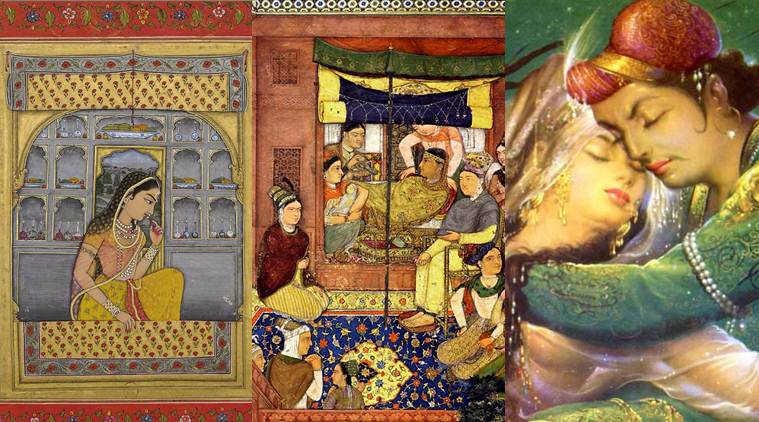 Image for representational purposes.
Film director Sanjay Leela Bhansali and his crew members were viciously attacked by members of the Karni Sena while shooting for Padmavati. In an article posted on their Facebook page promoting Rajput pride, the fringe group (which does not count historians of any kind among it’s esteemed members), says that there is no proof that Alauddin Khilji fell in love with Padmavati, or was her lover. The vandalism began because Bhansali refused to show them the script or quell the rumour of an intimate scene between the characters. Judging by the Karni Sena’s reaction, one would imagine Bollywood has a reputation of relentless fact checking and never deviating from the truth when it comes to period drama. Absolutely nobody goes to watch a Hindi movie as a history lesson. All the greatest films in this genre are heavily embellished, glossing over history’s true colours without a care in the world. Take the very watchable Mughal-e-Azam.
More from the world of entertainment:
If our textbooks are to be believed, the real Salim known to us as Jehangir was a lovable dissolute with a long list of addictions. He led a rebellion against his father for the throne. In his defense, that was a particularly brutal time when territorial expansion and consolidation mattered more than anything else, definitely a lot more than his love life. The film however, ascribes his antagonistic relationship with Akbar to his ardent desire to marry Anarkali.
Indian cinema would have been infinitely poorer if somebody had stopped K. Asif from turning a power struggle within a family into a grand romance.
Countless other films have “distorted” history, if you can forget the fact that history is or always was somebody’s opinion. Does alleged historical inaccuracy invalidate the effort? Like the past, a movie on it is also one version of the truth, disputable, but also indisputable. One part of the world is entering the post-truth era (when political debate is framed by emotion and factual rebuttals are ignored).
In India, meanwhile, dealing with fantastical, past truths has become an extremely delicate exercise. (For example, when a BJP MP declared astrology as the most important branch of science and that lakhs of years ago, sage Kanada had conducted a nuclear test.)
In the context of art or movies, specifically, the purpose of which is to entertain, it is acceptable for facts to be reinterpreted by the director. It’s what’s known as artistic license. “Based on a true story” doesn’t mean it’s wrong to add action and suspense to increase the popularity quotient of the film. No government or organisation has a monopoly on the truth, which, when it comes to events 400 years ago, is highly subjective anyway.
As George Orwell wrote several decades ago, “History is decided by the winners and future generations will most certainly find at least a modicum of truth in it.”
Story continues below this ad
Creation remains the top prerogative of art and it is the job of a filmmaker to be as original as possible. A character drawn from real life about whom little is known may be accessorised with some artificial plumes, and imagined nuances.
It is 35 mm after all. Portraying reality (usually depressing) is for documentarians and journalists. Life would be so boring if even those charged with entertaining us are forced to do so within the strict confines of the truth, whatever that may be.
Advertisement


More Entertainment




Advertisement
PHOTOS


PHOTOS





Top Stories












Must Read







Advertisement
- 01
- 02
- 03
- 04
- 05
Advertisement
