7 min read


© The Indian Express Pvt Ltd



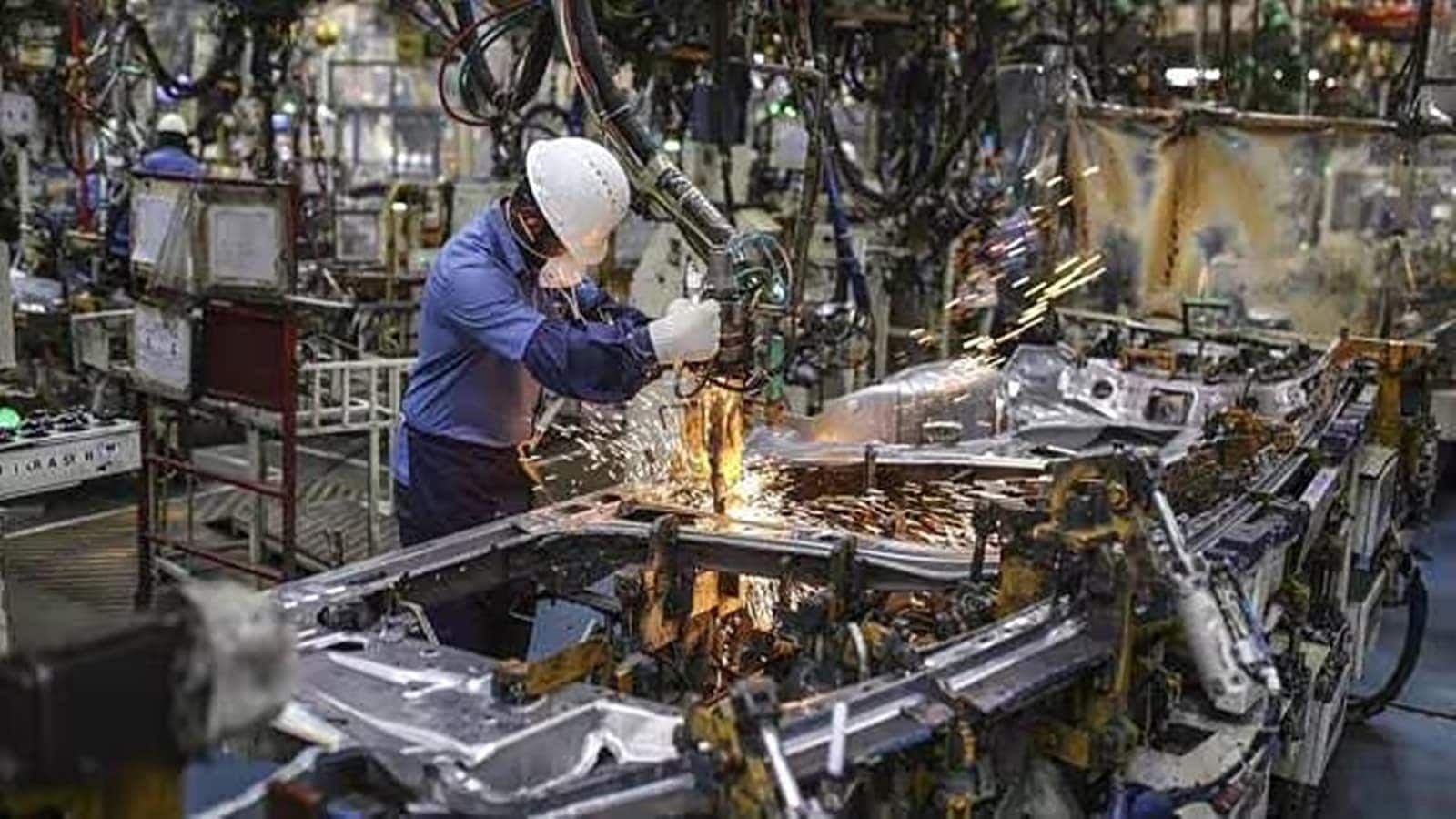 The GDP is calculated by adding net indirect taxes — indirect taxes such as Goods and Services Tax (GST) minus subsidies — to GVA. (representational image)
The Indian economy is likely to have performed better than the Reserve Bank of India’s (RBI) expectations in the second quarter of FY26, according to the median of estimates of 10 economists, with data scheduled to be released on Friday by the Statistics Ministry likely to show that GDP growth in the three months ended September stood at 7.3 per cent. The Indian central bank’s latest forecast pegged growth in July-September at 7 per cent.
While possibly lower than the five-quarter high growth rate of 7.8 per cent in the April-June quarter, another 7 per cent-plus expansion in the July-September quarter — despite the 50 per cent US tariffs that came into effect in late August — would burnish India’s growth story.
“Growth is tracking better than expected with Q2FY26 GDP growth at 7.3 per cent and Q3FY26 GDP getting support from GST cuts. Even before the GST cuts, rural recovery has become more broad-based in Q2, supported by stronger labour market conditions and good crop output. Urban demand has clearly responded to the GST cut with rise in consumer durable consumption expenditure,” Gaura Sen Gupta, IDFC First Bank’s Chief Economist, said in a note on Monday.
Days after the Ministry of Statistics and Programme Implementation (MoSPI) releases the GDP data on Friday at 4pm, the RBI’s Monetary Policy Committee will begin its three-day meeting on December 3 and announce its interest rate decision on December 5. And despite the economy chugging along at a good pace, economists think the central bank may cut the policy repo rate for the first time in six months.
“While such strong growth outcome would otherwise be seen as a deterrent to a rate cut, it is important to note that growth has peaked and H2FY26 (October 2025-March 2026) growth is estimated to be lower than H1 (April-September 2025),” Barclays’ economists Aastha Gudwani and Amruta Ghare said in a note earlier this month. “For a forward-looking, inflation-targeting central bank, we believe the stage is set for the RBI MPC to deliver a 25 basis points (bps) repo rate cut in the upcoming December meeting.”
So far in 2025, the MPC has lowered the repo rate by 100 bps to 5.5 per cent. But with headline retail inflation at record lows – it stood at just 0.25 per cent in October and is seen averaging below 2 per cent in FY26 by a few economists, well below the RBI’s target of 4 per cent – space may have emerged for the committee to cut interest rates further.
The fall in inflation could also make it difficult to read the GDP data for the second quarter in a row. In April-June, low inflation meant nominal GDP growth — or growth without adjusting for price changes — was at a three-quarter low of 8.8 per cent even though the real growth number of 7.8 per cent painted a positive picture of the economy.
The nominal GDP growth rate needs to be monitored for two reasons. Firstly, it is not only tracking below the Finance Ministry’s Budget assumption of 10.1 per cent, but economists are predicting it could be lower than 8 per cent growth — in both the July-September quarter and FY26 — that is required to meet the Budget estimate as per the latest GDP estimate for FY25. A lower than anticipated nominal GDP affects the Budget math, with tax collections not growing as hoped and fiscal deficit and debt-to-GDP ratios being higher than estimated.
Secondly, a slowdown in tax collections will also likely result in GDP growth being lower than the growth in overall Gross Value Added, or GVA. In April-June, GVA growth was 7.6 per cent, 20 basis points lower than the GDP growth rate.
The GDP is calculated by adding net indirect taxes — indirect taxes such as Goods and Services Tax (GST) minus subsidies — to GVA. So, if net indirect taxes fall or their growth slows down, GDP growth would be lower than the rise in GVA. Back-of-the-envelope calculations show the government’s net indirect taxes fell on a year-on-year basis in Q2 compared to a 10 per cent rise in Q1. According to State Bank of India Research, GDP growth in the second quarter may be 7.5-8 per cent, while GVA growth is seen at 8 per cent.
The reduced GST rates may have only come into effect towards the end of Q2 on September 22, but the surge in demand in the final few days of that month — in conjunction with other factors such as low inflation — may have lifted private consumption by 8 per cent, according to Paras Jasrai, Economist and India Ratings & Research. This would be the highest since the 8.1 per cent increase in Q3FY25.
In addition to retail inflation averaging a mere 1.7 per cent in Q2FY26 and rural agricultural wages growing by almost 6 per cent, Jasrai sees a potential boost in demand from the impact of the personal income tax cuts announced in the Union Budget for FY26 and a healthy 7.8 per cent rise in employee costs of over 500 listed companies. Private demand would have risen more than 8 per cent if not for households delaying purchases ahead of the GST cuts’ rollout.
In Q1FY26, private consumption growth had risen to 7 per cent from 6 per cent in Q4FY25, although it was lower than 8.3 per cent in Q1 that fiscal.
If households had a good three months in terms of their budgeting, so did companies, with Q2FY26 proving to be the best quarter in two years: HSBC analysts found that although sales of listed Indian companies were only 6 per cent higher year-on-year, their profits were up 13 per cent.
Here, inflation again played a big role. Even though retail prices rose 1.7 per cent year-on-year in Q2, wholesale inflation — which is indicative of the increase in inputs costs for producers -– averaged zero over the same period.
“Q2 has witnessed quite a satisfactory financial performance from companies,” noted Bank of Baroda economists last week. “The tariff impact has been seen to a limited extent… It does look like that with continued subdued inflation profit growth will improve. This will help to also get reflected in higher value-added growth which will support GDP growth in the range of 7 per cent for FY26,” they added.
The RBI has forecast a GDP growth rate of 6.8 per cent for the full year.
Despite the personal income tax and GST rate cuts, the private investment picture is not clear, with global trade uncertainty biting hard. But capital expenditure by the Central government remains robust. In Q2, the Centre’s capex was up 31 per cent year-on-year at Rs 3.06 lakh crore.
However, data from investment monitoring firm Projects Today is suggestive of private firms showing greater interest in expanding capacities: 71 per cent of fresh investments in the first half of FY26 were by the private sector, up from 61 per cent in the year-ago period.
In Q1FY26, growth in gross fixed capital formation — a proxy for investments — had cooled to 7.8 per cent from 9.4 per cent in the previous quarter, although it was higher than 6.7 per cent in Q1FY25.