5 min read


© The Indian Express Pvt Ltd



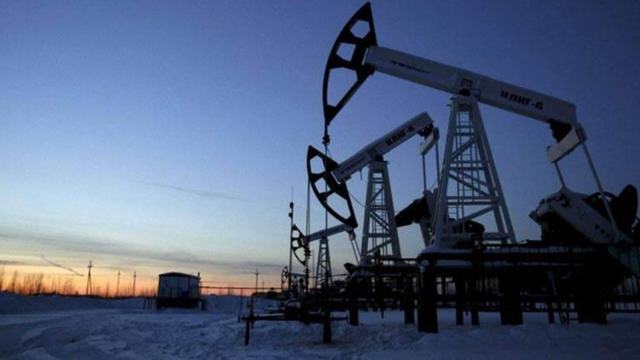 With the exception of Iraq, which is India’s second-largest supplier of crude, oil imports from the other key West Asian suppliers—Saudi Arabia and the United Arab Emirates (UAE)—declined sequentially. (File Photo)
Recent American sanctions on Russia’s oil trade have started to have an impact on India’s crude oil imports from Moscow, which fell to an over two-year low in February. To make up for the lost Russian volumes for now, Indian refiners are actively diversifying their crude oil sources by turning to relatively smaller suppliers from regions like Africa and Latin America, per vessel tracking data.
In January, just before demitting office, the US’s Joe Biden administration announced sweeping sanctions against Russia’s oil trade. It sanctioned as many as 183 tankers—a sizable part of the so-called shadow fleet that had kept Russian oil flowing—apart from sanctioning two Russian oil majors and Russian insurance companies, among others involved in the Russian oil sector and trade. The sanctions have made it difficult for Indian refiners to secure enough cargoes of Moscow’s crude, and they are being forced to look elsewhere to cover the gap.
In February, India’s oil imports from Russia declined 14.5 per cent month-on-month to 1.43 million barrels per day (bpd), the lowest since January 2023, shows data from commodity market analytics firm Kpler. Russia’s share in India’s oil imports declined to around 30 per cent in February, down significantly from the 2024 average of around 38 per cent. But India’s traditional West Asian oil suppliers failed to cash in on the opportunity, while a few smaller players collectively saw their oil supplies to India rise notably to make up for the shortfall in Russian oil volumes.
With the exception of Iraq, which is India’s second-largest supplier of crude, oil imports from the other key West Asian suppliers—Saudi Arabia and the United Arab Emirates (UAE)—declined sequentially. Oil imports from Iraq in February rose 5.5 per cent sequentially to 1.09 million bpd, while imports from Saudi Arabia declined over 6 per cent to 679,372 bpd. India’s oil imports from the UAE fell over 22 per cent in February to 342,076 bpd.
On the other hand, oil imports from relatively smaller sources of India’s oil imports, like Brazil, Nigeria, Colombia, Venezuela, Mexico, Qatar, Oman, Alegria, Republic of the Congo, Libya, and Gabon, rose in February. Some of these smaller suppliers exported oil to India after a gap of a few months. February also saw Argentina appearing on the map of India’s crude oil import sources by supplying around 25,000 bpd.
For instance, India’s oil imports from Nigeria rose to around 76,000 bpd in February from around 40,000 bpd in January, a jump of nearly 90 per cent. Oil import volumes from Colombia jumped 146 per cent sequentially to 71,500 bpd and those from Brazil rose 60.6 per cent to over 145,000 bpd. Imports from Qatar jumped nearly 60 per cent sequentially to around 74,000 bpd, and supplies from Venezuela were higher by 44.4 per cent at over 93,000 bpd.
Suppliers like Gabon, Libya, Algeria and the Republic of the Congo featured on India’s oil import sources list in February after being absent for varying periods. India’s oil imports from these countries ranged between 35,000 bpd and 55,000 bpd in February.
“India is actively diversifying its crude sources, increasing imports from (various countries including) Angola, Brazil, and West African producers to reduce dependency on Russia and mitigate geopolitical risks… India’s crude imports have remained strong to meet rising domestic needs, reinforcing India’s position as a key driver of refined product growth despite expectations of a slower pace compared to 2024,” said Sumit Ritolia, senior oil refining analyst at Kpler.
Industry insiders expect Indian refiners and Russian oil suppliers and traders to adjust to the latest sanctions and devise ways to buy Russian oil without any sanctions risk in the near to medium term. Indian refiners have stated that they are ready and willing to buy Russian oil as long as the transactions, suppliers, traders, shippers, and insurers involved are not under sanctions.
The impact of the recent US sanctions on India’s Russian oil imports has been limited so far. And while Russian oil volumes could drop further in the coming months, industry watchers expect the slide to be range-bound, and Russia to remain India’s largest source of crude in the medium term, unless there are more sudden disruptions or abrupt shifts in trade flows.
A lot will depend on the stance the new Donald Trump administration in Washington takes on Ukraine war-related sanctions on Russia, the discounts available on Russian oil, and how competitively other major suppliers price their crude. In the meantime, India’s strategy of diversifying its source of crude oil is expected to gather steam. Indian refiners are also understood to be looking at raising oil imports from West Asia, provided the oil is competitively priced.