6 min read

© The Indian Express Pvt Ltd



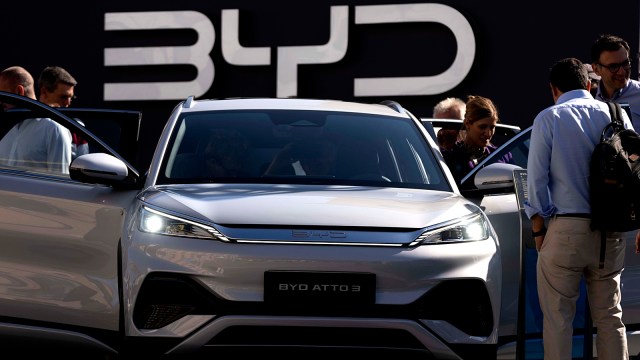 Visitors check the China-made BYD ATTO 3 at the IAA motor show in Munich. (Photo: AP)
Achieving electric vehicle charging speeds comparable to refueling petrol or diesel vehicles has been the elusive next frontier, often cited as the “holy grail” of the EV technological evolution. Shenzhen-based BYD Co. promises to change that, having just unveiled a new battery-charging system for electric cars that the Chinese automaker says will allow some of its cars to charge almost as fast as it takes a regular car to refuel at a fuel pump.
BYD’s new battery and charging system, which it calls the Super e-Platform, could provide 470 km of range in 5 minutes in tests on its new Han L sedan, the company’s Chairman and founder Wang Chuanfu said Monday. The manufacturer will start selling vehicles with the new technology from April.
BYD’s super e-platform
While BYD did not give more details about its new EV platform, its founder Wang said in an event at the carmaker’s headquarters in Shenzhen that the first models to get the ultra-fast charging will be the Han L and the Tang L sport utility vehicle. The new tech will allow these cars to reach a speed of 100 km per hour in 2 seconds, Wang said.
All this means BYD is clearly ahead in the EV leadership game, and is increasing the gap between itself and competitors, especially Tesla, Inc. The promise of the 470 km range with a 5-minute charge places it comfortably ahead of Tesla’s Superchargers, which can add up to 275 km of range in 15 minutes.
Other too are making progress, with Mercedes-Benz Group’s new entry-level CLA electric sedan unveiled last week featuring an 85 kWh battery pack that delivers almost 800 km of claimed range, and with the German carmaker claiming that with its new 800-volt electric architecture, the CLA takes just 10 minutes to recharge and provide a range of 325 km. BYD’s Chinese competitor Li Auto, too claims that it can achieve 500 kilometer of range in 12 minutes with its latest battery sourced from Contemporary Amperex Technology Ltd. or CATL, the world’s biggest battery maker and the main competitor to BYD’s battery business.
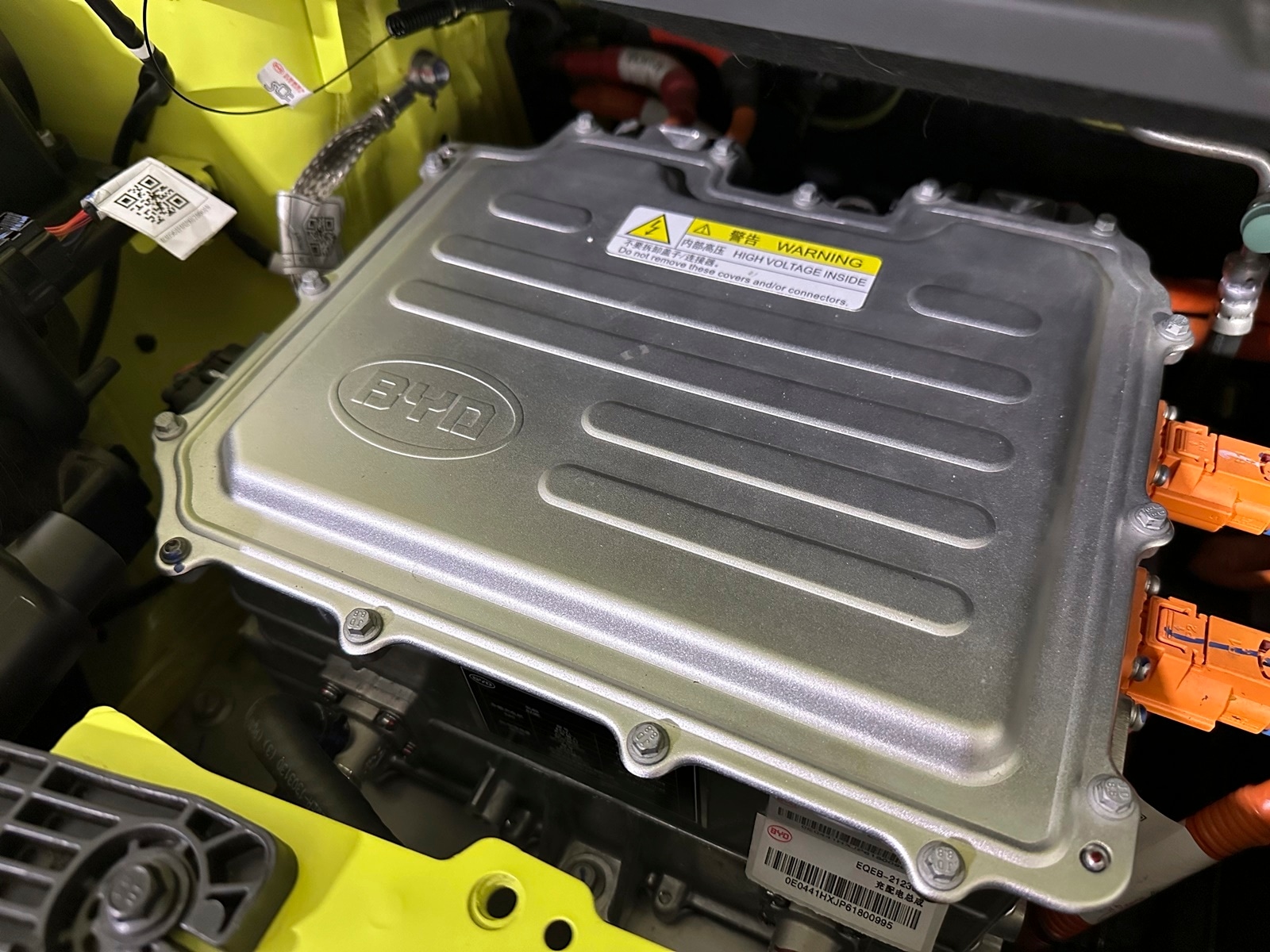 The battery of a BYD Seagull electric vehicle as seen at the Caresoft Global facility. (Photo: AP)
EV leader
The new battery-charging platform could provide yet another boost for BYD, which has come from behind to outgun Tesla as the world’s top EV seller. The platform requires new charging infrastructure that the Chinese company has said it will progressively set up, with plans to build more than 4,000 charging stations in China and elsewhere, designed to accommodate the new technology superchargers. Tesla, though, has a much larger network of more than 60,000 Superchargers worldwide.
The new EV powertrain could further boost demand for BYD’s next-generation cars, which have already outperformed vehicles from Tesla and other competitors. BYD also is more hedged in terms of auto technology, since it makes not just battery electric vehicles, but also a range of hybrids, which companies such as Tesla do no.
The other thing is pricing, where BYD has an edge. Its first set of models to get the new ultra-fast charging start at aggressive prices of under US$38,000 (in China), comparable to Tesla’s Model 3’s starting price tag of around US$ 36,000 (in China and other western markets).
Even as Tesla’s stock has been tanking, BYD reported sales of over 318,000 passenger vehicles in February, up over 150 per cent from a year earlier and the Chinese company’s Hong Kong-listed shares, which are already up nearly 50 per cent this year, surged on Tuesday.
BYD’s Super e-Platform could also pose a competitive threat to its biggest competitor in the battery manufacturing space — CATL, currently the world’s largest manufacturer of EV batteries. BYD, though, is far more integrated in its approach, starting from manufacturing its own batteries all the way up to making EVs.
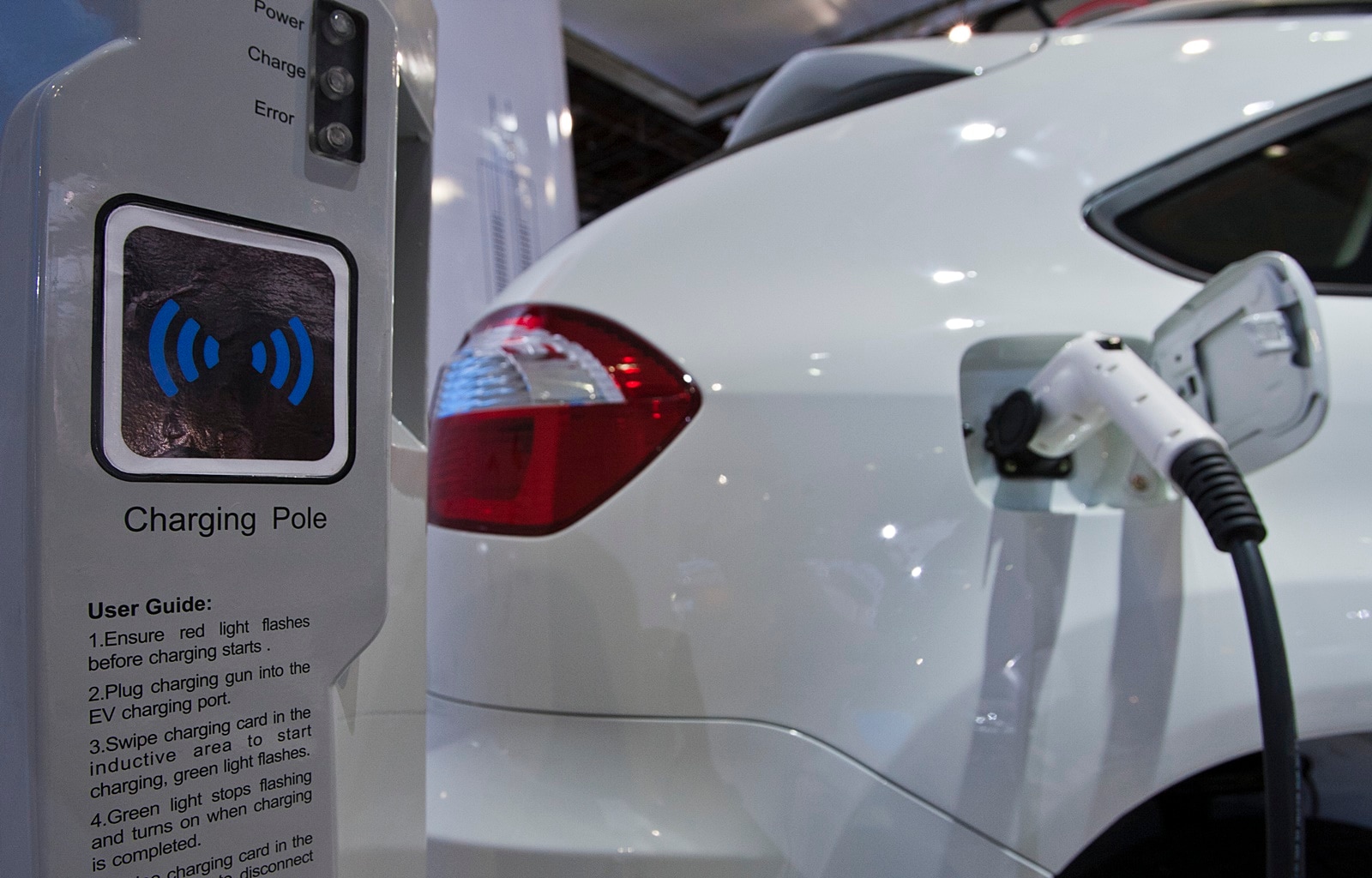 A display shows how the dual-mode electric S6DM sport utility vehicle from Chinese automaker BYD can be plugged into a charging station to recharge its onboard batteries. (Photo: AP)
Solid-state batteries — the next frontier
Meanwhile, Japan’s Toyota Motor Corp, the world’s largest carmaker and a late entrant into the battery electric vehicle race, is aiming to roll out next-generation solid-state batteries over the next three years. The solid-state battery technology promises to double vehicle range and drastically lower charging time.
In the due course, the Japanese carmaker could potentially have two sets of battery electric vehicles or BEV on offer across markets, including India – one range with existing Lithium-ion batteries and a second range with its new and pricier solid-state batteries, a senior company executive at Toyota’s joint venture in India had indicated to The Indian Express.
Toyota, the world’s largest carmaker by vehicles sold, had announced a “breakthrough” in solid state battery materials two years back and had said it plans to mass-produce solid-state batteries by 2027 or 2028. Solid-state batteries are seen as a major improvement in battery tech, countering concerns such as extended charging time and the risk of catching fire associated with traditional Li-ion batteries that have a liquid electrolyte.
With its new solid-state batteries, Toyota expects its electric cars powered by them to have a range of 1,200km — well over twice that of the current range of EVs — and a charging time of under 10 minutes.
Other companies too are making progress on alternatives to Li-ion batteries. CATL revealed in end-2023 it was preparing to mass-produce its semi-solid batteries, while South Korea’s Samsung SDI has completed a fully automated pilot line for solid-state batteries. Germany’s Volkswagen, whose investment in American startup QuantumScape has been dogged by delays, was reported by Reuters as having held talks with France’s Blue Solutions, which already produces solid-state batteries for Daimler electric buses.