Journalism of Courage



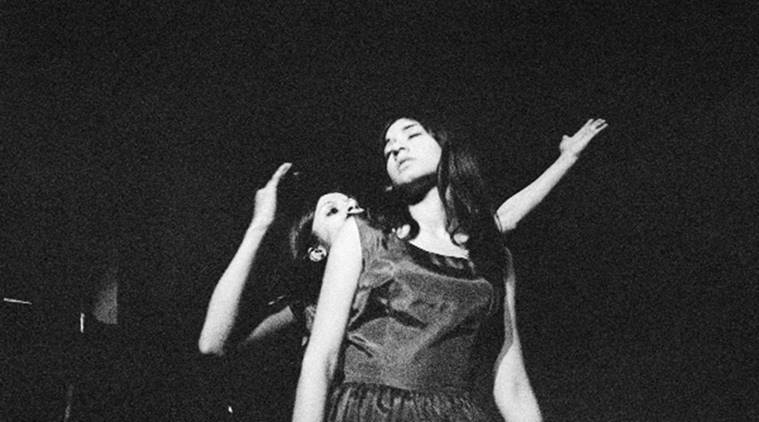 ‘60/60’ series — politician Menaka Gandhi acting in her college days.
He often caught people in their unguarded moments, giving his audience the “insider’s gaze” into his subjects. On World Photography Day last week, photographer Pablo Bartholomew spoke to a packed hall of budding photographers and students at Sri Aurobindo Centre for Arts and Communication in the Capital. The talk also marked the announcement of “The Open Library” at the centre, an initiative by Rang, which allows photography enthusiasts to become members for a nominal fee. They can source books from various galleries and photographers, without letting their steep prices serving as a deterrent to master the craft.
Apart from talking about his previous works like “60/60”, which was a visual celebration of him turning 60 last year, Bartholomew also answered questions on the financial success one can attain through photography. He said, “This is one of the reasons why I am reluctant to go to schools teaching photography. It is a bleak scenario outside because today thanks to cellphones, everyone has become a photographer. Earlier, before the advent of this technology, one needed to know the shutter speed and possess knowledge about the right time and temperature to bring out prints in the dark room. We had secrets that others didn’t know. But all of that has changed now. A photographer is much like a paanwala and not any different, where you have to attract clientele to keep you in business. Also, with a number of retailing sites like Amazon and Flipkart, new avenues have opened up for photographers which didn’t happen in my days. One has to learn to be a businessman and know how to sell and negotiate. If you can master that along with the aesthetics of photography, it is your winning ticket.”
Bartholomew, who at a very young age began to work as a photojournalist, won his first World Press Photo award in 1976 for a series on morphine addicts, which he made when he was only 20 years old. When asked if photojournalistic works gave him more pleasure, he said that since he had worked for the Western media, their demand was of a different kind, especially in the Socialist years. Following 1984, after former prime minister Indira Gandhi was assassinated and her son Rajiv Gandhi took over, a whole new era opened up. “The West looked at India in a very important way as India became a listening port for many regions, especially for the KGB and Afghanistan. There are pressures of deadline and being in dangerous situations is like a drug. One gets so addicted that it has physical and emotional effects on you,” he said.

 3 min read