Journalism of Courage
Based on the date of reporting by banks, the total number of frauds decreased to 5,092 in H1 FY26, as against 18,386 in the corresponding period of last year, the RBI said in its report on Trend and Progress of Banking in India 2024-25.
“Total Expense Ratio shall now be the sum of BER, brokerage, regulatory levies and statutory levies,” the statement said.
The board of the Securities and Exchange Board of India is scheduled to meet today
]Highlighting concerns over an acute shortage of small denomination currency notes in the country, the All India Reserve Bank Employees Association (AIRBEA) has urged the Reserve Bank of India (RBI) to ensure adequate supply of these notes. The RBI employees’ union noted that while there was no visible shortage of higher denomination currency notes of […]

The rural, semi-urban and urban branches registered 11.7 per cent, 10.7 per cent and 9.5 per cent deposit growth, respectively, during the same period, the RBI’s quarterly data on bank deposits said.

Loans above Rs 75 lakh now contribute 39.4 per cent of total originations. PSU banks strengthened their lead in the segment, lifting their market share to 50 per cent, according to data from CRIF High Mark, a credit information bureau registered with the RBI.
“Such unregistered platforms lack regulatory or supervisory oversight and do not provide for any mechanisms for investor protection or grievance redressal,” Sebi warned.

Even though retail inflation fell to a record low of 0.25% in October, inflation for ‘hospital and nursing home charges’ stood at 5.55 per cent.
Sebi, in a consultation paper issued on Thursday, proposed to introduce an enabling framework to address the issue of lock-in of pledged shares held by persons other than the promoters.
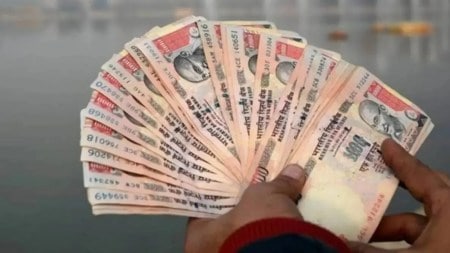
The sudden withdrawal of notes roiled the economy with demand falling, businesses facing a crisis and gross domestic product (GDP) growth declining nearly 1.5 per cent.
The bank’s gross non-performing assets (NPAs) improved by 40 bps to 1.73 per cent from 2.13 per cent. Net NPA stood at 0.42 per cent from 0.53 per cent.

The government had rationalised GST with effect from September 22. It abolished multiple GST rates of 5 per cent, 12 per cent, 18 per cent and 28 per cent, and introduced a two-slab structure of 5 per cent and 18 per cent

Addressing the Global Fintech Fest, Setty noted that credit availability through UPI would make access as seamless as digital payments.

Insurers face higher operating costs, and distributors face lower earnings, highlighting the unintended consequences of a well-meaning tax reform
The relaxation in IPO financing comes at a crucial juncture, with a slew of companies preparing to tap the market for fresh capital. Investor appetite for new issues has remained buoyant, driven by robust listing gains in recent months.

The platform will facilitate the real-time settlement of dollar-denominated trades in the GIFT City. Currently, settlement of US dollar-denominated trades takes a few hours.

Banks, regulators race to contain rising scam

In the open house, to be held between 10-10:30 am on all working days, employees can interact with the Governor without any prior appointment, according to an internal circular issued to the staff.

Introduced on April 1, 2016, MCLR is the minimum interest rate below which banks and non-banking finance companies (NBFCs) cannot lend.
Currently, the Cheque Truncation System (CTS) clears cheques in one or two working days, depending on when they are deposited.

The new requirements for FAT pose significant hurdles for staffing companies managing large, dynamic workforces, the ISF said in a letter to the EPFO chief

ICICI Bank MAB hike: The hike in MAB by ICICI Bank has been steep in all the locations.

“Major economies showed signs of slowing down, with global GDP growth at 3.3 per cent for year 2024. The geopolitical tensions in several parts of the world continue to affect global supply chains and commodity prices,” Chakraborty said.

Data provided by the finance ministry to the Rajya Sabha in July showed that the number of employees at PSBs had declined by 4% in the last five years: from 7.9 lakh in 2020-21 to 7.58 lakh in 2024-25

Successful bidder to be announced by March 2026