5 min read


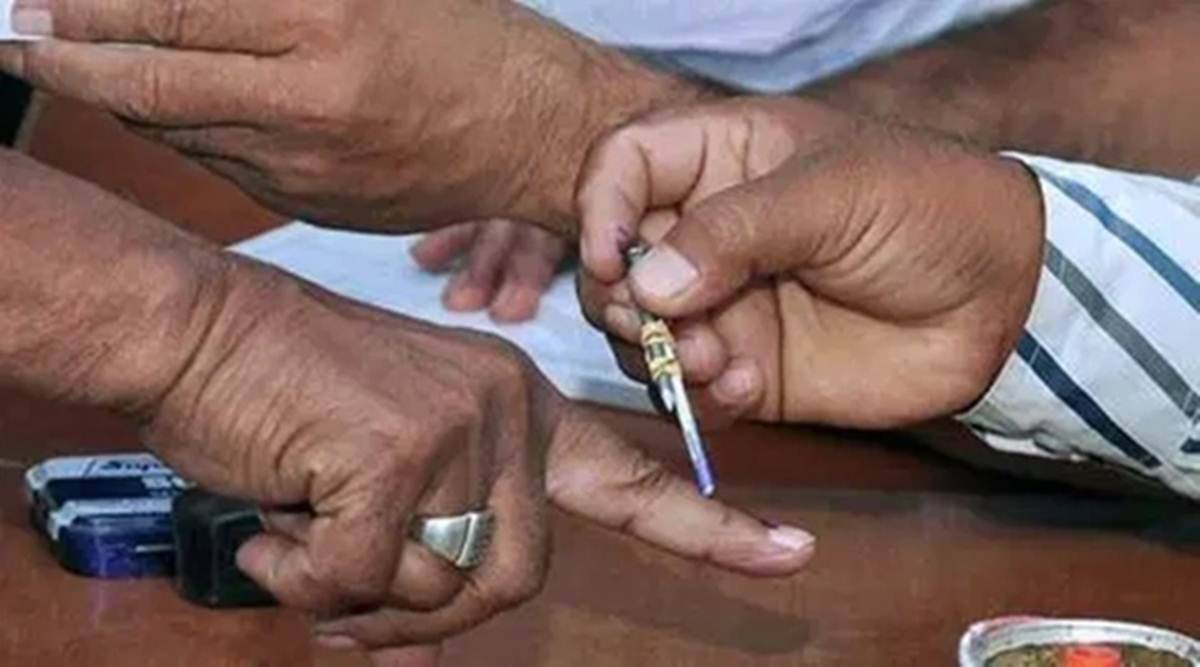 The SEC asked the 208 municipal councils and eight Nagar Panchayats to seek suggestions and objections on the draft ward boundaries till May 14. (File)
REINED by ally BJP in recent times, the JD(U) is seeing the Manipur result as fulfilment of its dream of becoming a “national party”. With six MLAs, the JD(U) finished behind only the BJP and the powerful regional party NPP in the state. It got one more than the Congress, the unquestioned leader in Manipur till five years ago.
In the state though, the performance of the JD(U) has not come as much of a surprise. Four of the six winning MLAs of the party are well-established turncoats, with the party itself considered by many as a proxy for the BJP.
However, for the JD(U), at a time when several regional parties are jostling for national space, the Manipur election marks planting of its flag in a state outside Bihar. The six seats are its first win since 2000 in Manipur, and its first successful foray after failures in Gujarat and Jharkhand.
JD(U) national spokesperson K C Tyagi stressed this, speaking to The Indian Express. Calling the results a reflection of the JD(U) base in the state, and support for Bihar Chief Minister Nitish Kumar’s “good governance model”, he said: “Besides Bihar, we have now won in Manipur and had earlier won in Arunachal Pradesh. We are now eyeing seats in the 2023 Assembly elections in Meghalaya and Nagaland.”
Tyagi said that since last time too, the party had won a seat in Nagaland, it had a good chance of getting the national party tag in 2023.
He said the party had “a true socialist base in Manipur”, with Social Party (Lohia) winning from the state in the first general election, in 1952, and the Samata Party even having its CM in Manipur in 2001, with allies. “The likes of Jayaprakash Narayan and George Fernandes worked in Manipur,” said Tyagi.
This time though, the JD(U) win is not being seen as because of its ideology or manifesto. An observer said: “Almost all the six JD(U) candidates who got elected are solid figures, having money, fame, who were denied tickets by the BJP. Moreover, there is a common perception that the JD(U) is the B-team of the BJP.”
The observer said that for many of them, the best alternative after the BJP was the JD(U), “given that the Congress was seen in a downfall, and the brewing friction between the NPP and BJP”.
Of the newly elected JD(U) MLAs, Kh Joykishan Singh and Asab Udin were sitting legislators, while Ngursanglur Sanate and Md Abdul Nasir were ex-MLAs.
Joykishan, who was re-elected from Thangmeiband, joined the JD(U) in January after he was expelled from the Congress. This is his third term as MLA. Asab Udin, re-elected from Jiribam, first won in 2017 as an Independent and was one of the MLAs who helped the BJP form the government in 2017. Abdul Nasir had served as a minister in the Okram Ibobi Singh-led Congress government, and quit the party in 2020.
A former MLA of Tipaimukh, Sanate was elected for the first time as an RJD candidate in 2007. He was expelled from the party for violating party rules in 2010. The JD(U)-elect from Churachandpur is former DGP of Manipur L M Khaute while Thangjam Arun, who was elected from Wangkhei, is a political newcomer.
Besides the six who won, many of the other 30 candidates fielded by the JD(U) were also those denied tickets by the BJP. It was the first time the party had fielded such a huge number in the state.
Manipur JD(U) secretary Brojendro, however, stressed that the candidates and people came to the party attracted by the governance example set by Nitish Kumar. “We take the mandate as a grand success and firmly believe that the party will prevail in Manipur,” Brojendro said.
On the popularity of the JD(U) and even the presence earlier of the RJD in Manipur, A Mubi, the editor of Times of Manipur, said: “The only logical explanation is that Manipur always looks for a party in alliance or having a connection with a party in power at the Centre.”
According to Mubi, that is the reason the Trinamool Congress was nowhere in Manipur now. “They did very well in previous elections but have faded away after their friction with the BJP. On the other hand, BJP ally RPI-Athalwale, a party not known to many common people, has surfaced.”