2 min read
Stay updated with the latest - Click here to follow us on Instagram

Journalism of Courage



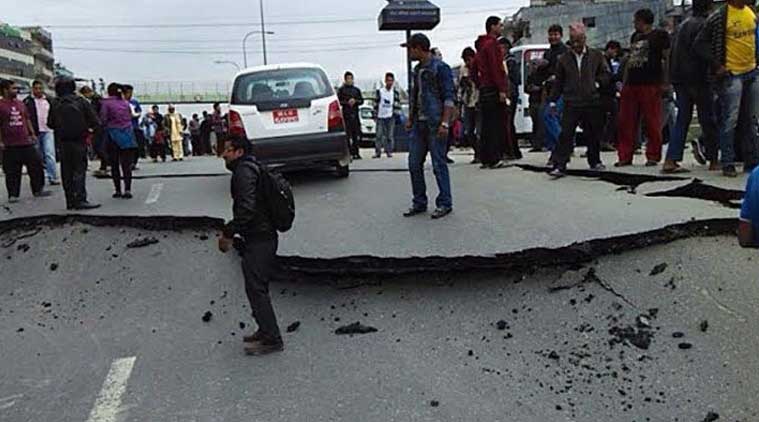 The region and particular fault has a history of damaging earthquakes, Earle said, warning that landslides are a particular worry now.
How bad is the damage?
The earthquake hit a heavily populated area of Nepal and its impact spread far beyond the Kathmandu Valley. United States Geological Survey calculations estimate damage between $100 million and $10 billion. Scientists estimate that more than 105 million people felt at least moderate shaking during the quake.
What happened? and what next?
Seismologist Earle said the quake happened on what is known as a “thrust fault”. That describes the situation when one piece of the Earth’s crust is moving beneath another piece. In this case, it’s the Indian plate that is moving north at 45 millimeters a year under the Eurasian plate to the north, Earle said.
[related-post]
The region and particular fault has a history of damaging earthquakes, Earle said, warning that landslides are a particular worry now.
Why has a ‘red alert’ been sounded?
The US Geological Survey said the earthquake was strong enough to merit a “red alert’’ for the fatalities and economic losses. It said that “high casualties and extensive damage are probable and the disaster is likely widespread” and added that, “past red alerts have required a national or international response”.
How prepared is Nepal for such a crisis?
Nepal is a relatively poor country without extensive resources that has been plagued by instability in recent years.
Nepal’s constitution was supposed to have been written by a Constituent Assembly elected in 2008, following the end of a 10 year Maoist insurgency and the overthrow of the monarchy, but it never finished its work. The current assembly was chosen in 2013, but has also failed to finish.
Stay updated with the latest - Click here to follow us on Instagram