6 min read
Stay updated with the latest - Click here to follow us on Instagram

Journalism of Courage



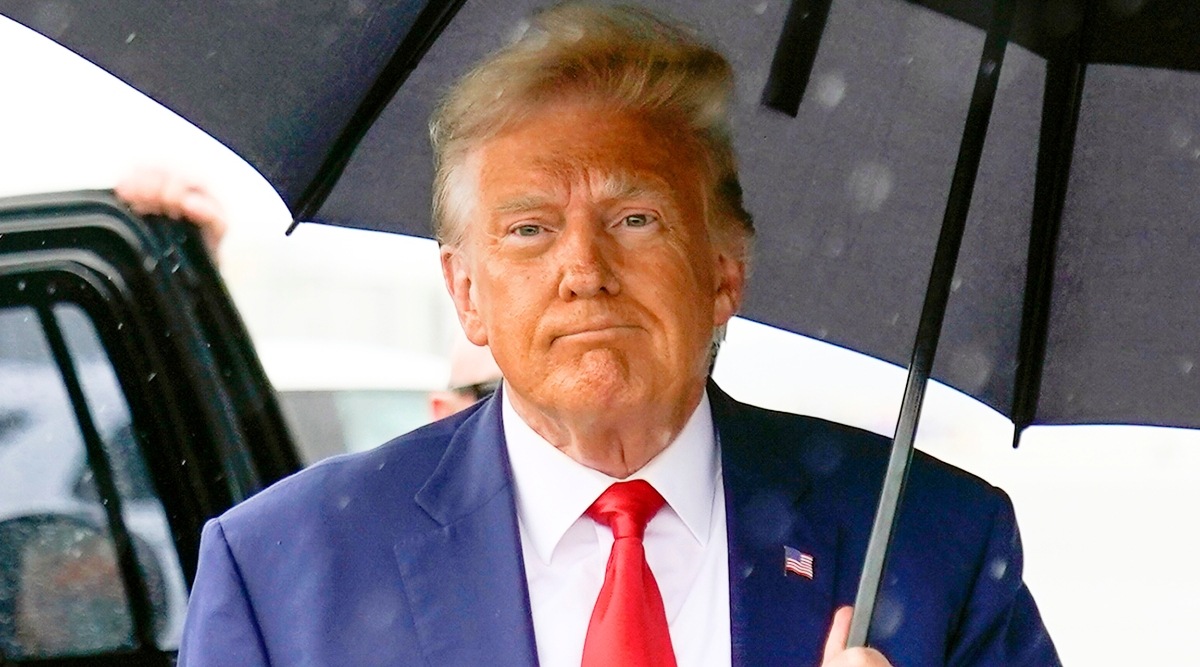 Former US President Donald Trump (AP)
 Written by Richard Fausset and Danny Hakim
Former US President Donald Trump and 18 of his allies were indicted late Monday in a sprawling racketeering investigation into a multipronged effort to overturn his narrow election loss in Georgia in 2020.
For Trump, who is now facing four separate criminal cases, the indictment lays out the most broad set of accusations against the former president: 13 counts, including racketeering, making false statements and pressuring public officials to violate their oath of office.
Among those charged in the 41-count indictment, the culmination of a 2 1/2-year investigation in Fulton County, Georgia, are Trump’s former White House chief of staff, Mark Meadows, and a number of lawyers, including Rudy Giuliani, John Eastman, Kenneth Chesebro, Jenna Ellis and Sidney Powell.
“It is now the duty of my office to prove these charges in the indictment beyond a reasonable doubt at trial,” said District Attorney Fani Willis, who oversaw the investigation, speaking at a news conference after the indictment was released. She said that the accused, including Trump, will have until noon Aug. 25 to head to Atlanta and voluntarily surrender for booking and arraignment.
Out of the four cases Trump is facing — already a staggering legal burden for a politician running for another term — this is the second case centered on his efforts to overturn the 2020 election. Yet he remains far ahead of competitors in the race for the 2024 Republican nomination, and neck and neck with President Joe Biden in a potential rematch, according to a New York Times/Siena College poll conducted in late July.
Here is what we know about the investigation in Fulton County, which includes most of Atlanta.
Willis began looking into whether Trump and his associates violated Georgia law shortly after a recording was released of Trump talking by phone to Brad Raffensperger, Georgia’s secretary of state, on Jan. 2, 2021. During the call, Trump insisted that he had won the state of Georgia and made baseless allegations of fraud, even though multiple recounts confirmed that he had lost.
Trump told Raffensperger that he wanted to “find” 11,780 votes in the state — one more than he needed to win Georgia and its Electoral College votes.
Over time, court documents and other public records revealed that Willis, a Democrat, was also investigating false statements that lawyers for Trump made in state legislative hearings; a meeting of 16 pro-Trump Republicans who cast bogus Electoral College votes for him; an intimidation campaign against a pair of Fulton County election workers falsely accused of fraud, and a successful effort by Trump allies to copy sensitive software at an elections office in rural Coffee County, Georgia.
The indictment lays out a multitude of charges, including soliciting a violation of oath by a public officer, false statements and writings, impersonating a public officer, forgery and conspiracy to commit computer theft.
Donald Trump response to Georgia Grand Jury Indictment#eyewitnesswv pic.twitter.com/LoYvvJjVWK
— Dave Benton (@davebentonWCHS) August 15, 2023
All 19 of those indicted face charges under the state’s racketeering law, which is often used to target members of an “enterprise” that has engaged in a pattern of criminal activity.
The federal racketeering law is best known for being used against members of the Mafia. But federal and state racketeering laws have been used in a wide array of cases. Prosecutors often use the laws to ensure that leaders of a criminal enterprise, and not just the foot soldiers, are held accountable.
The Georgia investigation appears to be the most expansive legal response yet to the efforts that Trump and his advisers and other associates undertook to keep him in power after he lost the 2020 election.
Giuliani, the former New York City mayor, as a Trump lawyer, made numerous false claims about voter fraud at Georgia legislative hearings.
Also indicted was David Shafer, the former chair of the state Republican Party. He oversaw the meeting of the bogus electors in December 2020; more than half of the electors have been cooperating with Willis’ office.
The lawyers who worked to keep Trump in power — including Eastman, Powell, Ellis and Chesebro — were charged with racketeering and other counts. Meadows, the former White House chief of staff, was ordered to testify last year before a special grand jury that aided in the investigation, was also charged with racketeering and other counts.
The Justice Department blocked an effort to seek the testimony of Jeffrey Clark, a former high-ranking lawyer in the department who sought to intervene in Georgia on Trump’s behalf after the 2020 election. He was also charged.
A number of people whose names have been mentioned in connection with the investigation have said they did nothing illegal, including Trump, who has described his call to Raffensperger as “absolutely perfect.”
Willis has said that she has not coordinated with Jack Smith, the special counsel in two federal investigations of Trump that have resulted in indictments. But Willis’ team has made use of the voluminous documents and testimony about election interference efforts produced by Congress’ Jan. 6 committee.
One of the federal cases is related to the former president’s handling of classified documents; the other to his efforts to reverse his defeat in the 2020 election. Another indictment, in New York state, is related to what prosecutors described as a hush-money scheme to cover up a potential sex scandal and clear his path to the presidency in 2016. Trump has pleaded not guilty in all three cases.
With the Georgia indictment now public, the defendants will now have to make their way to Atlanta to be booked and arraigned. Willis’ deadline means that they have until noon Aug. 25 to voluntarily do so.
The potential sentences could be steep: Violating the racketeering law alone can potentially result in a five- to 20-year sentence.
There is also the question of when a trial might occur, given Trump’s legal troubles in several other venues. And given the number of defendants, pretrial matters like jury selection could take months.
On Monday, Willis said she intended to try all 19 defendants together, and would request a trial date within the coming six months.
Stay updated with the latest - Click here to follow us on Instagram