5 min read
Stay updated with the latest - Click here to follow us on Instagram
© IE Online Media Services Pvt Ltd



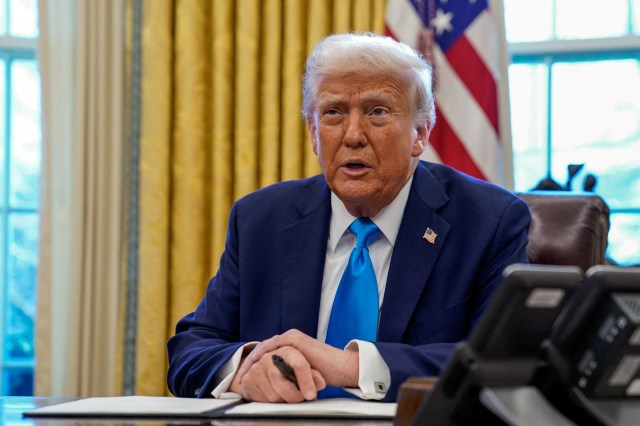 Judges in New York’s mid-level Appellate Division said the trial judge’s penalty against Trump for exaggerating his was ‘excessive.’ (Photo: Reuters)
A New York appeals court on Thursday voided a trial court order that imposed a civil fraud penalty of over $500 million on US President Donald Trump.
A panel of five judges in New York’s mid-level Appellate Division said the trial judge’s penalty against Trump for exaggerating his wealth was ‘excessive.’
After finding that Trump engaged in fraud by flagrantly padding up financial statements that went to lenders and insurers, Judge Arthur Engoron ordered him last year to pay $355 million in penalties. With interest, the sum topped $515 million. Combined with penalties on other Trump Organization executives, including sons Eric and Donald Jr., the total exceeded $527 million.
Engoron had also imposed other punishments, such as banning Trump and his two eldest sons from serving in corporate leadership for a few years. Those provisions have been on pause during Trump’s appeal, and he was able to hold off collection of the money by posting a $175 million bond.
While Thursday’s ruling spared Trump from a potential half-billion-dollar fine, it upheld other punishments, such as banning him and his two eldest sons from serving in corporate leadership for a few years.
Responding to the court order, Trump, in a social media post, claimed “total victory.”“I greatly respect the fact that the Court had the Courage to throw out this unlawful and disgraceful Decision that was hurting Business all throughout New York State,” he wrote.
A sharply divided panel of five judges in New York’s mid-level Appellate Division couldn’t agree on many issues raised in Trump’s appeal, but a majority said the monetary penalty was “excessive.
”After finding Trump flagrantly padded financial statements that went to lenders and insurers, Judge Arthur Engoron ordered him last year to pay $355 million in penalties. With interest, the sum has topped $515 million. Additional penalties levied on some other Trump Organization executives, including Trump’s sons Eric and Donald Jr. — bring the total to $527 million, with interest.
“While the injunctive relief ordered by the court is well crafted to curb defendants’ business culture, the court’s disgorgement order, which directs that defendants pay nearly half a billion dollars to the State of New York, is an excessive fine that violates the Eighth Amendment of the United States Constitution,” Judges Dianne T. Renwick and Peter H. Moulton wrote in one of three opinions shaping the appeals court’s ruling.
Engoron’s other punishments, upheld by the appeals court, have been on pause during Trump’s appeal, and the president was able to hold off collection of the money by posting a $175 million bond.
The court, which split on the merits of the lawsuit and Engoron’s fraud finding, dismissed the penalty in its entirety while also leaving a pathway for an appeal to the state’s highest court, the Court of Appeals. Trump and his co-defendants, the judges wrote, can seek to extend the pause on any punishments taking effect.
The panel was sharply divided, issuing 323 pages of concurring and dissenting opinions with no majority. Rather, some judges endorsed parts of their colleagues’ findings while denouncing others, enabling the court to rule.
Two judges wrote that they felt New York Attorney General Letitia James’ lawsuit against Trump and his companies was justifiable and that she had proven her case but the penalty was too severe. One wrote that James exceeded her legal authority in bringing the suit, saying that if any of Trump’s lenders felt cheated, they could have sued him themselves, and none did.
One judge wrote that Engoron erred by ruling before the trial began that the attorney general had proved Trump engaged in fraud. In his portion of the ruling, Judge David Friedman, who was appointed to the court by Republican Gov. George Pataki, was scathing in his criticism of James for bringing the lawsuit.
“Plainly, her ultimate goal was not ‘market hygiene’ … but political hygiene, ending with the derailment of President Trump’s political career and the destruction of his real estate business,” Friedman wrote. “The voters have obviously rendered a verdict on his political career. This bench today unanimously derails the effort to destroy his business.”
In a statement, James focused on the part of the case that went her way, saying the court had “affirmed the well-supported finding of the trial court: Donald Trump, his company, and two of his children are liable for fraud.” “It should not be lost to history: yet another court has ruled that the president violated the law, and that our case has merit,” James said.
The appeals court, the Appellate Division of the state’s trial court, took an unusually long time to rule, weighing Trump’s appeal for nearly 11 months after oral arguments last fall.
Stay updated with the latest - Click here to follow us on Instagram