© IE Online Media Services Pvt Ltd
Latest Comment
Post Comment
Read Comments
 9 min read


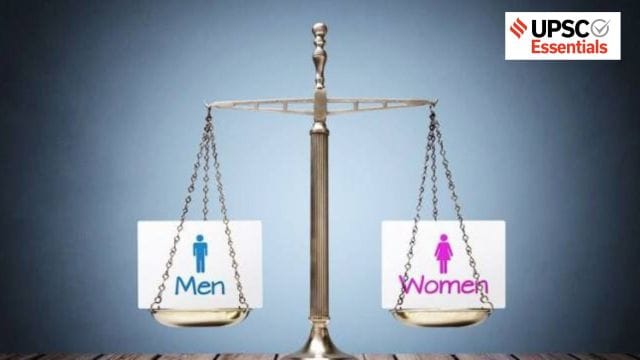 Although the foundation of gender justice has been laid in the Constitution of India, the real picture in homes, workplaces, and public spaces remains far more complex. (File)
— Archana Singh and Pushpendra Singh
Gender justice means ensuring equality, dignity, and safety to all genders. It’s not only about giving the same treatment to everyone; rather, it involves recognising and addressing the historical and social disadvantages faced by different genders. This is where gender equality (equal treatment), gender equity (fair treatment), and women’s empowerment (giving women more control over their lives) come together to provide pathways towards justice.
The foundation of gender justice – social, economic, and political – has been laid in the Constitution of India. However, the real picture in homes, workplaces, and public spaces remains far more complex. While some progress has been made, significant challenges persist.
The Constitution guarantees equality to all citizens. For instance, Article 14 guarantees equality to all citizens before the law; Article 15 prohibits discrimination based on sex, while Article 15(3) allows the government to make special provisions for women; Article 16 promises equal opportunity in public jobs; Article 21, the right to life, has been stretched by the courts to include privacy, dignity, and personal autonomy.
In addition, the Directive Principles, though non-binding, play an important role in promoting gender justice. For example, Article 39 directs the state to ensure equal pay for equal work for both men and women; Article 42 provides for maternity benefits; Article 51A(e) directs every citizen to renounce practices derogatory to the dignity of women.
Despite this progressive constitutional framework, the road from legal provisions to everyday experience remains long and uneven.
India has made visible progress towards gender justice since its independence. One of the earliest landmark moves was the 73rd Constitutional Amendment, which reserved one-third of seats in village panchayats for women. In State of Rajasthan v Union of India (1993), the Supreme Court upheld this shift as a cornerstone of participatory democracy. Today, over lakhs of women serve in local governance, reshaping how communities are led and heard.
Yet beyond the village square, the climb gets steeper. In State Assemblies and Parliament, women remain underrepresented in leadership positions. Although the Women’s Reservation Act, 2023, promises one-third representation in these bodies, its implementation is still pending. Until then, the top seats of power remain largely out of reach. While representation is a constitutional right, the struggle for equity is continuing.
Further, the workplaces echo a similar paradox. While the Constitution guarantees equal opportunity and equal pay for equal work, the judiciary has often been required to safeguard and enforce these promises through landmark judgements.
In the early 1980s, air hostesses were not allowed to marry or have children. In Air India v. Nergesh Meerza (1981), the Supreme Court struck down these unfair rules, deeming them unconstitutional.
Later, in the Mackinnon Mackenzie v. Audrey D’Costa (1987), the court addressed unequal pay for the same work based on gender, and stated that equal pay is not just a fair idea, it is a constitutional mandate.
More recently, in Babita Puniya v. Union of India (2020), women army officers challenged the denial of permanent commission. The Court judgement came in their favour, affirming that equality must apply even in the armed forces.
Despite these legal interventions, women (especially those working in informal sectors) continue to work without equal pay, job security, maternity benefits, and safety nets. Even the POSH Act (2013), meant to safeguard women at work, is often ignored in practice. The respect, rights, and recognition do not seem to be in sync with women’s significant contribution to the Indian economy.
Moreover, the fight for gender justice doesn’t begin in courtrooms alone, it begins at home and extends to access to public spaces. And historically speaking, home or, for that matter, private spaces, have also been a site of struggle for equality. For years, daughters were given love but not land. Inheritance property passed from father to son, while daughters stood on the sidelines.
This began to change when one Mary Roy went to court in 1986 and confronted the old rules in Kerala that denied Christian women equal property rights. The Supreme Court ruled that the Indian Succession Act, 1925, will also apply to the Indian Christian Community in the erstwhile state of Travancore.
Decades later, in Vineeta Sharma v. Rakesh Sharma (2020), the Court clarified the position further: holding that daughters are equal coparceners, with the same rights as sons, even if the father is no longer alive. But the story doesn’t end there. In many families, daughters are still pressured to relinquish their share of property in the name of peace, custom, or duty. The law may be on their side, but tradition still speaks louder through everyday practices.
This tension between constitutional rights and rituals plays out in places of worship, too. In Indian Young Lawyers Association v. State of Kerala (2018), the Supreme Court ruled that women, irrespective of age, can enter Kerala’s Sabarimala temple, adding that faith cannot be used to deny equality.
Similarly, in G Subramanian v. State of Tamil Nadu (2019), the Madras High Court struck down a rule that stopped women from becoming temple priests. These judgements marked significant progress but met with protests and resistance, highlighting that social change does not necessarily follow legal reforms. Even outside the home and temple, the picture stays complicated.
The issue of gender justice becomes even more urgent in the context of violence against women. In Vishaka and Ors. v. State of Rajasthan (1997), the Supreme Court laid down the Vishaka Guidelines to prevent sexual harassment at the workplace. This was a powerful move, arising from the case of the alleged gang-rape of Bhanwari Devi, a social worker from Rajasthan.
These guidelines defined sexual harassment and imposed three key obligations on institutions — prohibition, prevention, redress. The Sexual Harassment of Women at Workplace (Prevention, Prohibition and Redressal) Act, 2013 later gave statutory backing to these guidelines.
Yet another challenge faced by women is the right to reproduction. In Suchita Srivastava v. Chandigarh Administration (2009), the Court said clearly: a woman has the right to make decisions about her own body. And the Medical Termination of Pregnancy (Amendment) Act, 2021, gave more women the right to access safe abortion.
Since the Constitution guarantees liberty, dignity, rights over the body, these rights often clash with deeply entrenched cultural norms. It was evident in Joseph Shine v. Union of India (2018), where the Court struck down the old adultery law, affirming that a woman is not the property of her husband. However, a woman’s consent or refusal still holds insufficient weight within marriage. The law has opened many doors. But for countless women, justice still waits at the threshold.
India has seen landmark judgments and constitutional promises aimed at protecting individual rights, dignity, and choices, irrespective of their sex, religion, caste, class, or ethnicity. However, justice is not always experienced through court orders; it unfolds in everyday spaces – homes, clinics, offices, buses, temples – where many women still wait for safety, dignity, and voice. This gap between what the law promises and what life delivers is not just legal, it is cultural, institutional, and deeply personal.
To transform legal victories into everyday justice, focussing on strengthening enforcement would help. Laws like the POSH Act, inheritance protections, and reproductive rights require more than policy; they need routine oversight, trained staff, and clear mechanisms of accountability.
Legal awareness, especially among women in rural areas and the informal sectors, needs to be widened through targeted outreach and accessible legal aid. At the same time, deeper change depends on changing social attitudes. Engaging schools, community leaders, and the media to challenge long-held gender norms can help lay the foundation for equality that lasts.
Representation needs to go beyond numbers. Empowering women in leadership positions to exercise real authority and influence decision-making, rather than merely occupying reserved seats, would help bring change. Gender justice is already inscribed in law; the task ahead is to weave it into the fabric of everyday life.
Explain the constitutional perspectives of Gender Justice with the help of relevant Constitutional Provisions and case laws.
To what extent can constitutional guarantees of equality translate into lived justice for women in a society shaped by patriarchy and custom?
Examine the role of the judiciary in advancing gender justice. Has it been transformative or merely corrective?
Critically analyse the impact of the 73rd Constitutional Amendment on women’s political participation. Has numerical representation led to empowerment?
Analyse the conflict between religious freedom and gender equality with reference to the Sabarimala judgment.
What measures are necessary to bridge the gap between legal recognition and lived experience of gender justice?
(Archana Singh is an Assistant Professor of Gender and Economics at the International Institute for Population Sciences, Mumbai, and Pushpendra Singh is an Assistant Professor of Economics at Somaiya Vidyavihar University, Mumbai.)
Share your thoughts and ideas on UPSC Special articles with ashiya.parveen@indianexpress.com.
Click Here to read the UPSC Essentials magazine for November 2025. Subscribe to our UPSC newsletter and stay updated with the news cues from the past week.
Stay updated with the latest UPSC articles by joining our Telegram channel – IndianExpress UPSC Hub, and follow us on Instagram and X.


Read UPSC Magazine