24 min read


© IE Online Media Services Pvt Ltd



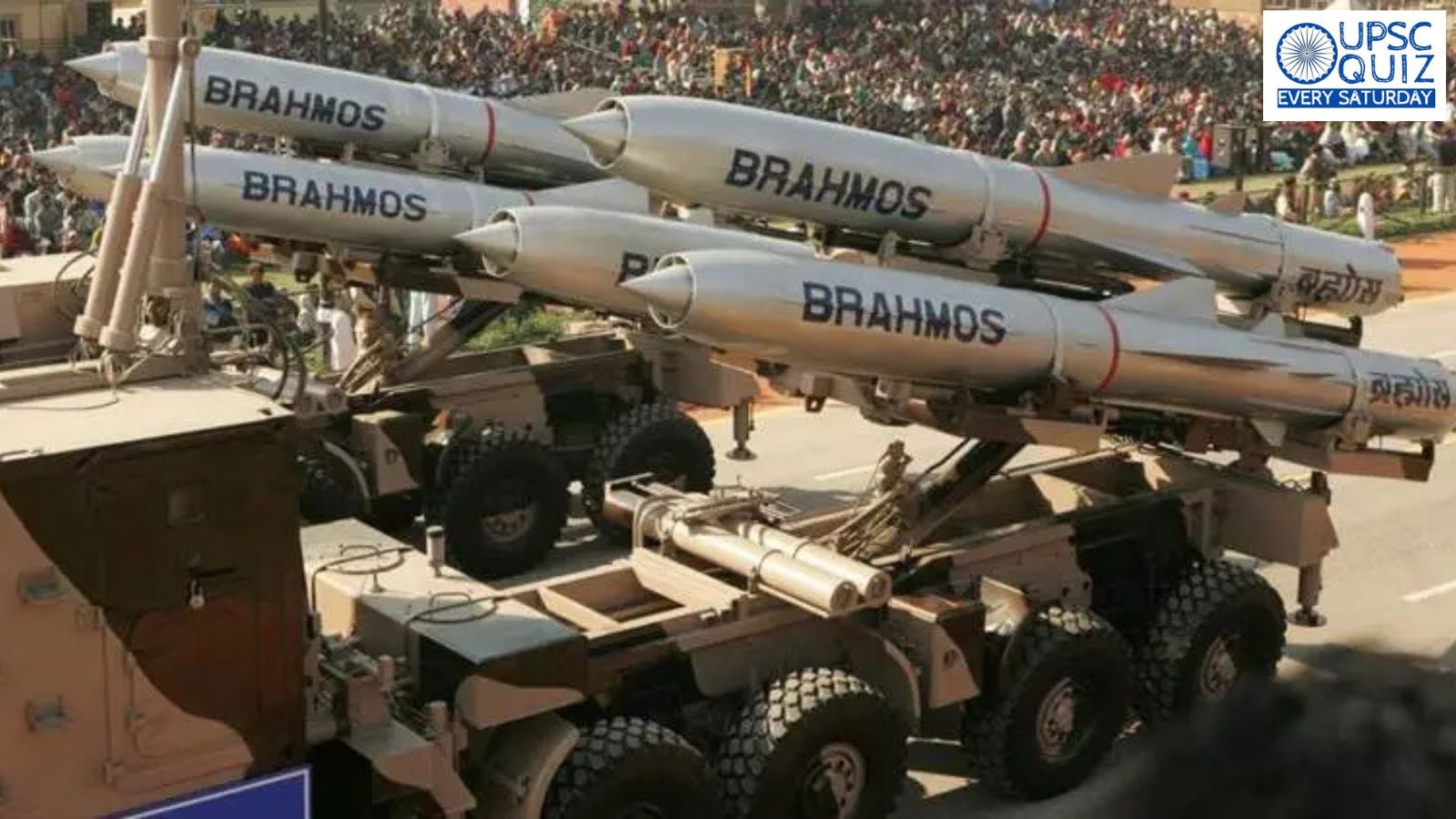 Brush up your current affairs knowledge with this week's top 15 questions. Find a question on the Brahmos Missile in today's quiz. (Representational Image/Reuters)
UPSC Weekly Quiz is a current affairs-based quiz on relevant topics from the past week, curated for the aspirants of competitive examinations. Attempt the weekly quiz every Saturday and find answers to the MCQs with explanations.
🚨 Click Here to read the UPSC Essentials magazine for November 2025. Share your views and suggestions in the comment box or at manas.srivastava@indianexpress.com🚨
With reference to the BrahMos missile, consider the following statements:
1. The BrahMos missile has been operationalised in all three defence services.
2. It is a hypersonic cruise.
3. Indonesia is the first country to procure the weapon system from India.
How many of the statements given above are correct?
(a) Only one
(b) Only two
(c) All three
(d) None
Explanation
— India and Indonesia discussed the finer details related to BrahMos supersonic cruise missile procurement, during the third India-Indonesia Defence Ministers’ Dialogue co-chaired by Defence Minister Rajnath Singh and his Indonesian counterpart Sjafrie Sjamsoeddin. This marks further progress towards the sale of the weapon system to Jakarta.
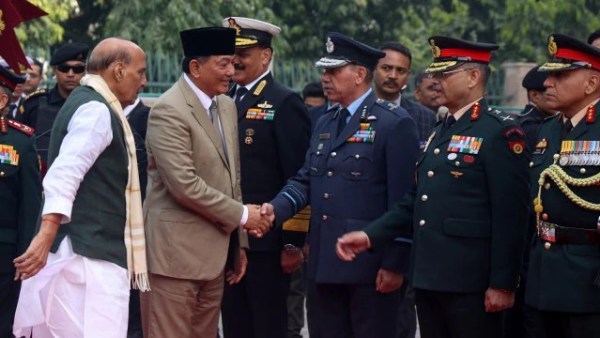 (Express photo by Amit Mehra)
— If the BrahMos deal goes through, Indonesia will be the second country to procure the weapon system from India, after the Philippines which has procured three batteries of weapon system in 2022. The missiles procured by the Philippines have a range of around 290 km. Hence, statement 3 is not correct.
— The supersonic cruise missile has been operationalised in all three defence services and played a key role in attacking set targets inside Pakistan during Operation Sindoor. Hence, statement 1 is correct and statement 2 is not correct.
— The range of the supersonic cruise missile BrahMos is expected to be upgraded from 290 km to 500 km for land attacks and 400 km for ship attacks.
Therefore, option (a) is the correct answer.
Consider the following countries:
1. Italy
2. Mexico
3. Nepal
4. Chile
Which of the countries listed above criminalises femicide and has a law that recognises it?
(a) 2 and 4 only
(b) 1, 2 and 4
(c) 2, 3 and 4
(d) 1 and 2 only
Explanation
— The Italian Parliament approved a law that recognises femicide, or the killing of a woman for reasons related to her gender. The motion received support from both the ruling centre-right majority and the centre-left opposition, according to the Associated Press.
— Italy joins a handful of nations — including Mexico and Chile — that specifically criminalise femicide. The law mandates life imprisonment as punishment.
— In Nepal, there is currently no law that treats “femicide” as a distinct offence.
What is femicide?
— It is considered among the most severe manifestations of crimes targeting women. A 2022 framework developed by several United Nations bodies divided femicides into three categories, based on the women’s relation to their attacker(s). These were intentional homicides or killings of women and girls perpetrated by intimate partners, by other family members (blood relatives and relatives by marriage or adoption), and by other perpetrators.
Therefore, option (b) is the correct answer.
With reference to the Indian Statistical Institute, consider the following statements:
1. It was set up by eminent statistician PC Mahalanobis in 1931.
2. The institute is located in Bengaluru.
3. In 1959, it was declared an institution of national importance through an Act of Parliament, giving it the power to grant degrees and making it eligible for Central grants and audits.
How many of the statements given above are correct?
(a) Only one
(b) Only two
(c) All three
(d) None
Explanation
— The Centre’s draft Indian Statistical Institute Bill 2025, made public in September for feedback, has drawn criticism from academics and students for the changes it proposes to the governance structure of the 94-year-old institute.
— Students, faculty members, and staff at the Kolkata campus will hold a protest Friday against the draft Bill prepared by the Ministry of Statistics and Programme Implementation (MoSPI).
About the Indian Statistical Institute
— The Indian Statistical Institute in Kolkata was set up by eminent statistician PC Mahalanobis in 1931. It began as a statistical laboratory at Presidency College and was registered as a society, first under the Societies Registration Act of 1860 and later under the West Bengal Societies Registration Act of 1961. Hence, statement 1 is correct and statement 2 is not correct.
— In 1959, it was declared an institution of national importance through an Act of Parliament, giving it the power to grant degrees and making it eligible for Central grants and audits. However, it continued as a society. Hence, statement 3 is correct.
— Headquartered in Kolkata with centres in Delhi, Bangalore, Chennai, and Tezpur, the institute offers courses including those in statistics and math, and has several research divisions.
— Its highest decision-making body is the 33-member council — including an elected chairman, six representatives of the Centre, scientists not employed at the institute, a representative of the University Grants Commission, and ex-officio members including the director and heads of academic divisions and centres. Representatives from the Centre include those from MoSPI, the Ministry of Finance, and the Reserve Bank of India.
Therefore, option (b) is the correct answer.
Recently, the Indian Navy commissioned an Anti-Submarine Warfare Shallow Water Craft (ASW-SWC). Consider the following statements:
1. The ship is capable of undertaking ASW operations in coastal waters, along with advanced mine-laying capabilities.
2. The ship takes her name from the historic coastal town on the Malabar Coast.
3. The ship’s crest features the Urumi, the flexible sword of Kalaripayattu, rising from stylised blue waves — a symbol of agility, precision, and lethal grace.
The above mentioned statements refer to:
(a) INS Mahe
(b) INS Kannur
(c) INS Kozhikode
(d) INS Thalassery
Explanation
— This week, the Indian Navy commissioned INS Mahe, an Anti-Submarine Warfare Shallow Water Craft (ASW-SWC). On its crest is Urumi, a flexible sword from the martial art form of Kalaripayattu.
— The Indian Navy commissioned INS Mahe, the first of the indigenously designed and built Mahe-class ASW-SWC, at the Naval Dockyard in Mumbai. Designed and constructed by Cochin Shipyard Limited (CSL), Kochi, INS Mahe is the lead ship of eight vessels in her class.
— At the commissioning ceremony, Army Chief General Upendra Dwivedi highlighted that the induction of the ship will significantly augment the Indian Navy’s capacity to ensure near-sea dominance, strengthen the coastal security grid, and safeguard India’s maritime interests across the littorals — the shallow and near-shore maritime zone that is strategically and economically critical.
— The ship takes her name from the historic coastal town of Mahe on the Malabar Coast.
— The ship’s crest features the Urumi, the flexible sword of Kalaripayattu, rising from stylised blue waves — a symbol of agility, precision, and lethal grace. Her mascot, the Cheetah, embodies speed and focus, while the motto ‘Silent Hunters’ reflects the ship’s stealth, vigilance, and unyielding readiness.
Therefore, option (a) is the correct answer.
With reference to the Lakshmana Temple, located in Sirpur, consider the following statements:
1. It is one of India’s finest brick temples.
2. It was built around the 7th Century.
3. It has multiple shrines in the panchayatana style.
Which of the statements given above is/are correct?
(a) 3 only
(b) 1 and 2 only
(c) 2 and 3 only
(d) 1, 2 and 3
Explanation
About Sirpur
— Sirpur, also known as Shripur and Sripura, is a multi-religious urban centre first discovered in 1882 by Alexander Cunningham, a British army engineer who became the first Director-General of the Archaeological Survey of India (ASI) in 1871. Excavations stalled in subsequent years, resuming only in the early 1950s, and later in the 1990s and 2003.
— These excavations revealed 22 Shiva temples, five Vishnu temples, 10 Buddhist viharas and three Jain viharas, with the earliest monuments dating back to the 5th Century AD.
— A fine example of early-medieval urban planning, Sirpur was the flourishing capital of Dakshina Kosala under the Panduvanshi and later Somavamshi kings. The site still has ruins of palace complexes, market structures, residential quarters, brick and stone temples, viharas, stupas, meditation cells and a water management system.
— The Lakshmana Temple (dedicated to Vishnu), one of India’s finest brick temples, was built around the 7th Century. The Surang Tila complex is especially dramatic: built on a high terrace accessed by a steep flight of 37 steps, it has multiple shrines in the panchayatana style (one main shrine surrounded by four subsidiary ones).
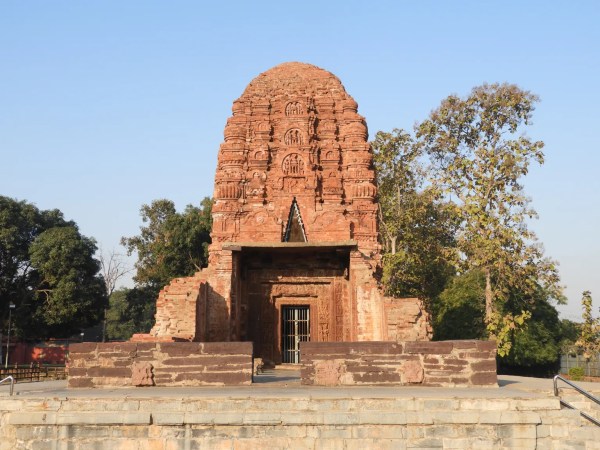 A view of the Lakshmana temple in Sirpur in Chhattisgarh’s Mahasamund district. (Source: Archaeological Survey of India)
— The site was a major Buddhist centre with large viharas, meditation halls and excavated stupas. One monastery (Tivaradeva Mahavihara) houses a significant Buddha statue. Archaeologists have also uncovered a 6th Century market complex, showing Sirpur was both a religious and commercial hub.
— Sirpur’s location along the Mahanadi creates a sacred riverine cultural landscape with ghats and temple clusters, aligning with UNESCO’s concept of a combined work of nature and humankind, enhancing the site’s value.
Therefore, option (d) is the correct answer.
The Higher Education Commission of India Bill 2025, to be introduced in the Winter Session of Parliament, seeks to merge the functions of:
1. University Grants Commission (UGC)
2. National Council for Teacher Education (NCTE)
3. All India Council for Technical Education (AICTE)
Select the correct answer using the codes given below:
(a) 1 and 2 only
(b) 3 only
(c) 1 only
(d) 1, 2 and 3
Explanation
— The Higher Education Commission of India Bill 2025, to be introduced in the Winter Session of Parliament next month, seeks to merge the functions of three statutory bodies — the University Grants Commission (UGC), the National Council for Teacher Education (NCTE), and the All India Council for Technical Education (AICTE).
— According to officials, the Bill is likely to follow NEP 2020’s recommendations. The NEP proposed a single overarching regulator subsuming the functions of the UGC, AICTE, and NCTE. While the UGC regulates higher education, the AICTE oversees technical education in engineering and management, and the NCTE sets standards for teacher education.
— The NEP proposes four verticals under HECI: the National Higher Education Regulatory Council to regulate all fields except medical and legal education; the National Accreditation Council as an accrediting body; the General Education Council to frame learning outcomes; and the Higher Education Grants Council for funding.
Therefore, option (d) is the correct answer.
With reference to the moss, consider the following statements:
1. It is a small plant usually found in damp and shady spots.
2. It is among the earliest land plants and has colonised some of the harshest environments on the planet.
3. It is not found in Antarctica.
4. Mosses reproduce via spores and are important for soil health.
How many of the statements given above are correct?
(a) Only one
(b) Only two
(c) Only three
(d) All four
Explanation
— A team of scientists has found that moss can survive a prolonged trip to space. As part of a study, a handful of moss spores survived nine months exposed to low-orbit conditions, with 80% of them still able to reproduce once back in a lab on Earth.
— Moss — the small plant usually found in damp, shady spots — is already known for its resilience on Earth. Mosses reproduce via spores and are important for soil health. Hence, statement 1 and 4 are correct.
— It is among the earliest land plants and has colonised some of the harshest environments on the planet, including Antarctica, volcanic fields, and deserts. Hence, statement 2 is correct and statement 3 is not correct.
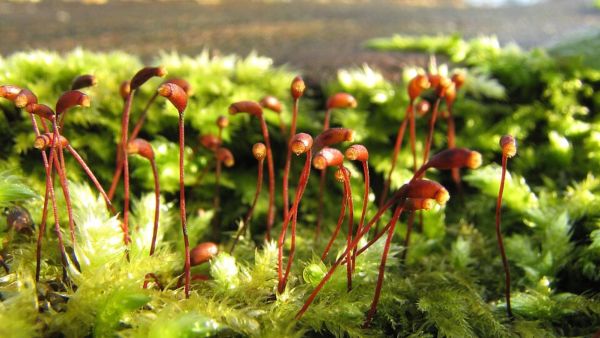 (Photo: Wikimedia Commons)
About the study
— In March 2022, the scientists locked 20,000 moss spores outside the International Space Station (ISS) and left them exposed to space, where they endured vacuum, cosmic radiation, microgravity and temperature extremes for 283 days.
— In January 2023, the spores were brought back to Earth. The scientists found that more than 80% of them had survived, and of those, all but 11% had successfully germinated in the lab.
— “The team checked chlorophyll levels as well – essential pigments for photosynthesis – and found normal levels across the spores, aside from a 20% drop in chlorophyll a. But even that reduction did not appear to harm the spores’ overall health,” according to a report by the BBC.
— The scientists suggested that moss spores were able to survive due to the multiple layers of spore walls that encase the reproductive tissue, offering “passive shielding against space stresses”.
Therefore, option (c) is the correct answer.
Currently, which of the Union Territories are under the provisions of Article 240 of the Indian Constitution?
1. Lakshadweep
2. Dadra and Nagar Haveli and Daman and Diu
3. Puducherry
4. Chandigarh
5. Andaman and Nicobar Islands
Select the correct answer using the codes given below:
(a) 1, 3 and 5 only
(b) 2, 3 and 4 only
(c) 1, 3, 4 and 5
(d) 1, 2, 3 and 5
Explanation
— Earlier, a bulletin of the Lok Sabha and Rajya Sabha had stated that the Centre would introduce The Constitution (131 Amendment) Bill 2025 in the upcoming session, to include Chandigarh under Article 240 of the Constitution.
About Chandigarh
— Chandigarh is a Union Territory (UT), but is also the shared capital of Punjab and Haryana. The Governor of Punjab currently holds additional charge as the Administrator of the UT of Chandigarh.
— Bringing Chandigarh under the ambit of Article 240 of the Constitution would pave the way for the city to get an independent administrator, like the Lieutenant Governor (L-G) in many other UTs.
Article 240
— Article 240 of the Constitution lays down the power of the President of India to make regulations for certain Union territories. It says the “President may make regulations for the peace, progress and good government” of the Union territory of the Andaman and Nicobar Islands; Lakshadweep; Dadra and Nagar Haveli and Daman and Diu; and Puducherry when its Legislative Assembly is dissolved or suspended.
— “Any regulation so made may repeal or amend any Act made by Parliament or any other law which is for the time being applicable to the Union territory and, when promulgated by the President, shall have the same force and effect as an Act of Parliament which applies to that territory,” the Act says.
— If Chandigarh comes under this Act, it will not remain under the Punjab Governor in the manner it is now.
Therefore, option (d) is the correct answer.
The ‘non-dispersive infrared (NDIR) absorption’ method is used to measure which of the following pollutants for air quality index (AQI) readings?
(a) PM 2.5
(b) Sulphur dioxide
(c) Ozone
(d) Carbon monoxide
Explanation
— The Supreme Court asked authorities to explain the equipment used in Delhi air-quality monitoring stations and whether it is suited to the city’s conditions — a question raised at a time when Delhi relies heavily on AQI readings to gauge daily exposure to pollution.
— The city’s network comprises 40 Continuous Ambient Air Quality Monitoring Stations (CAAQMS) — compact, temperature-controlled cabins that function as automated laboratories. Spread across the city for representative measurement, each station must track eight pollutants: PM2.5, PM10, nitrogen dioxide, sulphur dioxide, carbon monoxide, ozone, ammonia and lead. They operate under Central Pollution Control Board (CPCB) guidelines issued in 2012, which specify the principles, calibration steps and quality-control procedures all instruments must follow.
— Carbon monoxide is measured using non-dispersive infrared (NDIR) absorption, based on how much infrared light CO absorbs.
Therefore, option (d) is the correct answer.
Read more: How Delhi’s air quality monitors work — and why their readings can falter
Which of the following are the effects of a decline in crude oil prices?
1. improves the current account deficit
2. keeps inflation under control
3. reduces subsidy on LPG and kerosene
Select the correct answer using the codes given below:
(a) 1 and 2
(b) 2 and 3
(c) 1 and 3
(d) 1, 2 and 3
Explanation
— India imports around 85 percent of its oil requirement. The share of oil imports in India’s total import bill is more than 25 per cent. A dip in oil prices benefits the current account deficit, which is the difference between the values of goods and services imported and exported.
— A decline in crude prices also helps in keeping inflation under control.
— Crude oil-related products have a share of more than 9 per cent in the WPI basket, and therefore, a 10 per cent decline in crude prices may lead to a 0.9 per cent dip in WPI inflation.
— A dip in crude oil prices also leads to a reduction in the subsidy on LPG and kerosene, easing the government’s subsidy bill.
— Export-oriented companies and infotech firms are set to gain from the recent decline in crude oil prices.
Therefore, option (d) is the correct answer.
In its annual staff report for India for 2025, the International Monetary Fund (IMF) retained its C-grade for India’s national account statistics. What does this mean?
(a) The essential elements of good-quality national accounts are absent; major reforms are required.
(b) Data provided to the Fund have some shortcomings that somewhat hamper surveillance.
(c) Most requirements are met, but there are some shortcomings in methods, coverage, or data sources.
(d) The national accounts follow international standards, use sound methods, and data quality is considered high.
Explanation
— In its annual staff report for India for 2025, the International Monetary Fund (IMF) on Wednesday retained its C-grade for India’s national account statistics, or GDP data, which means the data provided to the Fund have “some shortcomings that somewhat hamper surveillance”. On Friday, the Ministry of Statistics and Programme Implementation (MoSPI) said India’s GDP growth rate unexpectedly surged to a six-quarter high of 8.2 per cent in July-September from 7.8 per cent in April-June.
— As is usually the case when economic data exceeds expectations – economists widely saw growth moderating to 7.3 per cent in the second quarter – questions have again been raised about what the GDP numbers really mean.
Therefore, option (b) is the correct answer.
According to a recent study, compared to western and southern cities — such as Chennai, Chandigarh, Visakhapatnam, Mumbai, and Bengaluru — northern cities — like Delhi, Lucknow, and Varanasi — experience worse air quality levels, especially during winters. What can be the possible reason/s?
1. Northern cities are landlocked, as the Indo-Gangetic Plain is surrounded by the Himalayas.
2. Cities in western and southern India witness winter inversion more effectively than cities in in northern India.
(a) Only 1
(b) Only 2
(c) Both 1 and 2
(d) Neither 1 nor 2
Explanation
— No major urban cities in India recorded safe air quality levels between 2015 and November 2025, with Delhi being the most polluted city during this period, according to a new analysis. It also found that while northern cities experienced the most severe and persistent levels of pollution, southern and western cities comparatively saw better air quality levels.
— The analysis, ‘Air Quality Assessment of Major Indian Cities (2015–2025)’, was released on Friday (November 28) by Climate Trends, a Delhi-based climate research organisation. For the study, the organisation examined annual mean AQI data of 11 cities: Ahmedabad, Bengaluru, Chandigarh, Chennai, Delhi, Kolkata, Lucknow, Mumbai, Pune, Varanasi, and Visakhapatnam.
Why do northern cities have worse air quality levels?
— Compared to western and southern cities — such as Chennai, Chandigarh, Visakhapatnam, Mumbai, and Bengaluru — northern cities — like Delhi, Lucknow, and Varanasi — experience air quality levels, especially during winters, due to the region’s geography.
— The issue is that these northern cities are landlocked, as the Indo-Gangetic Plain is surrounded by the Himalayas. Due to this, pollutants get trapped and are not able to disperse. Moreover, “within cities, dense urban structures create additional “surface roughness,” a frictional effect that further slows wind speeds and limits dispersion,” the analysis said.
— While during the summer monsoon, rain and strong westerly winds help disperse pollutants, in winter, the situation becomes worse. Delhi is particularly affected during this time because it is situated in the middle of a vast, flat basin bound by the Himalayas to the north.
— “During winters (December-February), the air in the planetary boundary layer (the lowest part of the atmosphere) is thinner as the cooler air near the Earth’s surface is denser. The cooler air is trapped under the warm air above, forming a kind of atmospheric ‘lid’. This phenomenon is called winter inversion. Since the vertical mixing of air happens only within this layer, the pollutants released lack enough space to disperse in the atmosphere,” the analysis said.
Therefore, option (a) is the correct answer.
With reference to Nellie massacre seen in news, which of the following statements is/are true:
(a) The massacre occurred during the Assam Agitation, which demanded detection, removal from voter rolls, and deportation of illegal Bangladeshi immigrants.
(b) The incident was a direct result of a long-standing water-sharing conflict between Assam and neighboring states
(c) The massacre occurred because the central government refused to provide flood-relief funds, which escalated into ethnic hostility.
(d) The violence erupted mainly due to a dispute over forest land rights between tribal communities and commercial logging companies.
Explanation
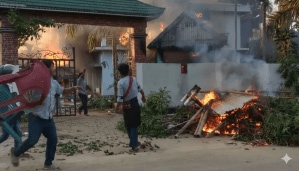
— The Nellie Massacre of February 18, 1983, one of the worst instances of mass violence in post-Independence India, is back in focus with the Assam government tabling and releasing on Tuesday two key reports on the unrest that engulfed the state at the time.
— Of these, the report of the ‘Commission of Enquiry on Assam Disturbances’ led by IAS officer Tribhuvan Prasad Tewary was an official administrative enquiry into the circumstances of the 1983 violence and the measures authorities took to anticipate and prevent it.
— The violence in Nellie on February 18, 1983, occurred while Assam was in the throes of the Assam Agitation, which began in 1979 and sought the detection of illegal immigrants from Bangladesh, their deletion from the state’s voter rolls, and their deportation. Of the places affected was Central Assam’s Nagaon district, where Nellie was then located .
Therefore, option (a) is the correct answer.
Consider the following statements:
1. K.M. Nanavati v State of Maharashtra was the last case of jury trials all over India.
2. Code of Criminal Procedure, 1973, removed the provision for jury trials entirely from the Indian criminal justice system.
Which of the above given statements is/are true?
(a) 1 only
(b) 2 only
(c) Both 1 and 2
(d) Neither 1 nor 2
Explanation
While the decline of the jury system was a gradual process, one case is famously credited with sealing its fate in the popular imagination: K.M. Nanavati v State of Maharashtra in 1959.
Kawas Manekshaw Nanavati, a decorated Parsi naval commander, shot and killed Prem Ahuja, his wife’s lover. The case became a media sensation, whipped up by tabloid journalism, which painted Nanavati as a betrayed hero and a man of honour.
Despite the judge’s instructions and the evidence pointing to premeditated murder, the jury in the Bombay sessions court acquitted Nanavati by an 8-1 majority, accepting his defence that the shooting was accidental during a scuffle. The presiding judge, finding the verdict “perverse” and contrary to the weight of evidence, referred the case to the Bombay High Court. The high court subsequently overturned the jury’s verdict and convicted Nanavati of murder, following which he spent three years in prison before being pardoned by the Governor of Maharashtra.
The case highlighted the susceptibility of juries to public sentiment and media pressure rather than strict legal evidence. It reinforced the government’s view that the system was prone to emotional errors.
Contrary to popular belief, the Nanavati case did not instantly end jury trials. The system continued in pockets of the country for several years. For instance, the Calcutta High Court continued to hold jury trials until 1973.
Its death knell came with the enactment of the Code of Criminal Procedure, 1973, which came into effect in 1974. The new law removed the provision for jury trials entirely from the Indian criminal justice system, placing the responsibility of determining both fact and law solely on judges.
However, a unique vestige of the system survives in India today. Under the Parsi Marriage and Divorce Act, 1936, special courts are constituted to decide matrimonial disputes within the Parsi community. These courts are aided by “delegates” – essentially jurors – chosen from the community to assist the judge in deciding questions of fact.
Therefore, option (b) is the correct answer.
South Africa will hand over the rotating G20 presidency to which country in December 2025?
(a) Italy
(b) Japan
(c) Britain
(d) US
Explanation
Next G20 Summit
South Africa will hand over the rotating G20 presidency to the US in December 2025, with the next Summit scheduled for Miami in 2026.
Therefore, option (d) is the correct answer.
UPSC Weekly Current Affairs Quiz | November 16 to November 22, 2025
UPSC Weekly Current Affairs Quiz | November 09 to November 15, 2025
UPSC Weekly Current Affairs Quiz | November 02 to November 08, 2025
UPSC Weekly Current Affairs Quiz | October 26 to November 01, 2025
UPSC Weekly Current Affairs Quiz | October 19 to October 25, 2025
Subscribe to our UPSC newsletter and stay updated with the news cues from the past week.
Stay updated with the latest UPSC articles by joining our Telegram channel – IndianExpress UPSC Hub, and follow us on Instagram and X.

Read UPSC Magazine