10 min read


© IE Online Media Services Pvt Ltd



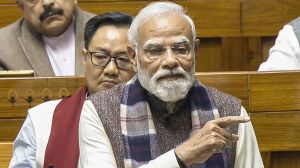
 On Monday, Parliament will discuss Vande Mataram for 10 hours on the occasion of its 150th anniversary, with Prime Minister Narendra Modi set to initiate the debate on the government’s behalf. Find questions on the song and its writer in our upsc quiz today.
 UPSC Essentials brings to you its initiative of daily subject-wise quizzes. These quizzes are designed to help you revise some of the most important topics from the static part of the syllabus. Attempt today’s subject quiz on History and Culture to check your progress. Find links to previous History quizzes for UPSC towards the end of the article.
🚨 Click Here to read the UPSC Essentials magazine for November 2025. Share your views and suggestions in the comment box or at manas.srivastava@indianexpress.com🚨
Consider the following statements with the reference to Vande Mataram, the song written by Bankim Chandra Chattopadhyay:
1. This song, which was partly written in Hindi and partly in Bengali, became the symbol of protest against the Partition of Bengal in 1905 and soon afterwards caught national imagination as the rallying cry of the freedom struggle.
2. During the 1896 Congress session in Calcutta, Bankim Chandra Chattopadhyay set it to tune and sang it for the first time.
3. The song appears in the novel Anandamath, published as a book in 1882, which tells the story of a rebellion of sanyasis against Muslim conquerors.
Which of the following statements is/are not correct?
(a) 1 only
(b) 1 and 2 only
(c) 3 only
(d) 2 and 3 only
— Metamorphosing from a song written by Bankim Chandra Chattopadhyay, Vande Mataram became the symbol of protest against the Partition of Bengal in 1905 and soon afterwards caught national imagination as the rallying cry of the freedom struggle, becoming a fixture at Congress sessions before Independence.
— On Monday, Parliament will discuss Vande Mataram for 10 hours on the occasion of its 150th anniversary, with Prime Minister Narendra Modi set to initiate the debate on the government’s behalf. The song, which was partly written in Sanskrit and partly in Bengali, was composed in 1875 and included in Chattopadhyay’s novel Anandamath in 1881 during its serialisation in the magazine Bangadarshan. During the 1896 Congress session in Calcutta, Rabindranath Tagore set it to tune and sang it for the first time.
— Anandamath, published as a book in 1882, tells the story of a rebellion of sanyasis against Muslim conquerors. The song appears in the novel when Mahendra, a householder, meets Bhavananda, a fighting monk, who sings the first few lines. A curious Mahendra then seeks to know who this mother was, but Bhavananda sings the next few lines instead of answering. When a perplexed Mahendra tells the monk he is singing about the country, not a mother, Bhavananda responds, his eyes welling up with tears, “We know no other mother… except the land that gave us birth.”
Therefore, b is the correct answer.
(For more, refer: Vande Mataram at 150: Rallying cry of freedom fighters to Sangh favourite — the evolution of India’s national song ny Vikas Pathak, The Indian Express.)
Consider the following excerpt:
“There is no question of some Muslims objecting to Vande Mataram. That has not influenced many people here, but many of us, and I feel strongly about it, think that in the present context Vande Mataram is completely unsuited as a national anthem. It is and it will continue to be a national song which is intimately connected with our struggle for freedom, and which will be revered accordingly. But a national anthem is something different from a song which represents the struggle and the longing which Vande Mataram so powerfully represents. A national anthem should be something of victory and fulfilment, not of past struggle.”
Whose words are these?
(a) Mahatama Gandhi
(b) Jawaharlal Nehru
(c) Maulana Abul Kalam Azad
(d) Bankim Chandra Chattopadhyay
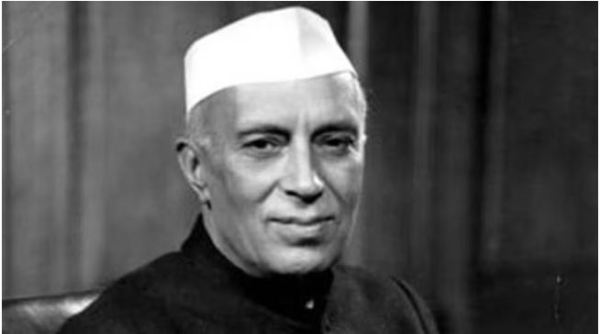
— In a Cabinet note on May 21, 1948, Nehru spelled out his reasons for choosing Jana Gana Mana over Vande Mataram as the national anthem.
“A National Anthem is, of course, a form of words, but it is even more so a tune or a musical score. It is played by orchestras and bands frequently and only very seldom sung. The music of the National Anthem is, therefore, the most important factor. It is to be full of life as well as dignity and it should be capable of being effectively played by orchestras, big and small, and by military bands and pipes. It is to be played not only in India but abroad and should be such as is generally appreciated in both these places. Jana Gana Mana appears to satisfy these tests … Vande Mataram for all its beauty and history is not an easy tune for orchestral or band rendering. It is rather plaintive and mournful and repetitive. It is particularly difficult for foreigners to appreciate it as a piece of music. It has not got those peculiar distinctive features which Jana Gana Mana has. It represents very truthfully the period of our struggle in longing and not so much the fulfilment thereof in the future.”
Nehru added that the language of Vande Mataram was “very difficult for an average person”, while Jana Gana Mana “is simpler though it is capable of improvement and some changes are necessary in the present context”.
“… Bearing all these considerations in mind, I suggest that we might provisionally accept Jana Gana Mana as the National Anthem which should be played on all suitable occasions,” the former PM said.
— Arguing in favour of Jana Gana Mana as the national anthem, Nehru wrote to Congress leader B C Roy, who became the first CM of West Bengal, on June 15, 1948, saying, “There is no question of some Muslims objecting to Vande Mataram. That has not influenced many people here, but many of us, and I feel strongly about it, think that in the present context Vande Mataram is completely unsuited as a national anthem. It is and it will continue to be a national song which is intimately connected with our struggle for freedom, and which will be revered accordingly. But a national anthem is something different from a song which represents the struggle and the longing which Vande Mataram so powerfully represents. A national anthem should be something of victory and fulfilment, not of past struggle.”
“I should like to repeat that it is the tune of the anthem not so much the words. So far as I can see the Vande Mataram does not fulfil this essential qualification although I believe some people are of opinion that it does. From the point of view of the foreign countries it is undoubtedly a flop. Whether Jana Gana Mana is adopted or not I doubt very much if Vande Mataram could be adopted. As for the words Vande Mataram contains language which most people do not understand. Certainly, I do not understand it,” he wrote.
— About a week later, on June 21, 1948, Nehru responded to Syama Prasad Mookerjee’s letter on the issue. Mookerjee later went on to form the Bharatiya Jana Sangh, the precursor to the BJP.
“Personally I do not think Vande Mataram is at all feasible as a national anthem chiefly because of its tune which does not suit orchestral or band rendering… Jana Gana Mana, on the other hand, has already been greatly appreciated in foreign countries as well as in India and the music of it has a great appeal to people who hear it in India or abroad. Vande Mataram is of course intimately connected with our entire national struggle and we are all emotionally attached to it and will continue to be so attached. It will in any event remain as a famous national song but I personally think that a song which represents poignant longing for freedom is not necessarily a song which fits in with the achievement of freedom. Jana Gana Mana has an element of triumph and fulfilment about it,” he wrote.
Therefore, b is the correct answer.
(For more, refer: Why Nehru did not want Vande Mataram as national anthem: ‘Premier song … (but) mournful … difficult for foreigners to appreciate’ by Pushakar Banakar, The Indian Express.)
Which of the following statements is/are correct with reference to ‘Kalaka Acharya Katha’?
(a) It tells the tale of a Jain monk who seeks help from the Sakas.
(b) It is a Buddhist text belonging to the Tripitaka.
(c) It was originally written in Sanskrit and only later adapted into Prakrit.
(d) The text describes the construction of ancient Hindu temples in western India.
— Each Tirthankara’s life (Jainism) was mapped through the five sacred events, known as the Pancha-kalyanak: conception, birth, renunciation, enlightenment, and liberation. The manuscripts often repeated these stories, reflecting the timeless rhythm of Jain teaching rather than individual innovation.
— Many also included appendices such as the Kalaka Acharya Katha, recounting how the sage Kalaka invited foreign kings, especially Sakas, to punish an arrogant ruler of Ujjain who had abducted his sister.
Therefore, a is the correct answer.
(For more, refer: Art and Culture with Devdutt Pattanaik | Karma’s cosmic order in Jain manuscripts by Devdutt Pattanaik, The Indian Express.)
Consider the following literary works:
1. Raktakarabi
2. Kapalkundala
3. Durgeshnandini
4. Rajmohan’s Wife
5. Devi Chaudhurani
Which of the above mentioned literary works were written by Bankim Chandra Chattopadhyay, the writer of Vande Mataram?
(a) 1, 2 and 3 only
(b) 1, 4 and 5 only
(c) 2, 3, 4 and 5 only
(d) 2, 3 and 5 only
— Raktakarabi was written by Rabindranath Tagore. Rest all are the works of Bankim Chandra Chattopadhyay.
Who among the following was known as ‘Father of Indian Modern Dance’?
(a) Vishnupant Moreshwar Chatre
(b) Shanti Bardhan
(c) Uday Shankar
(d) Vishnu Narayan Bhatkhande
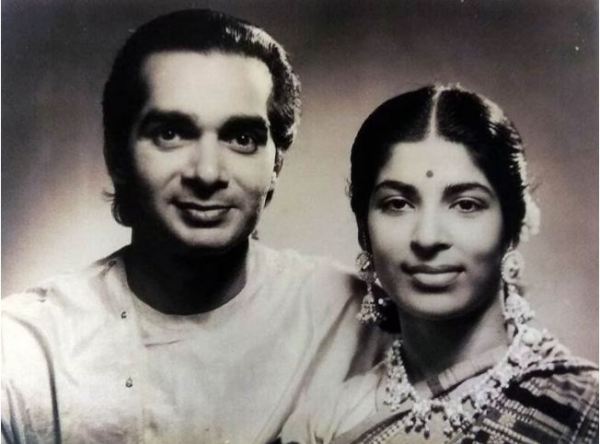 Uday Shankar and wife Amala Shankar. Amala Shankar née Nandy, has lived and danced in the shadow of her partner, Uday Shankar.
— Uday Shankar was a pioneering Indian dancer and choreographer (1900-1977) who created a new fusion style of dance by blending traditional Indian classical, folk, and tribal forms with Western theatrical techniques. He is considered the father of modern Indian dance for his innovative approach, which gained international recognition and broke the taboo surrounding dance in society at the time. (wbtourism.gov.in)
Therefore, c is the correct answer.
(For more, refer: Dancing with the Star: The legacy of Amala Shankar, the centenarian, The Indian Express)
Daily Subject-wise quiz — International Relations (Week 139)
Daily Subject-wise quiz — History, Culture, and Social Issues (Week 134)
Daily subject-wise quiz — Polity and Governance (Week 139)
Daily subject-wise quiz — Science and Technology (Week 139)
Daily subject-wise quiz — Economy (Week 139)
Daily subject-wise quiz — Environment and Geography (Week 139)
Daily subject-wise quiz – International Relations (Week 138)
Subscribe to our UPSC newsletter and stay updated with the news cues from the past week.
Stay updated with the latest UPSC articles by joining our Telegram channel – IndianExpress UPSC Hub, and follow us on Instagram and X.

Read UPSC Magazine