9 min read
© IE Online Media Services Pvt Ltd
Latest Comment
Post Comment
Read Comments



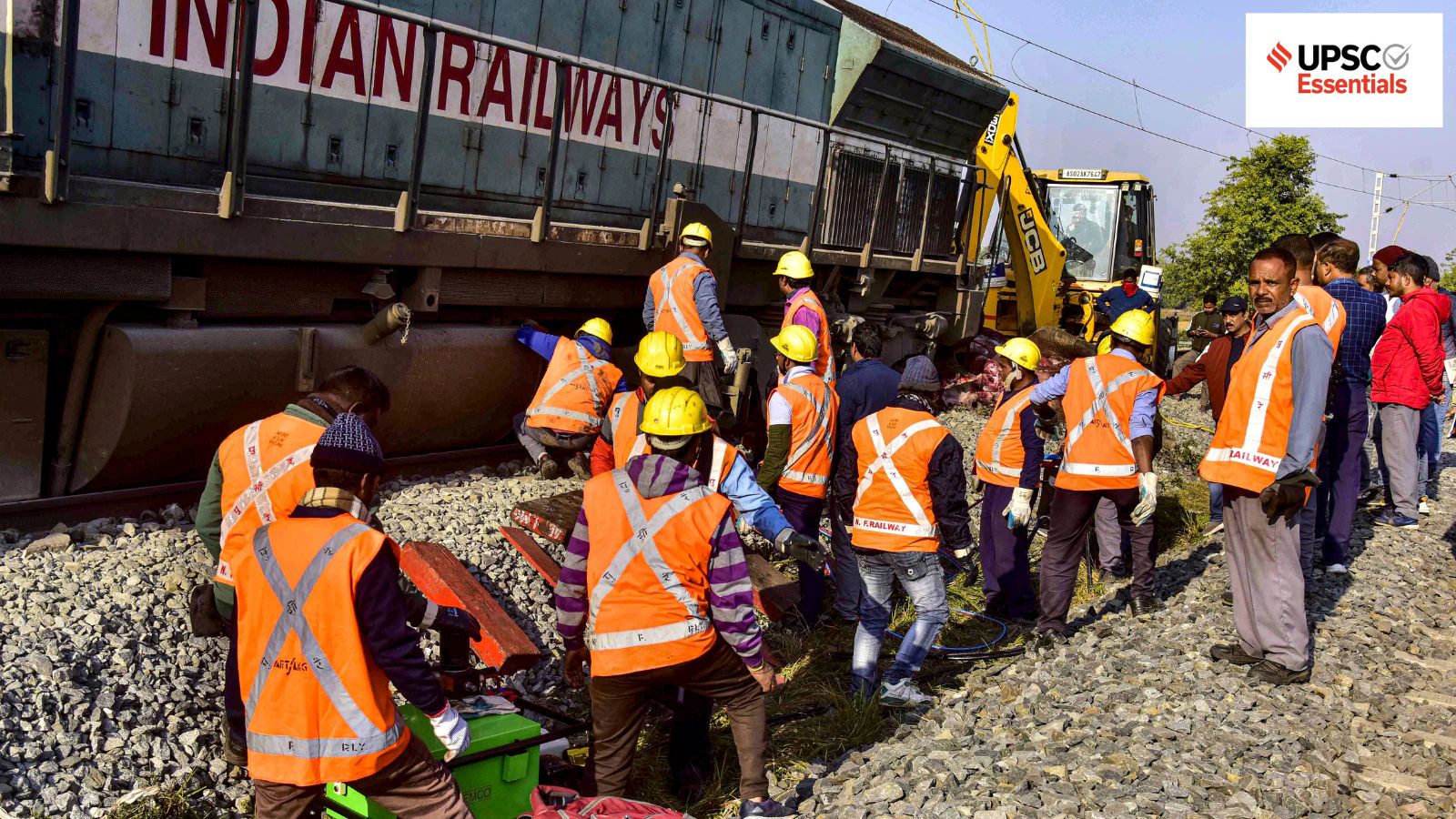 Attempt a question on the train–elephant collisions in today's answer writing practice. (file image)
UPSC Essentials brings to you its initiative for the practice of Mains answer writing. It covers essential topics of static and dynamic parts of the UPSC Civil Services syllabus covered under various GS papers. This answer-writing practice is designed to help you as a value addition to your UPSC CSE Mains. Attempt today’s answer writing on questions related to topics of GS-3 to check your progress.
🚨 Click Here to read the UPSC Essentials magazine for December 2025. Share your views and suggestions in the comment box or at manas.srivastava@indianexpress.com🚨
India has witnessed a significant number of elephant deaths due to train collisions, despite conservation legislation and wildlife protection frameworks. Discuss the major causes of train–elephant collisions in India. Suggest reforms to strengthen wildlife protection along transport corridors.
Discuss the significance of the induction of Seahawk helicopter squadrons in the Indian Navy’s efforts to strengthen anti-submarine warfare and maritime surveillance capabilities.

QUESTION 1: India has witnessed a significant number of elephant deaths due to train collisions, despite conservation legislation and wildlife protection frameworks. Discuss the major causes of train–elephant collisions in India. Suggest reforms to strengthen wildlife protection along transport corridors.
Note: This is not a model UPSC answer. It only provides you with thought process which you may incorporate into the answers.
Introduction:
— Recently, the Delhi-bound Rajdhani Express collided with a herd of elephants in Assam’s Hojai district, killing seven of them.
— In India, which is home to over half the 52,000-strong population of the endangered Asian elephant (Elephas maximus), collision with trains is a leading anthropogenic cause of elephant mortality.
Body:
You may incorporate some of the following points in your answer:
Causes of train–elephant collisions in India
— Between 2010 and 2020, a whopping 1,160 elephants were killed in the country due to non-natural causes, according to data from the Union Ministry of Environment, Forest and Climate Change (MoEFCC), with train hits (186 deaths) the second largest killer after electrocution (741 deaths); even electrocution is frequently caused by the high-voltage overhead line equipment used to power trains.
— Apart from directly killing elephants, linear transport infrastructure (LTI) like railways, road networks, or human-made canals cutting through elephant habitat also exerts pressures on elephant populations that have downstream impact on their health. For instance, railway lines may trap a herd in a small section of the forest, limiting its access to food and water.
— Although elephants do cross LTI, they are often reluctant to do so: a 2017 study found that train-elephant collisions occurred more frequently at night, with males disproportionately affected since they were more likely to cross the tracks more often to embark on crop raiding behaviour during crop harvest season.
Reforms to strengthen wildlife protection
— The ‘Handbook to Mitigate the Impacts of Roads and Railways on Asian Elephants’, published by the International Union for Conservation of Nature’s (IUCN’s) Asian Elephant Transport Working Group in 2023, provides a comprehensive set of guidelines:
(i) Designing infrastructure so as to not pass through or near elephant habitat or avoid cutting across migration pathways, is much more effective than any mitigation measure. Since avoiding habitats altogether is often unviable, development planners must take all mitigation measures available to them. The foremost among them is to construct well-designed and -conceptualised wildlife crossing structures.
(ii) Wildlife crossing structures are typically the cornerstone of successful strategies to minimise the impact of roads and railways on wildlife… When used together with wildlife fencing, wildlife crossing structures dramatically reduce the incidence of wildlife mortality by as much as 98%.
(iii) Crossing structures can either be underpasses, where wildlife travels underneath the LTI (under bridges, flyovers), or overpasses, where wildlife travels over the LTI (over natural or human-made tunnels). The preference for a particular kind of crossing structure depends on the nature of the terrain and known-behaviour of wildlife in the area. But the key is for crossing structures to be well-designed.
(iv) For elephants, this means prioritising openness, so they do not feel confined and choose to not use the structure. The handbook suggests minimum heights of 6–7 m, depending on the length of the crossing.
(v) Sensor-technology can be locomotive- or ground-based. The former usually comprises Forward Looking Infrared (FLIR) cameras, which can help detect obstructions on a track at ranges of up to 750 m, regardless of visibility conditions. Ground-based systems, comprising cameras and other acoustic or seismic sensors, can be installed at frequent crossing locations.
Conclusion:
— The Railways have already deployed AI-based early warning systems in multiple places, although these are yet to see widespread adoption.
— In a pioneering initiative, the Northeast Frontier Railway (NFR) in 2023 began using AI to proactively observe and safeguard wild elephants from train collisions. A similar system was introduced in the Kerala-Tamil Nadu border in 2024.
(Source: Seven elephants die in train hit in Assam: How such accidents can be prevented)
Points to Ponder
Read more about human-animal conflict
Read more about elephants in India
Related Previous Year Question
Rehabilitation of human settlements is one of the important environmental impacts which always attracts controversy while planning major projects. Discuss the measures suggested for mitigation of this impact while proposing major developmental projects. (2016)
QUESTION 2: Discuss the significance of the induction of Seahawk helicopter squadrons in the Indian Navy’s efforts to strengthen anti-submarine warfare and maritime surveillance capabilities.
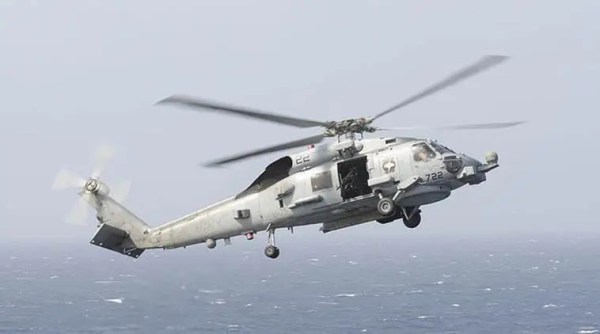 (Wikimedia Commons)
Note: This is not a model UPSC answer. It only provides you with thought process which you may incorporate into the answers.
Introduction:
— The Indian Navy commissioned its second MH-60R helicopter squadron, INAS 335, at INS Hansa in Goa.
— The squadron has been nicknamed ‘Ospreys’ after the fish-hunting bird of prey. The MH-60R Seahawks are maritime helicopters of US origin, based on the Black Hawk platform but distinct from the V-22 Osprey transport aircraft.
Body:
You may incorporate some of the following points in your answer:
— Their induction will greatly improve the Indian Navy’s anti-submarine warfare (ASW) and maritime surveillance capabilities. The helicopters will also improve India’s blue-water operating reach and endurance, particularly in the Indian Ocean region.
Significance
— The aircraft has been fully integrated with the Indian Navy’s fleet operations and can operate from shore bases as well as maritime assets like aircraft carriers and other large ships.
— The helicopter is designed for a wide range of operations including anti-submarine warfare (ASW), anti-surface warfare (ASuW), search and rescue (SAR) missions, and medical evacuation (MEDEVAC). It can be used for vertical replenishment (VERTREP), a naval logistics operation in which supplies are transferred by helicopter between ships at sea or from shore to ship without the ships having to dock or come next to each other.
— The helicopter has been rigorously tested in Indian Reference Atmosphere (IRA) conditions. Twenty-four of these submarine-hunting helicopters have been acquired by India from the US for a contract worth over Rs 15,000 crore. These helicopters are replacing the ageing British-origin Sea King helicopters, which have been in service for long.
Conclusion:
— The induction coincides with an important milestone as the year 2025 marks 75 years since the Government of India approved the formation of a Fleet Air Arm for the Navy.
— The state-of-the-art digital sensor package of the MH 60R includes a multi-mode radar, electronic support measures, infrared cameras, datalinks, aircraft survivability systems, and dipping sonars. The on-board mission system processes data obtained from sensors to create a comprehensive situational picture of the sea surface and underwater domain.
Points to Ponder
Read more about recent Indian Navy’s induction (ships and submarines)
Read about Indian Navy’s presence in Indian Ocean Region
Related Previous Year Questions
Why is maritime security vital to protect India’s sea trade? Discuss maritime and coastal security challenges and the way forward. (2025)
What are the maritime security challenges in India? Discuss the organisational, technical and procedural initiatives taken to improve the maritime security. (2022)
UPSC Essentials: Mains answer practice — GS 3 (Week 132)
UPSC Essentials: Mains answer practice — GS 3 (Week 133)
UPSC Essentials: Mains answer practice — GS 2 (Week 132)
UPSC Essentials: Mains answer practice — GS 2 (Week 133)
UPSC Essentials: Mains answer practice — GS 1 (Week 133)
UPSC Essentials: Mains answer practice — GS 1 (Week 132)
Subscribe to our UPSC newsletter and stay updated with the news cues from the past week.
Stay updated with the latest UPSC articles by joining our Telegram channel – IndianExpress UPSC Hub, and follow us on Instagram and X.


Read UPSC Magazine