© IE Online Media Services Pvt Ltd
Latest Comment
Post Comment
Read Comments
 9 min read


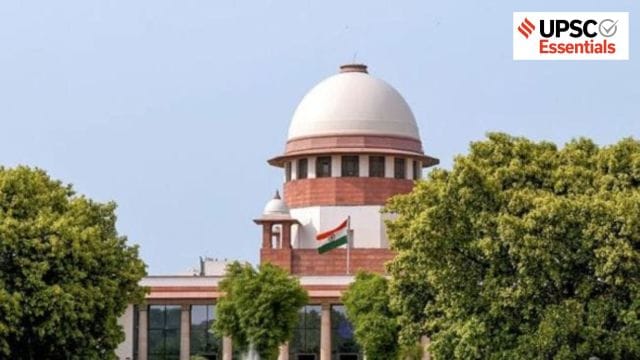 In India, the pardoning powers of the President and Governors are subject to limited judicial review. (PTI Photo)
— Dileep P Chandran
In Kehar Singh versus Union of India (1988), the Supreme Court held that the “President’s power under Article 72 falls squarely within the judicial domain and can be examined by the court by way of judicial review”.
This underscores that the President’s pardoning power in India is subject to limited judicial review. Let’s examine the pardoning power of the President of India and how it compares with that of the President of the US.
The pardoning power in India can be traced back to the colonial era, when the British monarch was vested with absolute powers to pardon. The British monarch traditionally enjoyed the ‘royal prerogative of mercy’, which refers to the pardoning power. Originally an absolute power, it is now restricted by constitutional conventions:
1. The monarch is now required to act on the advice of ministers.
2. The power is also subject to limited judicial scrutiny.
However, during the colonial era, the Governor General of British India enjoyed powers similar to the British monarch and could suspend, remit, or commute sentences. This was codified in Section 295 (1) of the Government of India Act, 1935.
Makers of India’s Constitution preserved the pardoning power of the Head of State and vested it in the President as a safeguard to correct the judicial error. In this way, the President’s pardoning power functions independently of the judiciary. But how is it comparable to the pardoning power of the US President?
The Constitution of India and that of the US confer the pardoning power on their respective Presidents.
The case of India
In India, Article 72 of the Constitution provides power to the President to grant pardon to persons convicted of offences or sentenced under Union Law, by court martial, or those resulting in death sentences.
Article 72(1) empowers the President with powers to “grant pardons, reprieves, respites or remissions of punishment or to suspend, remit or commute the sentence of any person convicted of any offence”. This means the President can:
Pardon – Remove both sentence and conviction.
Commute – Substitute a punishment with a lesser one.
Remit – Reduce the period of a sentence.
Respite – Lessen punishment in view of special circumstances such as physical disability.
Reprieve – Delay the execution of punishment for a temporary period.
While exercising clemency, the President neither acts as a court of appeal nor does the process involve an oral hearing. The President is also not bound to provide reasons for granting or refusing clemency, although such decisions can be subject to limited judicial review on procedural grounds.
For instance, the Supreme Court in the Epuru Sudhakar case (2006) held that the exercise of pardoning power is subject to judicial review on the grounds of arbitrariness, mala fides or extraneous considerations.
The case of the US
The US Constitution empowers the President to pardon exclusively for offences against the US but not state offences or impeachment cases. Article II, Section 2 of the Constitution, provides that the President “shall have power to grant reprieves and pardons for offences against the United States, except in cases of impeachment.”
This means that the US President’s clemency power extends only to matters of federal jurisdiction, while state governors are vested with similar powers under their respective state laws. Thus, unlike the President of India, the President of the US has no authority over offences under state law.
But the broad language of Article II has been interpreted to allow pre-emptive pardons, which means the US President can pardon an individual even before he/she is formally charged, convicted, or tried. For instance, shortly before leaving his presidency, former President Joe Biden issued pre-emptive pardons to some to protect them from possible retribution from the succeeding government. By contrast, such a pre-emptive pardon has no Constitutional basis in India.
The clemency power of the US President is conclusive and final once granted, as the Constitution vests this authority solely in the President, and it is not subject to Congressional review or modification. Except in rare cases, a pardon cannot be revoked by a subsequent President.
The only Constitutional limitations are that the President’s clemency powers cannot be exercised in impeachment cases and do not extend to offences under state law. In contrast, the President of India enjoys very limited personal discretion in the exercise of clemency power.
The President of India is constitutionally bound to act on the advice of the Council of Ministers, as clarified in Maru Ram versus Union of India (1980) case. This position was reiterated in Dhananjoy Chatterjee versus State of West Bengal (1994) case. When there is an unreasonable delay on the part of the ministry to decide on mercy petitions, the President is expected to use discretionary power.
However, situations involving an unreasonable delay by the ministry have also invited judicial intervention. For instance, in the A G Perarivalan (2022) case, the Supreme Court ordered his release, citing the delay on the clemency decision by the Tamil Nadu Governor.
In essence, the difference in discretionary authority of the Presidents of India and the US in clemency matters stems from fundamental distinctions between the Presidential system in the US and the Parliamentary system in India. In the two systems, the scope of judicial intervention in the pardoning powers of the Presidents of India and the US also differs.
In India, the President’s power is subject to limited judicial review. As mentioned earlier, in Kehar Singh versus Union of India (1988), the Supreme Court held that the “President’s power under Article 72 falls squarely within the judicial domain and can be examined by the court by way of judicial review”.
However, it also made clear that courts cannot review the merits of cases despite their powers to intervene where procedural fairness is not met. Maru Ram versus Union of India (1980) prescribed limitations for judicial intervention on clemency matters.
In contrast, the US President’s clemency power is not subject to judicial intervention. The constitutional powers exercised by US Presidents in granting pardons are plenary, and therefore beyond any judicial correction if they are validly exercised. The doctrine of separation of powers shields the President’s clemency authority from judicial scrutiny. In the case of India, courts ensure accountability in the exercise of mercy powers.
Nonetheless, the pardoning power of the President of India is broader, as it extends beyond offences under Union law. But the pardoning power of Governors under Article 161 overlaps with that of the President. However, it has been argued that the pardoning power of Governors cannot be restricted on the ground that the President has earlier rejected a mercy petition.
The authority of Governors is distinct and independent, and the President’s pardoning power is not superior to that of Governor. However, the power of Governors has two limitations:
1. A Governor cannot pardon death sentences.
2. A Governor has no clemency power in cases tried by court martials.
3. In the case of the US, there is a clear federal-state separation.
Moreover, the exercise of clemency powers by the Heads of State in India and the US reflects the political character of each system. In the US, the use of presidential clemency has often attracted criticism for being politically motivated.
In India, the pardoning powers of the President and Governors are invoked less frequently, and usually without major controversy. Their decisions are subject to limited judicial review. The restricted discretionary powers and clearer constitutional framework reduce the scope for arbitrary use of clemency.
In sum, the contrasting scope and practice of clemency in these countries stem from their differing constitutional designs – the presidential system in the US and the parliamentary form of government in India.
Compare and contrast the pardoning powers of the President of India and the President of the United States. How do constitutional design and political systems shape their exercise?
Examine the scope of judicial review of pardoning powers in India and the United States. Are the limitations justified?
Explain the significance of the 101st Constitutional Amendment Act. To what extent does it reflect the accommodative spirit of federalism?
‘Constitutional Morality’ is rooted in the constitution itself and is founded on its essential facets. Explain the doctrine of Constitutional Morality’ with the help of relevant judicial decisions.
(Dileep P Chandran is an Assistant Professor at the Department of Political Science in P M Government College, Chalakudy, Kerala.)
Share your thoughts and ideas on UPSC Special articles with ashiya.parveen@indianexpress.com.
Click Here to read the UPSC Essentials magazine for November 2025. Subscribe to our UPSC newsletter and stay updated with the news cues from the past week.
Stay updated with the latest UPSC articles by joining our Telegram channel – IndianExpress UPSC Hub, and follow us on Instagram and X.

Read UPSC Magazine