© IE Online Media Services Pvt Ltd
Latest Comment
Post Comment
Read Comments
 10 min read


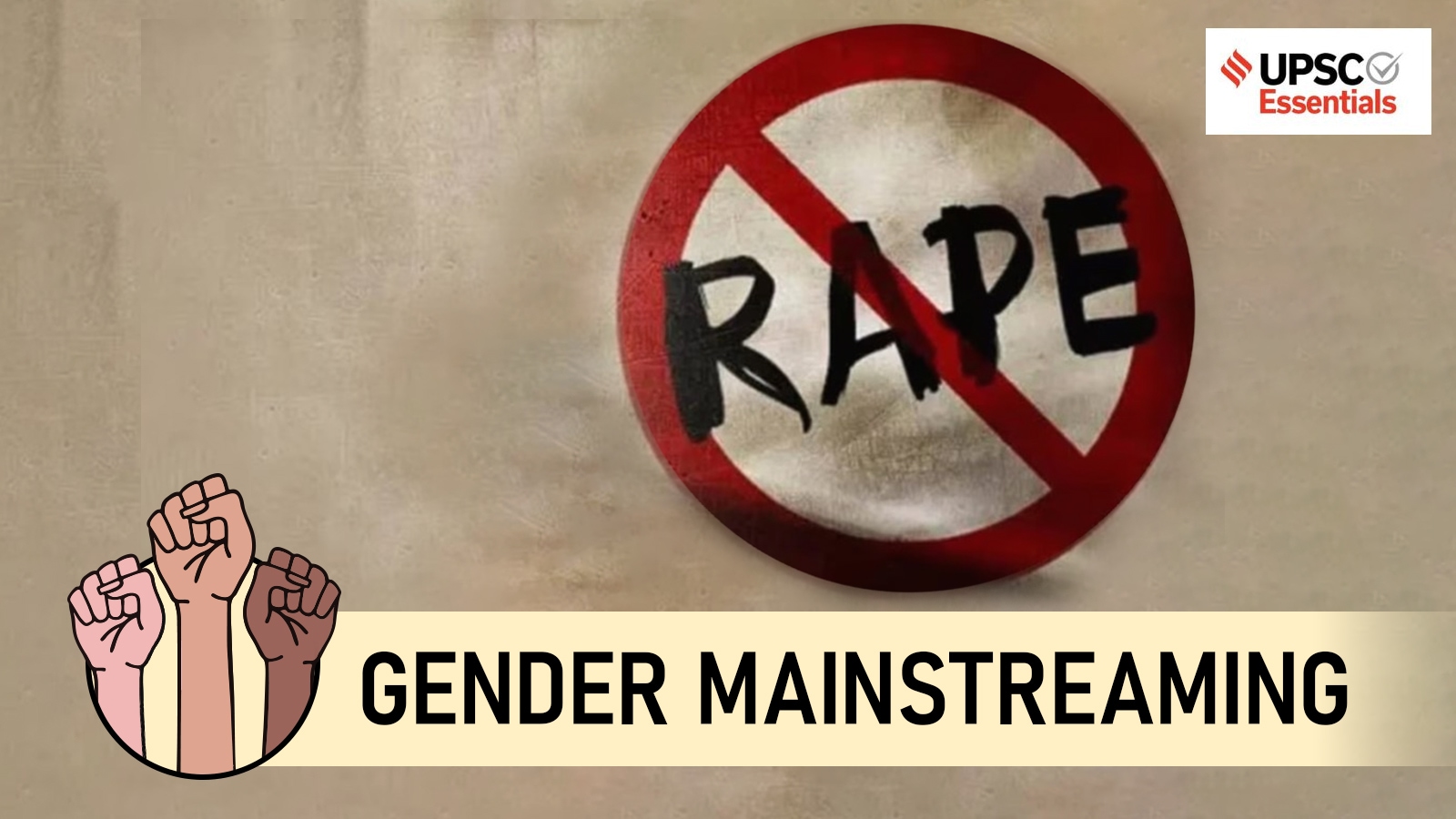 The law on rape was first introduced by the British in 1860, when the Indian Penal Code (IPC) was framed. (File)
— Rituparna Patgiri
Debate on marital rape has, once again, been reignited, with Congress MP Shashi Tharoor introducing a private member’s bill in the Lok Sabha to criminalise it. Having introduced the bill during the recently concluded Winter Session of Parliament, Tharoor questioned its exception in the Indian Penal Code (IPC), now carried over in Section 63 of the Bharatiya Nyaya Sanhita (BNS), 2023.
The criminalisation of marital rape was also recommended in the Justice J S Verma Committee report (2013), formed in the aftermath of the horrific gangrape of a 22-year-old physiotherapy intern in 2012. However, as the issue resurfaced, some of the men’s rights activist groups have voiced opposition to it, claiming that it will destroy the Indian family system.
In this context, it is important to examine the trajectory of Indian rape laws within its historical debates and socio-political context.
The law on rape was first introduced by the British in 1860, when the Indian Penal Code (IPC) was framed. But the law reflected colonial notions of morality and chastity, with women seen as objects and their consent given little importance.
Historical studies such as Elizabeth Kolsky’s “The Body Evidencing the Crime: Rape on Trial in Colonial India, 1860-1947” (2010) show how the modernisation of law and the development of a medico-legal understanding of rape introduced evidentiary standards. These standards placed a heavy burden on Indian women seeking justice in colonial courts.
Moreover, rape was narrowly defined as penile-vaginal penetration, and there was no recognition of custodial rape. The limitations of the colonial framing of the law became particularly evident in what is popularly known as the Mathura Rape Case.
Mathura, a minor Adivasi girl, was raped by two police constables within the premises of the Desaiganj Police Station in Gadchiroli district of Maharashtra in March 1972. But the sessions court acquitted the accused on the ground that she had sexual intercourse at the police station, but rape had not been proved as her consent was voluntary, and that she was “habituated” to sexual intercourse.
In 1976, the Bombay High Court set aside the Sessions Court’s judgement and convicted the accused, holding that the so-called ‘consent’ to act was only ‘passive submission’ by a helpless victim. But, in September 1979, the Supreme Court reversed the High Court ruling, saying that the “alleged intercourse was a peaceful affair”, as there were no visible marks of injury on her body. The apex court acquitted the accused policemen.
The judgement led to wide-scale protests across the country, with women’s groups pressing for reforms in the rape law. There were also widespread debates on the understanding of ‘consent’. Four prominent law professors – Raghunath Kelkar, Lotika Sarkar, Vasudha Dhagamwar and Upendra Baxi – wrote an open letter to the Chief Justice of India, outlining the dangerous precedents set in this case. They wrote that consent involves submission, but the absence of resistance doesn’t necessarily indicate consent.
Several women’s rights organisations, formed in response to the judgement, questioned the legal understanding of ‘consent’, and how the survivor was asked to prove her innocence, overlooking the power dynamics between the accused (Policemen) and survivor (orphaned, Adivasi daily wage labourer).
Public outrage against the 1979 judgement prompted Parliament to introduce the Criminal Law Amendment Act, 1983. Rape and sexual intercourse committed by officials within institutional premises or custodial rape would now be considered an aggravated form of rape under Section 376 of the erstwhile Indian Penal Code (IPC).
The burden of proof in custodial rape was shifted to the accused by the introduction of Section 114A in the Indian Evidence Act. Under the act, if a girl contends that she gave no consent, then the court shall presume the same. Section 228A also prohibited the disclosure of the identity of ‘rape victims’. However, the understanding of rape remained limited to custodial and authority-based cases.
Certain progressive judgements, such as in the state of Punjab versus Gurmit Singh 1996 case, which mandated in-camera rape trials and emphasised the dignity of the victim, have made the rape law robust. But there have also been several cases where the court’s decision has been regressive.
One such case is the 1992 gangrape of Bhanwari Devi 1992 rape, which brought forth the intersection between caste and gender in the Indian context. Bhanwari, a lower caste woman working as a social worker in Bhateri village of Rajasthan, was raped by five upper caste Gujjar men while working in the field with her husband.
The district and sessions court in Jaipur reasoned that it was unimaginable that upper-caste Gujjar men would rape a Dalit woman, implying sexual purity and restraint. They also argued that Bhanwari’s husband could not have been a passive witness, and since the accused were relatives, they could not have done such an act together. Caste purity and family honour were prioritised over Bhanwari’s testimony.
The judgement triggered nationwide protests and eventually contributed to the formulation of the Vishakha Guidelines in 1997, which laid down the basic definitions of sexual harassment at the workplace.
The 2012 Delhi gangrape and murder, known as the Nirbhaya case, shook India’s urban middle-class consciousness as public protests rocked the country, and led to major changes in India’s rape law.
The accused men’s testimonials and interviews were largely seen as their disdain for women’s rights and freedom. This underscores how rape is often used as a social and political weapon and cannot only be understood as a sexual crime. Bhanwari Devi’s case, the Unnao rape case (2017), the Kathua minor’s rape case (2018), and the Hathras rape case (2020) highlight how women from marginalised social positions are usually more vulnerable.
Against this backdrop, the Justice J S Verma Committee recommended severe penalties for rape and sexual crimes, broader definitions of sexual crimes, including stalking and trafficking, improvements in the criminal justice system, reforms within the armed forces and the police, and clear protocols for dealing with victims of rape.
Some of these recommendations are part of the Criminal Law (Amendment) Ordinance, which was passed on 3 February 2013. The ordinance has substituted the word ‘sexual assault’ for ‘rape’. Interestingly, the Verma Committee report was against capital punishment, but the ordinance instituted the death penalty in cases of aggravated rape.
Notably, the amendments clarified that silence or a feeble no by a woman cannot be translated as a ‘yes’, and raised the age of consent from 16 to 18 years. But the recommendations related to political, police and military reforms have not been implemented.
The Unnao and Kathua rape cases led to further amendments to make criminal laws for sexual offences against women more stringent. The Criminal Law Amendment Act, 2018, recommended capital punishment for the rape of children below 12 years of age.
Similarly, the Protection of Children from Sexual Offences (POCSO) Amendment Act, 2019, increases the compulsory minimum punishments for sexual crimes against children. Faster investigation timelines and gender-neutral protection for children have also been introduced.
In 2024, the Indian Penal Code was replaced by the Bhartiya Nyaya Sanhita to make it more relevant to contemporary times.
However, marital rape still enjoys statutory exception on the grounds that its criminalisation could lead to the destabilisation of the family system. Marriage is seen as implying consent to sexual intercourse every time the husband demands. But other countries such as the UK, Germany, the US, and South Africa have criminalised marital rape.
It may be argued that the understanding of consent needs to be further broadened. In addition, avoiding to proceed from the resumption of consent and reliance on binaries like consent versus resistance or penetration versus non-penetration would help create space for recognising the lived realities of sexual violence.
Moreover, the Indian women’s movement has been critical of capital punishment, arguing that it deflects attention from investigative and procedural lapses in the trial of sexual offence cases.
Rather, reforms need to prioritise survivor-centered justice based on guaranteed compensation and long-term care. The reluctance of the police to file FIRs in rape cases, particularly against men from upper-caste communities, as seen in the Unnao rape case of 2018, remains a concern.
Rape trials are also required to be conducted in camera (closed court) under Section 327(2) of the Criminal Procedure Code, 1973. However, studies such as Neetika Vishwanath’s “The Shifting Shape of the Rape Discourse” (2018) show that many such trials are held in open courts. In addition, an effort to reconstitute rape laws that recognise women as the subject, not the object of the laws, would be a progressive development.
How have colonial notions of morality, chastity, and consent shaped the foundational structure of India’s rape laws? In what ways did the Mathura rape case expose the limitations of colonial-era rape jurisprudence?
How has the legal understanding of consent evolved in Indian rape jurisprudence since the Mathura case?
Does shifting the burden of proof to the accused in custodial rape cases adequately address power asymmetries? Why or why not?
Are women from marginalised communities more vulnerable to sexual violence and less likely to receive justice? Why or why not?
(Rituparna Patgiri is an Assistant Professor at the Indian Institute of Technology (IIT), Guwahati.)
Share your thoughts and ideas on UPSC Special articles with ashiya.parveen@indianexpress.com.
Click Here to read the UPSC Essentials magazine for November 2025. Subscribe to our UPSC newsletter and stay updated with the news cues from the past week.
Stay updated with the latest UPSC articles by joining our Telegram channel – IndianExpress UPSC Hub, and follow us on Instagram and X.

Read UPSC Magazine