2 min read
© IE Online Media Services Pvt Ltd



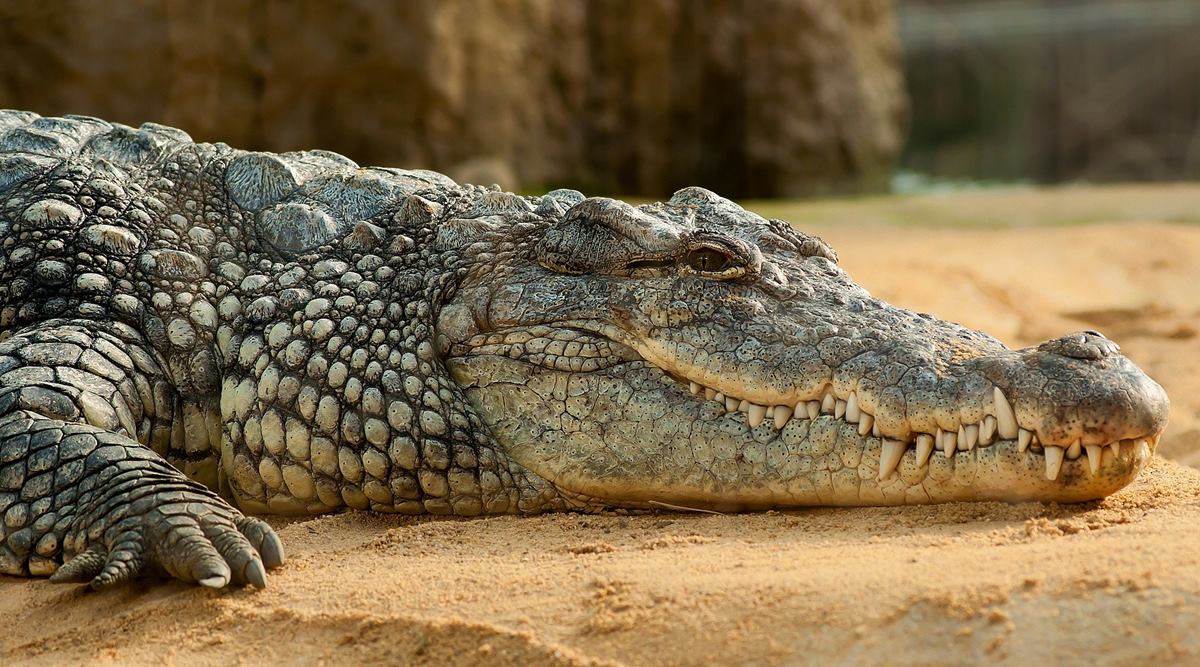 Though helium does impact the reptile, it makes the alligator belch and not not squeak. (Source: Pixabay)
While it is well known that inhaling helium imparts a funny squeaky sound in humans, a global team of researchers decided to see how the gas impacts the voice of an alligator.
To carry out the experiment, the team recorded the voice of the reptile while breathing normal air and then after breathing heliox — a mix of oxygen and helium.
The research paper, which was published in the Journal of Experimental Biology, was later awarded an Ig Nobel Prize for Acoustics. The award commemorates accomplishments in science world’s more unorthodox experiments.
Watch the video here:
If humans sound like Minnie Mouse after inhaling helium, would an alligator squeak from the gas used to float balloons? https://t.co/wazkG8uQRH pic.twitter.com/uGkoGI4H1m
— Reuters (@Reuters) September 22, 2020
“Our question was whether alligators have vocal tract resonances like human speech,” biologist Tecumseh Fitch told the news website. Fitch was among the members of the team, which constituted researchers from Austria, Sweden, Japan, the United States and Switzerland.
While the experiment left many intrigued, the challenging part was to get an alligator to breathe helium. However, the issue was soon resolved by getting a female Chinese alligator and pumping helium in the airtight chamber. As alligators bellow a lot during mating season, the researchers were able to conduct the experiment and draw conclusions, the news website reported.
Though helium does impact the reptile, it makes the alligator belch and not not squeak.
Usually, the sound waves produced by our vocal cords travel through air in the voice box. The speed of sound in helium is almost three times faster than in air and this changes the resonant frequency of our throat so that high frequencies sound louder than low ones, creating a chipmunk-like, flat sound.