2 min read
© IE Online Media Services Pvt Ltd



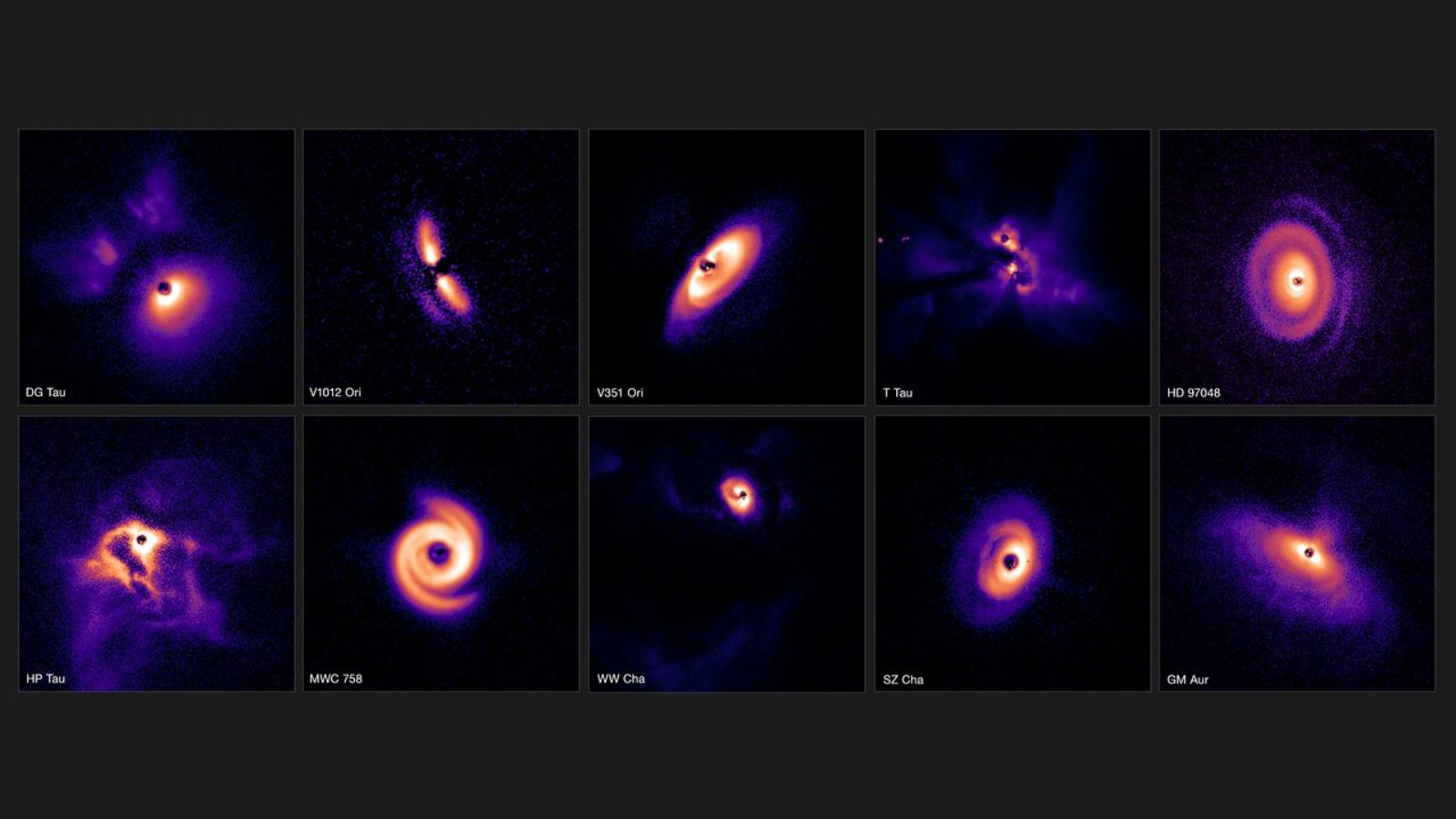 Unveiling diverse environments in star-forming regions, these observations shed light on how planets are born across the galaxy. (ESO)
Stunning images captured using the European Southern Observatory’s (ESO) Very Large Telescope in Chile gave scientists new insights into the complex process of planet formation. ESO on Wednesday released the images, along with the publication of several studies.
“This is really a shift in our field of study. We’ve gone from the intense study of individual star systems to this huge overview of entire star-forming regions,” said Christian Ginski, lead author of one of three new papers published in the journal Astronomy & Astrophysics, in a press statement.
We have discovered more than 5,000 exoplanets so far, these are planets that orbit stars other than the Sun. Many of these are in systems which are significantly different from our own solar system. Astronomers have to observe dust and gas-rich stars to that envelop young stars to learn more about how different systems get so diverse because they are the cradles of planet formation. The easiest place to fund such discs are in the huge clouds of gas where stars are forming.
Researchers observed a total of 86 stars across three different star-forming regions within our galaxy — Taurus, Chamaeleon I, and Orion. Taurus and Chamaeleon I are both about 600 light-years away from our planet while Orion is a gas-rich cloud about 1,600 light-year away. They found that planet-forming discs also have extraordinary diversity, just like their mature counterparts.
“Some of these discs show huge spiral arms, presumably driven by the intricate ballet of orbiting planets. Others show rings and large cavities carved out by forming planets, while yet others seem smooth and almost dormant among all this bustle of activity,” added Ginski.
Among the many revelations they found was the fact that in Orion, many stars in groups of two or more were less likely to have large planet-forming discs. This is quite important since most stars in our galaxy have companions, unlike the Sun, according to ESO. Also, the uneven appearance of discs in the region points towards the possibility of massive planets being present within them, which could cause discs to warp and become misaligned.