This is an archive article published on September 26, 2020
Lockdown effect: Athletes deficient in Vitamin D
Staying indoors for long periods being seen as a possible reason for lack of the micronutrient in top track and field stars
Written by Nihal Koshie
New Delhi | Updated: September 26, 2020 03:51 PM IST
4 min read
Whatsapp
twitter
Facebook
Reddit
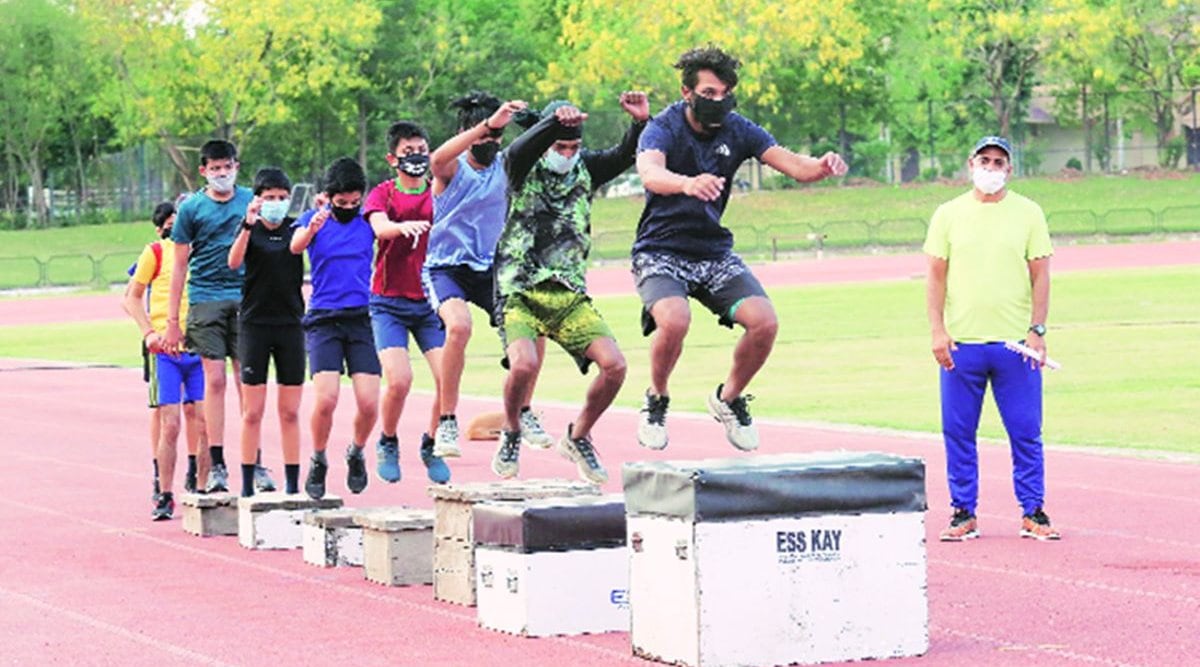
The training for most sports has resumed across the country but the athletes have been told to avoid intense workouts or regimens to avoid the risk of coronavirus infection.(Representational Image)
Staying indoors during the lockdown and subsequently resuming training early in the morning or late in the evening to avoid the sweltering summer heat has caused an unexpected problem for India’s top track and field athletes. Not getting enough sunlight has resulted in low Vitamin D levels, that help in muscle recovery and improved bone density. Lack of the Vitamin D, produced when the body is exposed to the sun’s rays, can lead to stress fractures or muscle injury, especially when athletes resume training after long breaks.
Athletes across sport, including the country’s top cricketers, have spoken about taking time to regain muscle memory to play a stroke, build endurance and getting used to training regimens after lockdown-enforced breaks. However, even changes in nutrition levels can make a world of a difference if not detected early.
Athletics Federation of India’s (AFI) high performance director Volker Herrmann said the Vitamin D deficiency was observed in all the national campers in Patiala following results of blood tests in June.
Athletes belonging to the core group, including those who have qualified for the Tokyo Olympics, have been based at training centres in Bangalore and Patiala since the start of the first lockdown announced towards the end of March. Throwers and the 400 metre squads are based at the National Institute of Sports in Patiala.
“Interestingly a lot of our athletes are lacking in Vitamin D. We were thinking whether it was due to the lockdown. They spend so much time inside and not outside. It might be one of the reasons. Vitamin D is produced by sunlight. We took blood samples after the lockdown in June. In general they were more or less back in their rooms, it is one possible explanation,” Herrmann told The Indian Express.
Vitamin D supplements were purchased and given to all athletes at the national camp after the blood test results came out. The next round of tests will be conducted in October, before training begins for the upcoming season. The lack of Vitamin D can adversely affect athletes as it is central to calcium absorption of the body.
“Vitamin D helps with recovery, especially of the muscles and it also reduces the recovery time. That is the main aspect. Vitamin D is also related to the bone density. Sometimes athletes are dealing with stress fractures and that can be due to an overload but it can also be because of Vitamin D deficiency,” Herrmann added.
Story continues below this ad
During the first phase of the lockdown, athletes were restricted to their room but later began to train in batches, one set in the morning and another in the evening to ensure there was no overcrowding. Even when they began training outdoors in May, their exposure to the sun was limited to avoid higher summer temperatures, especially in Patiala where it touched 45-degree centigrade.
Sprinters and jumpers changed their training schedule from 9 am to 6 am while the evening session began at 5 pm. “We had to adjust because of the weather conditions. Because of the heat in Patiala we always had to train very early in the morning or late in the evening,” Herrmann explains.
Iron an issue too
The collection and testing of blood samples, once in three months, is helping to ensure nutrition levels of elite athletes are optimum. In addition to lack of Vitamin D in all athletes, some were found to have low levels of iron. Iron deficiency was more common among women athletes.
“With performance athletes we take these blood samples around every three months, because you have to ensure that no athlete is dealing with any deficiency. One of the main problems is iron as well because they can’t eat red meat. Especially female athletes are often dealing with the deficiency in iron. We need to monitor this very closely. We are working with recovery experts and nutritionists to find ways to (improve levels) in a natural way and if required with supplements as well. Iron supplements were added only if required. We are trying to get food which has natural iron as well,” the AFI’s high performance director said.
Story continues below this ad
The collection of samples to monitor the blood profiles of athletes is vital to aid high-level of performance and this would continue, Herrmann said.
Nihal Koshie is an Associate Editor and sports writer at The Indian Express. He is best known for his in-depth reporting and investigative work that often explores the intersection of sports and social issues. He is also a key member of the sports desk, which is based out of The Indian Express' office in Noida.
Professional Background
Role: Associate Editor (Sports) at The Indian Express.
Key Achievements: He is a two-time winner of the prestigious Ramnath Goenka Award for Excellence in Journalism. He won the RNG award for 'Sports Journalism' for 2019 for his exclusive interview and follow up stories with sprinter Dutee Chand, who became the first Indian athlete to say she was in a same-sex relationship. He won his second RNG award in the 'Investigative Reporting' for 2023 for a series of exclusive stories related to sexual harassment charges levelled against WFI president Brij Bhushan Sharan Singh by the country's top women wrestlers.
Expertise: While he covers major sports, he is particularly recognized for his extensive reporting on Athletics, investigative stories and long-form news features.
Recent Notable Topics & Articles (Late 2025)
Nihal Koshie’s recent work reflects a focus on investigative and human-interest stories
Recent investigative pieces: He recently wrote a profile of an Indian teenager serving a jail sentence in Kenya after being embroiled in a doping scandal while chasing "Olympic dreams."
Wrestling: He continues to track the political and social fallout of the Indian wrestling protests, including the recent public appearances of Brij Bhushan Sharan Singh and the political career of wrestler Vinesh Phogat.
Recent long-form features: The story of the rise of Kranti Gaud, the young fast bowler who was a key member of the ICC women's World Cup-winning team; The physics and science behind modern cricket bats
Podcast Presence
He is a guest and contributor to the "Game Time" podcast by The Indian Express, where he provides technical and social analysis of current sporting events.
Experience: 24+ years
Previous experience: Times of India (2001-2005), Daily News and Analysis (2005 to 2010)
Nihal joined The Indian Express in May, 2010
Social Media
X ( formerly Twitter) : @nkoshie
You can follow his latest work and full archive on his official author profile. ... Read More


 4 min read