6 min read
© The Indian Express Pvt Ltd



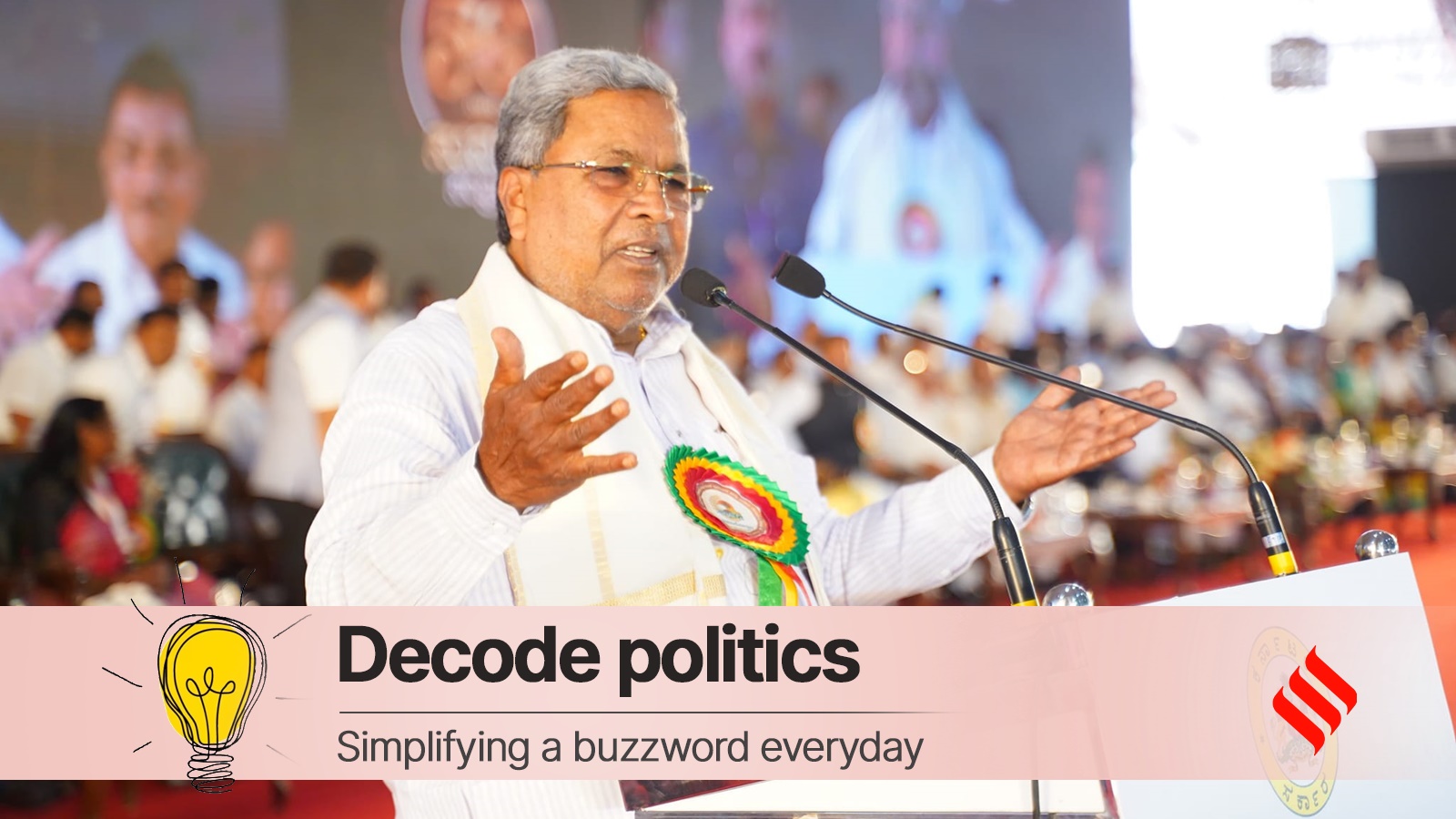 Karnataka Chief Minister Siddaramaiah's government has commissioned a report to enumerate the state's various castes. (Facebook)
 The chairperson of the Karnataka State Backward Classes Commission, Jayaprakash Hegde, submitted the report of the Social, Economic and Educational Caste Census to Chief Minister Siddaramaiah on Thursday. In 2014, during his previous term as Congress CM, Siddaramaiah commissioned the report to enumerate the state’s various castes as well as their socio-economic and educational status.
Siddaramaiah, while receiving the report, said it would be placed before the Cabinet at the next meeting. The Cabinet will decide if the survey recommendations will be accepted or not. The report was expected to be released during the elections to five states last November but got delayed amid opposition to its release by the state’s influential Vokkaliga and Lingayat communities.
The survey has been opposed by the state’s two dominant communities, the Lingayats and Vokkaligas, who fear that the survey will reveal their numbers are far less than estimated. Accordingly, both communities have already called the survey unscientific. But the report is eagerly awaited by the state’s Backward Classes, SC-STs and minorities, who are traditionally allied with the Congress, and whose numbers are likely to see a rise.
A version of the report, which got “leaked” in 2018, indicated that the Lingayats and Vokkaligas constituted only 9.8% and 8.2% of Karnataka’s six-crore population, instead of the 17% and 15% that is usually assumed. While the report is only an enumeration of castes and does not contain recommendations, these communities fear that its results will even be used to decide quotas in government, including the Cabinet, where Lingayats and Vokkaligas are currently in a majority.
The Congress government is unlikely to place the report before the state Assembly ahead of the Lok Sabha polls. And if it does, the ruling party is expected to be cautious in accepting the results.
As much as the Karnataka caste survey is a test of the Congress’s commitment to the backward classes and downtrodden communities, it is also a test of Siddaramaiah’s commitment to the OBCs. The CM, who is himself an OBC, has received the unstinting support of the community that has helped him to emerge as one of the state’s last standing mass leaders.
Siddaramaiah is believed to be keen to publicise and accept the report as he aspires to a legacy equivalent to the state’s great OBC leader and former Congress CM Devaraj Urs. But he is seen as hemmed in by political compulsions, because of which, he will likely accept it only after the Lok Sabha polls.
“I stand by my commitment to accept the report of the Social, Economic and Educational Caste Census commissioned in the state in the previous tenure of our government, in order to provide social justice to communities deprived of opportunities,” he said in January while referring to Congress MP Rahul Gandhi’s statement that the party would conduct a caste census in the country if it comes to power.
The opposition from Lingayats and Vokkaligas from within his party and outside. On Thursday, Industries Minister M B Patil, a Lingayat, said the government would decide on the fate of the report after studying it.
Lingayat leaders claim that the survey has recorded the caste details of several Lingayat sub-communities with backward caste origins as backward castes, not Lingayats, resulting in a dip in the community’s numbers and a rise in numbers of communities like OBCs.
“It is true that there is a lot of concern in the Veerashaiva Lingayat community about the caste census report. This is because many of the people have provided the names of their sub-castes. We have said that all sub-castes of Veerashaiva Lingayats must be recorded as Veerashaiva Lingayats,” Patil said, adding, “This concern also exists among Vokkaligas and other communities.”
Earlier this year, the Vokkaligara Sangha, in a meeting attended by Deputy CM and state Congress chief D K Shivakumar, who is a Vokkaliga, urged the government to not accept the report. Shivakumar was among the signatories to a letter opposing the release of the report.
This, in short, is the challenge Siddaramaiah faces. If he pushes too hard on this, the party will antagonise two of the most dominant communities in the state. But if he sits on the report, he will weaken his position among the groups that propelled him to power for a second term.
Congress leaders from the backward classes and SCs, including Congress national president Mallikarjun Kharge, are in favour of publicising the report. “Around 35% of the people may oppose the release of the report, but the remaining 65% will support it. This is because Vokkaligas are now around 15%, the Lingayats around 17%, and Brahmins around 3.8%. While they may oppose it, the SCs, STs, OBCs, and minorities will support it. It will be helpful to the ruling party even if it is accepted before elections,” said a Congress leader from a backward community.
On December 11, 2023, Kharge, responding sharply to comments from Union Minister Prahlad Joshi in Parliament on internal differences in the Karnataka Congress on the caste survey, said, “Our Deputy Chief Minister (D K Shivakumar) himself is opposing the caste census, as are you. All upper caste people have joined hands internally.”