4 min read

Journalism of Courage



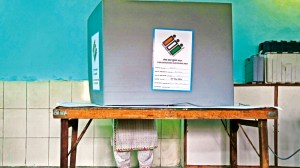
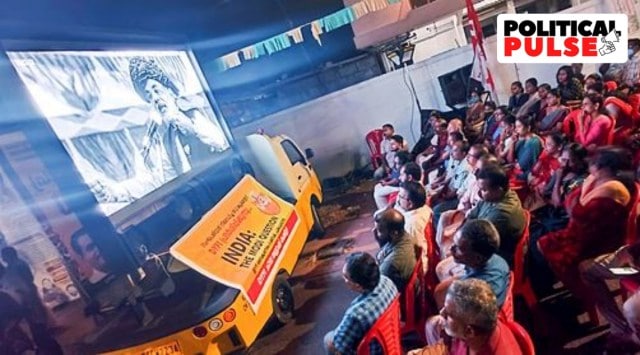 People watch the screening of the BBC documentary 'India: The Modi Question', in Thiruvananthapuram, Tuesday, Jan. 24, 2023. (PTI Photo)
 While banning the first part of the BBC documentary India: The Modi Question, using emergency powers under the IT Rules (2021), the Narendra Modi-led Centre called the film a “propaganda piece that lacks objectivity and reflects a colonial mindset”.
The most recent example of such a blanket ban on a BBC-affiliated work was in May 2015 on the India’s Daughter documentary directed by British filmmaker Leslee Udwin. Part of the BBC’s Storyville series, the film was about the 2012 gangrape of a 23-year-old physiotherapy student in New Delhi.
The documentary was slated for global telecast on Women’s Day (May 8) 2015 and the Delhi Police registered a case and obtained a court order restraining the parties concerned from releasing it.
At the time, the Ministry of Home Affairs (MHA) said that Udwin had violated a condition that prohibited the use of the documentary for commercial purposes. It added that the clause was the reason why the Tihar Jail authorities had allowed her to record the interview of gang-rape convict Mukesh Singh.
The MHA contacted the External Affairs Ministry, the Information and Broadcasting Ministry and the BBC to ensure that the documentary was not published in any form. It also ordered the the Information Technology Ministry to block it on the Internet.
The BBC went on to push the premiere of the film by four days in the UK and other countries. “The film handles the issue responsibly and we are confident the programme fully complies with our editorial guidelines,” the BBC’s statement said.
Taking strong exception to the telecast of the film, then Union Home Minister Rajnath Singh said, “We had asked to not release the documentary, but the BBC aired it. We will investigate into it and the MHA will take action accordingly….the conditions [for permission to shoot the documentary] have been violated and, therefore, action will be taken,” Singh said.
In a debate on the issue in the Lok Sabha, then Parliamentary Affairs Minister M Venkaiah Naidu said: “We can ban the documentary in India, but there is a conspiracy to defame India.”
Earlier too, the BBC has been at cross-roads with the Indian government.
As per a history of the BBC in India on its own website, in the summer of 1970, the broadcast of two of French filmmaker Louis Malle’s documentary films, Calcutta and Phantom India, on British television (BBC Two), had “caused outrage amongst the Indian diaspora in Britain and with the Indian government for what were perceived as prejudicial and negative depictions”.
The two documentaries were banned and “the BBC was expelled from India until 1972”.
A 1972 New York Times review of Phantom India says that “the picture punctures once and for all our standard, grab-bag image of India as poverty personified, teeming millions, holy men, the Taj Mahal by silvery moonlight and trouble with Pakistan”. It adds that the Malle’s film “recorded ancient tradition alongside staggering modern complexities”.
The BBC was again expelled during the Emergency imposed by Prime Minister Indira Gandhi in 1975.
On August 14, 1975, this paper reported that a statement signed by 41 Congress MPs accused the BBC of broadcasting “notoriously anti-India stories” and asked the government “not to allow the BBC to report again from Indian soil”. The BBC never missed an opportunity to malign India and willfully misrepresent the country, the statement said.