Journalism of Courage
 11 min read


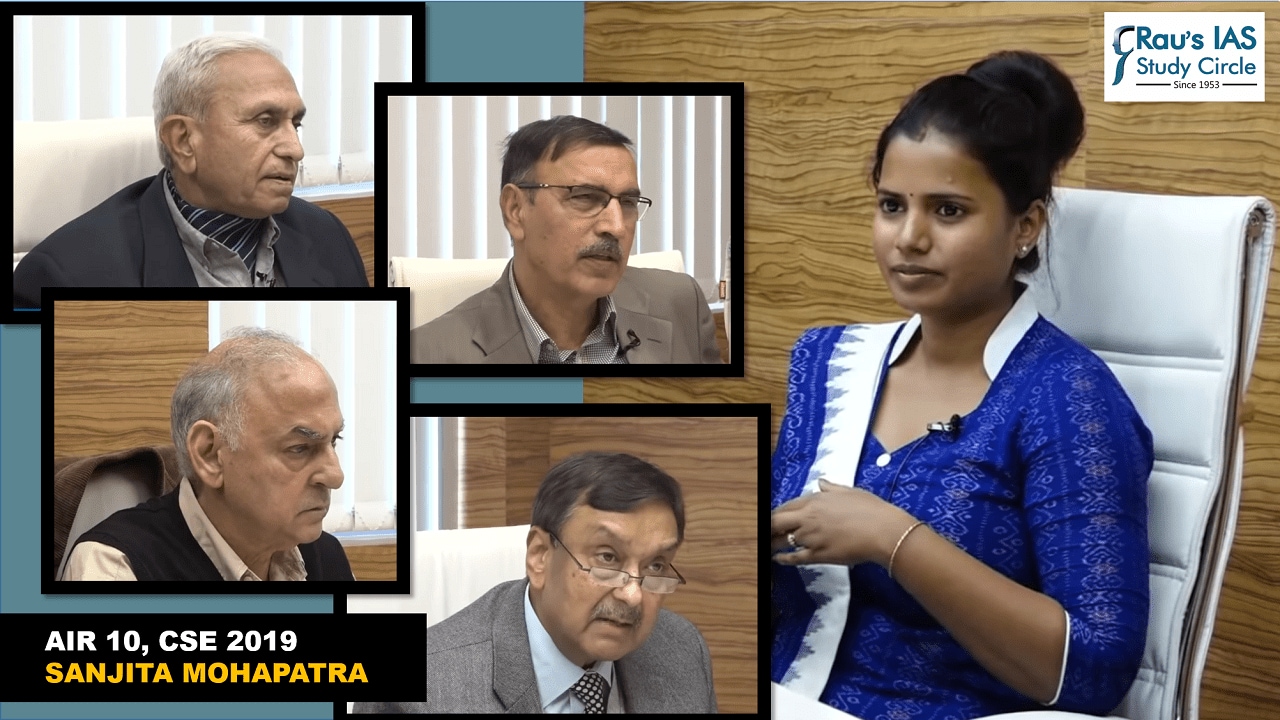 The main purpose of conducting PT is to uncover true personality and to assess the candidate
 UPSC Personality Test (PT) which is commonly called as IAS Interview is the final stage of a yearlong civil services exam (CSE) process. The competition gets stiffer at this stage as aspirant who have cleared Mains contest vigorously to make their place in the final merit. A good score in interview can create a substantial difference of marks with the fellow candidates in just under half an hour and can give an aspirant unassailable lead in the final merit. Usually PT gets attention of an aspirant at a very later stage, once Mains results are declared. Whereas, the personality attributes which are being assessed during PT necessitate that preparation for PT should also start along with Prelims and Mains. The time period available to a candidate, roughly three weeks, after the declaration of results and commencement of PT is grossly insufficient to work upon on some of the attributes which need a longer time to be refined and honed.
Before we unravel finer nuances of PT, the most important point which needs to be kept in mind by aspirants is that PT is not an interview. In fact, the word “Interview” is a misnomer. PT is much more than an interview. The main purpose of conducting PT is to uncover true personality and to assess if the candidate has the traits and qualities to be a good civil servant.
Another important thing to remember is that it is not the test of your knowledge. Your knowledge has already been tested in the preceding two stages of selection. So, if you are unable to answer few questions here and there, it really doesn’t reflect adversely on your performance. Nevertheless, it is important for a candidate to keep abreast with the happenings of national and global importance and to be aware of current socio-economic problems.
Board conducting PT thus focuses on some specific attributes/qualities. Some of these attributes can be categorized as non-negotiable and uncompromising from the UPSC’s perspective. The attributes a candidate is expected to possess can be broadly divided into six categories, i.e. personality related, motivational aspects, interpersonal skills, intellectual abilities, specific administrative skills and values. Here are some of the attributes which are assessed: –
A logical question which comes to mind is, how does UPSC board assess the personality attributes through questions based on Current affairs? How does Board assess whether candidate is consistent in thought, whether the candidate was accountable as a child, his/her adaptability in the school/hostel, whether the candidate will succumb to pressure or temptation? This does sound a bit intriguing however, it is not a complex thing! Let us understand this through examples.
Attribute of “Emotional Stability” can be assessed by asking a series of difficult questions where a candidate is made to accept that he doesn’t know the answer to those questions. This is then followed by a relatively normal question. A candidate who has the ability to keep emotional balance even under stress, will not be effected and will be able to respond to the next questions. While the one who is unable to hold nerve will succumb and would lose focus. “Secular Attitude” could be assessed by asking your opinion on any contentious issue, “Integrity” could be assessed by throwing situational questions. Your “Patriotic Attitude and National Pride” can be assessed by asking your views on issues like functioning of government machinery, issues plaguing our society, corruption etc.
One must remember that the board taking PT is not there to deride a candidate by asking direct questions or cross examining, or emphasising about something a candidate doesn’t know. Rather, their aim is to put a candidate at ease so that candidate is not guarded while responding. The questions asked therefore will be open ended to energise a candidate to speak spontaneously.
By virtue of their experience and also having been trained to take PT, the board members will ask questions which will make a candidate reveal both favourable and unfavourable information. The board members are equipped to segregate descriptive and evaluative information. They can identify truthfulness/reliability by watching contradictions and inconsistencies. Board members watch for flow of positive information, the reactions and handling of situations by the candidates. By asking questions and from DAF the Board creates a profile of the candidate by considering candidates’ background, school, family, college, friend-circle, areas of interest, books read, sports, social service, ethical dilemmas, parental aspirations, significant persons and events, socio-economic background, academic achievements, leadership activities, candidates strengths and weaknesses, things they strongly like/dislike, reasons for choosing civil services, previous work experience etc. Based on this, his suitability for civil services is checked.
How and What to prepare for PT?
Those candidates who clear Mains exams are required to fill up “Detailed Application Form” (DAF). Personality Test requires first and foremost self-introspection. The same is a much desirable exercise before filling up DAF. A candidate should be sure of and should have a firm sense of conviction of what he/she writes in the DAF. This application form contains information about candidate’s educational back ground; work experience, native place, extra-curricular activities; optional papers etc. In fact, this detailed form serves as a sort of CV of the candidate for the panel members. Hence, it is imperative that many questions in the interview will be based on the details filled up by the candidate in the form.
Broadly, the type of questions in PT can be grouped as; questions based on DAF and questions which are out of DAF. However, it is not necessary that PT board has to stick to a norm of asking questions from DAF and out of DAF as well. Board could decide anything. Board might ask a candidate all questions from the DAF or choose to just not to touch DAF at all. Therefore, an aspirant has to prepare well for all possibilities, so to say.
It is extremely important that candidate has in depth knowledge about all the details mentioned in the DAF. There is a good method to prepare DAF questions. Pick up a question and answer it. Then, based on your answer, think what all you can be asked further by the board. Write down all those questions. Answer them one by one. Each time repeat this exercise of framing more questions form your answers. This would be like a branching tree of questions and answers. DAF Analysis is an obligatory exercise for all candidates.
Although it is difficult to summarise or quantify the questions which can be asked in PT however, some of the most commonly asked questions in the UPSC Interview are: –
(a) Questions pertaining to Civil Services
(b) Questions pertaining to your Native City / City of Education / City of work/ State / Region
(c) Questions pertaining to Educational Background
(d) Questions on Optional Subject
(e) Questions on work experience
(f) Questions pertaining to Extracurricular activities/ hobbies
(g) Situational questions:
Now this is something for which there are no boundaries. Anything can be asked from a candidate by giving him a situation. Most commonly asked situational question starts with something like…….…you are a DM/DC/SP of a district, how will you implement ABCD government scheme………how will you handle law and order situation………how will you handle problem of terrorism/ Naxalism …..what actions will you take to address the environmental degradation being caused by ….and so on and so forth.
(h) Miscellaneous questions (which appear to be simple but are most difficult to answer)
The personality test requires the candidates to exhibit not only the art of balanced and precise thoughts and knowledge but also the art of communicating it effectively. In other words, two most distinct attributes of a candidate who is well prepared for PT are his knowledge and communication skills. And none of these two can be achieved overnight or in a short time. Both these attributes need to be cultivated with perseverance. Since overall personality development is a continuous process, it requires nurturing for sustained time. It will be thus prudent to start preparing for PT right away.
For UPSC Interview Guidance or UPSC Personality Test guidance, you can contact Rau’s IAS Study Circle.
Click here to learn more about Rau’s IAS Interview Guidance