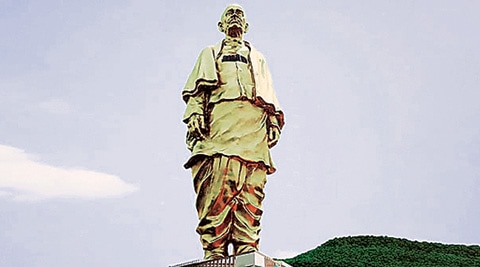

Progress at the Statue of Unity, a pet project of Prime Minister Narendra Modi, has revealed a rather disquieting truth. The construction contract for what would be the world’s tallest statue may have gone to Larsen & Toubro (L&T), but it has sub-contracted the crucial work of bronze cladding to Jiangxi Toqine, a Chinese firm. Even the steel framework for the statue is being procured from China. While L&T’s decision may be prompted by economic rationale, the sheer disconnect with the manner in which the statue was promoted — as a symbol of national pride within the Make in India framework — may seem a disappointment. That sentiment is, however, misplaced. While Make in India may be a laudable objective, the right way to go about it would be to take a cue from what RBI Governor Raghuram Rajan had to say on Monday. Rajan’s central message was that Make in India should not be about the government micro-managing specific sectors and industries, but focusing on creating an enabling environment that makes the country a natural choice for manufacturers, both global and domestic.
“Let’s create the frameworks, let’s make the business easier, let’s make taxation more transparent, more predictable and let’s do all the things necessary to allow our businesses to create what is needed,” Rajan said. This is not the first time he has said it. Last December, Rajan sought to distinguish between “Make in India” and “Make for India” and argued that in a global downturn, the latter is a better choice. This is because Make in India could easily fall into the trap of extending sops to exporters or import substitution through high tariff barriers, which, in turn, reward inefficiency and hurt consumer interest.


