
Opinion His open work
Umberto Eco was a wide-ranging genius scarcely captured by his gigantic corpus.
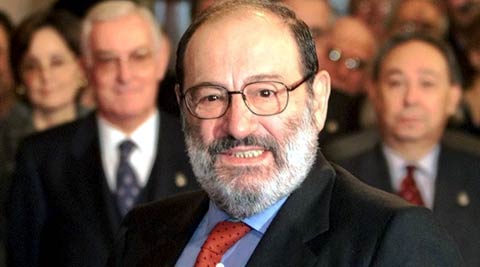 Umberto Eco, best known for the international best-seller “The Name of the Rose,” died Friday, Feb. 19, 2016. (File/Reuters)

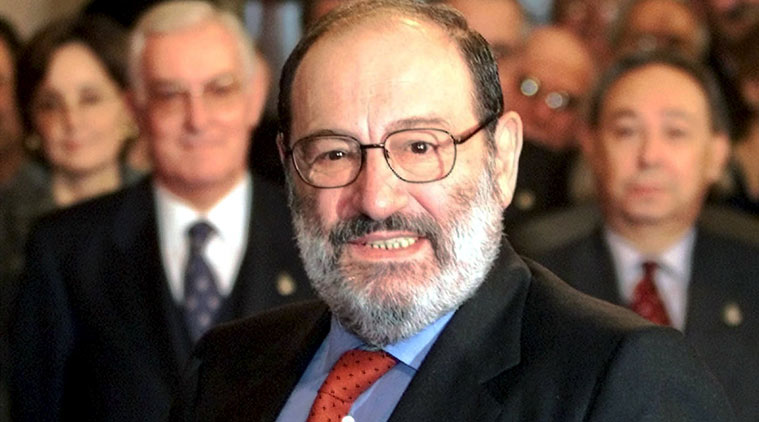 Umberto Eco, best known for the international best-seller “The Name of the Rose,” died Friday, Feb. 19, 2016. (File/Reuters)
Umberto Eco, who passed away on Saturday, not only gave us new perspectives on the agglomeration we call culture but also, literally, created culture. But in summing up his polymathic expanse as novelist and critic, theorist and philosopher, semiotician and academic, it’s often forgotten that fame found him late — only after the publication of The Name of the Rose in 1980, by which time he was touching 50. The book was written for a publisher who demanded a cheap thriller but presented itself as a tour de force of semiotics, philosophy, literary theory, biblical analysis and church history, and, of course, a riveting murder mystery. It was translated into 30-plus languages, sold 10 million copies or more, and inspired a simpler but well-made Sean Connery starrer. The irony? Tired of critics calling him “erudite” and “difficult”, Eco gave them The Mysterious Flame of Queen Loana (2004). By his sales standards, it bombed. The Name of the Rose demonstrated what Eco, decades later, would claim: “People are tired of simple things. They want to be challenged.”
Sadly, the book came to define him in the public mind. Eco’s fiction, including Foucault’s Pendulum (1989) and Baudolino (2001), constitute a small fragment of his corpus, which itself can only hint at the magnitude of his mind that, being interested in everything it found in the world around, demolished the wall between popular and high-brow. From William of Baskerville’s medieval puzzles to the video game is but a single leap. And underlying it all is a narrative impulse that’s universal and undying.

Eco’s gift to posterity has been his ability to use the genius of the past to anticipate the future. Thus, he leaves us firmly convinced about the book’s longevity, irrespective of its form: “The book is like the spoon: Once invented, it cannot be bettered.”
 Share
Share


