
Opinion Crisis at the bank
Modi government may have underestimated the gravity of the issue. It must act urgently.
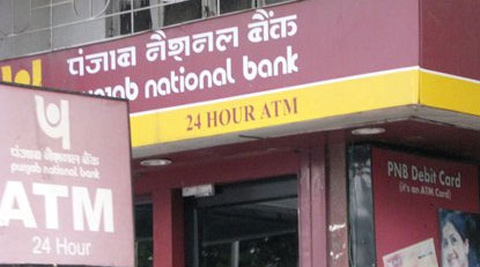


Three top state-owned banks reported a steep fall in their net profits on Monday, including the country’s second-largest lender — Punjab National Bank. The burden of bad loans is increasingly showing up. Punjab National Bank’s net profits halved from Rs 1,405 crore to Rs 721 crore, a steep decline of close to 49 per cent compared to a year ago, while its gross non-performing assets or NPAs rose to Rs 25,397 crore in the quarter to June this year, compared to Rs 19,603 crore a year ago. It is a similar story in the case of Bank of India, at one time high on the pecking order of Indian banks, and Union Bank too. Together, the bad loans of these three banks add up to Rs 66,340 crore, a 56 per cent jump. Coming as this does when bad loans and restructured advances have surged to 11.1 per cent of total advances from 10.7 per cent in the period of September 2014 to March 2015, it should worry both the government and the Reserve Bank of India.
[related-post]

While the Modi government can claim this is a legacy issue — as the huge overhang of bad loans can be traced back to lending to many infrastructure companies in the early years of the UPA government and the impact of the slowdown towards its fag end — it does appear that the government underestimated the gravity of the issue. And there aren’t any easy solutions. For banks, it is a double whammy, as with the pile of bad loans on their books, many have to set aside more capital to provision against losses, with the threat of more slippages at an accelerated pace. The demand for loans is also very low, which will in turn impact their interest income. And unlike 15 years ago, when banks faced a similar challenge, there is little prospect of sharp secular interest rate cuts, which helped banks to boost their treasury income and repair their balance sheets.
Earlier, the government addressed the challenge by also working out sectoral packages, thus helping the lenders. There have been attempts this time too, but the pace at which the problems in the banking sector are being addressed, especially by the finance ministry, ought to worry many, including investors. The problems of banks cannot be equated to those of other PSUs — of just providing capital and keeping them going. It is also about risks to financial stability and the ability of banks to finance businesses and industry when the recovery happens. At the “Gyan Sangam” in Pune seven months ago, the Modi government promised much, but little seems to have changed on the ground with many banks still headless and the induction of professionals yet to happen.
 Share
Share


