
Opinion A maha claim
JD(U) seeks to replicate the mahagathbandhan in other poll-bound states. It may be overreaching.
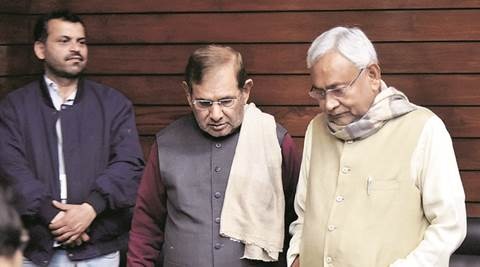 New Delhi: Bihar Chief Minister Nitish Kumar with JDU President Sharad Yadav arrive for Party Executive meeting in New Delhi on Sunday. PTI Photo by Atul Yadav(PTI12_20_2015_000071B)

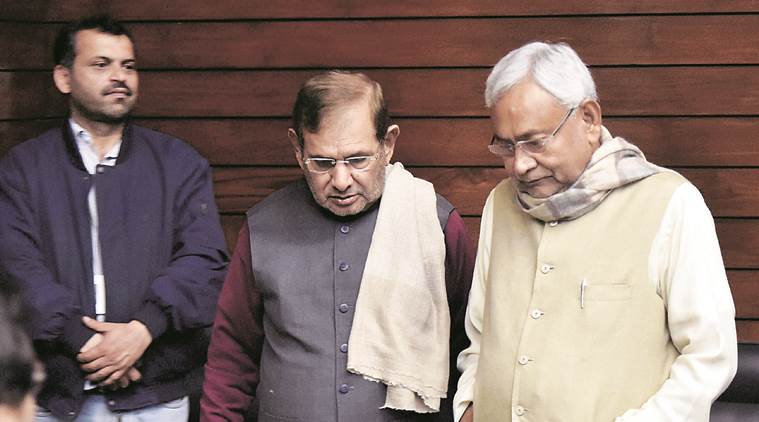 New Delhi: Bihar Chief Minister Nitish Kumar with JDU President Sharad Yadav arrive for Party Executive meeting in New Delhi on Sunday. PTI Photo by Atul Yadav(PTI12_20_2015_000071B)
The national executive of the JD(U) has announced that it will make an effort to replicate the grand alliance that defeated the BJP in Bihar in the states scheduled for assembly elections in April-May next year. The JD(U) seems to believe that the Bihar model of anti-BJP alliance-making can be replicated elsewhere and could hurt the BJP’s plans for Assam, West Bengal, Tamil Nadu, Kerala and Pondichery. The impetus behind the JD(U)’s ambition to build a national anti-BJP coalition seems to be the outsized impact of the Bihar verdict. The party hopes to use the Bihar outcome as a launching pad for its own national ambitions.
But every assembly poll is driven by a political dynamic all its own. Local equations and considerations influence coalition-building and moreover, in many states, the strategy of building an anti-BJP alliance may have little salience. At this juncture, the only state where the JD(U) initiative could find some resonance is Assam. The 2014 general election trends from Assam point to an ascendant BJP. Even the state Congress has hinted that the party may need to build tactical alliances with regional outfits, including the AGP and the AUDF, to overcome anti-incumbency and keep the BJP out of power. Yet, though these parties identify a common foe in the BJP, their political constituencies and compulsions are not necessarily in sync. In West Bengal, the BJP remains a marginal player, while the Congress could influence the outcome. Sections within the Left Front may want an alliance with the Congress to consolidate the anti-Trinamool sentiment, but ideological reservations within the CPM stand in the way. Here the JD(U) could well broker a pre-poll understanding between the Congress and the TMC. Kerala’s coalition politics is a saturated space and the BJP’s third front is yet to take shape. The JD(U)’s dilemma in Kerala is whether to stay on in the Congress-led UDF or accept the invitation from the Left and join the LDF. The JD(U) is inconsequential in Tamil Nadu, where the political space, though fragmented, continues to revolve around the two Dravidian parties, the DMK and the AIADMK. In the last election, the BJP stitched together a third front that mopped up nearly 20 per cent of the vote, but the front unravelled after the election.

Certainly, coalitions will determine the outcome of the April assembly elections, but the BJP is likely to have a limited impact. And the JD(U) may be overstating its influence when it assumes the role of an alliance facilitator in next year’s poll-bound states.
 Share
Share


