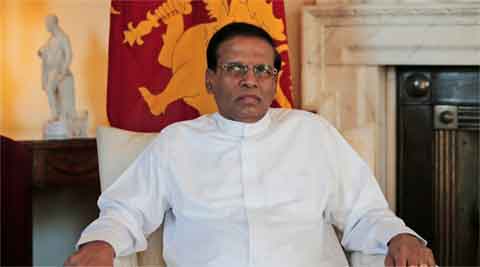
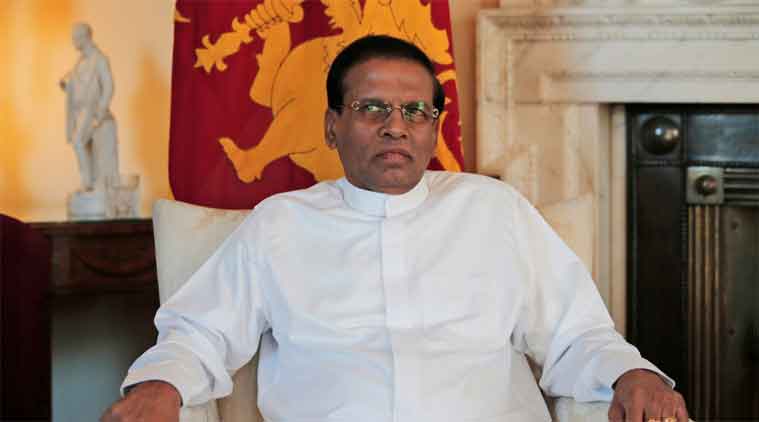
Sri Lanka appeared to have survived a constitutional coup in early January this year, with outgoing President Mahinda Rajapaksa unable to prevail upon his colleagues in the government to delay the announcement of the results of the presidential election and deny victory to his rival, Maithripala Sirisena. He could only negotiate an exit pact with Ranil Wickremesinghe. As a result, Sirisena became the president of an all-party government, with support for his election from the Sri Lanka Freedom Party (SLFP), United National Party (UNP), Janatha Vimukthi Peramuna (JVP) and even the Tamil National Alliance (TNA). Wickremesinghe settled for prime minister of a government guided by everyone and from everywhere, including New Delhi and Washington.
But this is a minority government making promises with little political capacity to deliver on them. The presidential elections, held two years ahead of schedule, revealed not only Rajapaksa’s cynicism but also the fragile polity. Why then does the government want to hold parliamentary elections almost 10 months ahead of schedule? Though this government speaks of assembling a needed majority to pass crucial amendments to the constitution, the political consensus post the presidential elections has evaporated, with a sudden insecurity replacing the earlier pragmatism displayed by Rajapaksa’s opponents. This is not merely because Rajapaksa’s decision to contest and his positioning himself as a PM candidate are leading to a brewing revolt within the SLFP.


The impending release of the UNHRC report is no more than turbulence for the Sinhala political elites, which they can overcome with an informed political consensus and collective determination. The expected nationalist backlash after the report, combined with the resurgence of Sinhala nationalism, is acceptable to the Sinhala political elites. But, in their view, this should not result in the return of Rajapaksa. There, the concerns of the government and the international community coincide. But on the ground, sentiment shifts far more rapidly than the international community likes to believe. It is unable to contain Rajapaksa or the resurgence of Sinhala nationalism, and has little appreciation that these are interrelated.
So scheduling the parliamentary elections for August 17 is considered strategic. This is to prevent the UNHRC report from having an impact on the polls. But Rajapaksa is already in the fray, awaiting the report. This is a critical battle for him. He knows that if he misses this last opportunity, he will be out of contention forever. He is generating a nationalist backlash even before the report is released. It is thus impossible for the Sinhala parties to settle for even the domestic probe that the government wants the world to believe it is conducting.
Sri Lanka is faced with the single-door exit option of a choice between a national emergency to stem the tide of Sinhala chauvinism and the nationalist backlash awaiting the UNHRC report. It is not a coincidence that Rajapaksa wants to exploit both options. In Orwellian terms, everyone who wants to fight Rajapaksa not only resembles him but also shares a past with him. This is the tragic reality of Sri Lankan politics.
The writer is professor and head, Department of Politics and Public Administration, University of Madras.


