
Opinion Budget 2023: The exemptions and modified rates will nudge taxpayers with annual income up to Rs 8 lakh to adopt the new tax system
The budget seeks to shift taxpayer preferences to complete the transition to a simpler tax system.
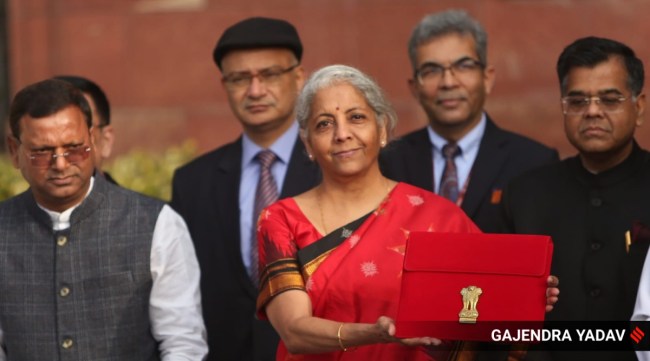 The finance minister proposed that to address the pendency of cases, about 100 joint commissioners will be made available for the disposal of small appeals. (Express)

Every year, the Union budget is preceded by calls for transformative policies. In keeping with tradition, this year too, discussions were rife about the possibility of changes to the tax regime. More so with reports suggesting that the economic shock from the Covid pandemic had exacerbated wealth inequalities.
Across the globe, there is now a tacit agreement among experts that tax rates cannot be eased, especially as levels of debt remain elevated. And tax policy will have to play a more active role to meet the challenges stemming from uneven growth, high inflation and a high fiscal deficit. However, at first glance, the direct tax announcements in the budget seem to be contrary to these notions.

The budget has proposed that the current level of rebate will be raised from Rs 5 lakh to Rs 7 lakh. At the same time, the exemption threshold has been raised to Rs 3 lakh. This implies that individuals with an annual income of Rs 3 lakh or less will pay no tax and those who earn Rs 7 lakh will receive a full rebate on tax paid. While raising the exemption threshold has been passionately discussed, it is estimated that India now exempts incomes in multiples of its per capita income. Although such claims of generous exemptions are often countered with the need for accommodating the cost of living, even the inflation-adjusted historical threshold is exceeded by the actual exemptions now given. Thus, one may expect that such relief will cost the exchequer.
However, the numbers suggest otherwise and the revision in the exemption limit along with the rebate will have a muted impact on the government’s fiscal position. As per the last information published by the Income Tax Department for the assessment year 2018-19, the impact of the change will be seen at income levels between Rs 5.5 and Rs 9.5 lakh. Taxpayers in this category account for less than 1 per cent of the total tax returns and contribute 11.34 per cent of income tax collections. These numbers signal that the impact will be muted and largely restricted to a specific income group. The finance minister has corroborated this with the estimated revenue foregone of Rs 37,000 crore. The question then is if such a change was imperative. The answer to that lies in the other noteworthy announcement – the new tax regime shall now function as the default regime.
The new tax regime is a simplified version of what was introduced in 2020. The taxpayer could opt-in based on their preference for lower tax as against availing exemptions. Behaviourally, opting out is better than opting in. Therefore, by making the new tax regime the default and lowering the rates, the policy seeks to shift preferences to complete the transition to a simpler tax system. This will nudge taxpayers with an annual income above Rs 8 lakh to adopt the new tax system.
The other rate change introduced in the budget is the reduction in surcharge — from 37 per cent to 25 per cent — on top incomes. India’s personal income tax rates at the higher level compare with those of Belgium, Luxembourg, France and South Africa. The reduction in the rate maintains India’s position while ensuring progressivity.
Other than the change in rates, the budget has also focussed on administrative reforms. The finance minister proposed that to address the pendency of cases, about 100 joint commissioners will be made available for the disposal of small appeals. The Finance Bill, therefore, has amended many of the sections relating to investigations and appeals to empower the joint commissioners alongside the commissioner income tax (appeals). With the introduction of faceless assessment and digitisation, there is a need to direct the capacity within the department to functions that can help unlock revenues that are in dispute.
On balance, the objectives of ensuring simplification and providing certainty in the tax regime have gained precedence, while the principle of a progressive tax regime has been maintained.
The writer is assistant professor, NIPFP
 Share
Share


