Journalism of Courage
 4 min read



With the Supreme Court staying a tribunal order lifting the ban on the Students8217; Islamic Movement of India SIMI, the status quo on the organisation blamed for many terror attacks in India stays. KRISHNADAS RAJAGOPAL explains the law under which the Government has sought that the outfit remain proscribed:
8226;What is the Unlawful Activities Prevention Act?
The Act was passed in 1967 to check subversive activities across the country. In 2004, the Government upgraded it with an amendment, which primarily enhanced punishment for offences related to terror acts. While the 1967 Act contemplated a punishment of only two years for members of an 8220;unlawful association8221;, the new ordinance prescribes death penalty or life imprisonment for a member who voluntarily aids or promotes mass destruction, causing loss of human life or grievous injury to any person or significant damage to any property. Funding terrorism can invite five years in jail to life imprisonment. Unlike the 1967 law, the 2004 amendment also has a separate chapter on terrorism. Now 32 are identified terror groups in its Schedule. SIMI is under its fourth ban since the September 2001 attacks.
8226;What is the role of the tribunal under the Act?
First the Centre notifies in the Official Gazette that a particular organisation has been declared 8220;unlawful8221;, specifying the circumstances or facts necessitating the action in detail. Section 4 of the Act says the Government will refer its declaration to the tribunal within 30 days to adjudicate as to whether the ban is legal or not. The tribunal, which is set up by the Centre and consists of a single judge of the rank of a high court judge, has to confirm the ban within a period of six months after hearing both the association and the Government. The tribunal is the last resort for an association declared 8220;unlawful8221;. A different judge is appointed to adjudicate on different organisations. The tribunal travels across the country collecting evidence and hearing testimonies of witnesses. In 2008 alone, the forum travelled to Kerala and Karnataka. The order of the tribunal is then published in the Gazette.
Had the tribunal confirmed the ban on SIMI, it would have been applicable for two years from the date of issue of notification by the Home Ministry, i.e. February 7, 2008. In SIMI8217;s case, charge sources inside the outfit, lot of the 8220;evidence8221; collected was literature published in its newsletters. 8220;On the basis of this, activists were arrested and charged with sedition,8221; says a source.
8226;What happens when an organisation is banned?
The funds of the organisation are forfeited if it gets the green signal from the designated court. Financial transactions and other monetary securities are brought under the scanner. 8220;As a result of the continued ban of SIMI, the organisation is now peopled by members above the prescribed age limit of 30,8221; says a source in the SIMI.
8226;What happens when the ban is lifted?
The organisation8217;s funds are released, but the cases against its alleged members continue separately. Their cases are heard not by the tribunal but by criminal courts.
8226;Which organisations are banned under the Act currently?
Babbar Khalsa International, Khalistan Commando Force, Khalistan Zindabad Force, International Sikh Youth Federation, Lashkar-e-Toiba, Jaish-e-Mohammed, Harkat-ul-Mujahideen, Hizbul Mujahideen, Al Umar Mujahideen, Jammu and Kashmir Islamic Front, ULFA, National Democratic Front of Bodoland, People8217;s Liberation Army, United National Liberation Front of Manipur, People8217;s Revolutionary Party of Kangleipak PREPAK of Manipur, Kangleipak Community Party of Manipur, Kanglei Yaol Kanba Lup of Manipur, Manipur People8217;s Liberation Front, All Tripura Tiger Force, National Liberation Front of Tripura, LTTE, Deendar Anjuman, CPI Marxist-Leninist, Maoist Communist Centre or MCC, Al Badr, Jamiat-ul-Mujahideen, Al Qaeda, Dukhtaran-e-Millat, Tamil Nadu Liberation Army, Tamil National Retrieval Troops, Akhil Bharat Nepali Ekta Samaj, and SIMI.
8226;Has any other outfit gone to the tribunal against its ban?
Deendar Anjuman contested against the ban but in March 2008, the tribunal endorsed it. The 80-year-old outfit is blamed for many terror attack in south India.

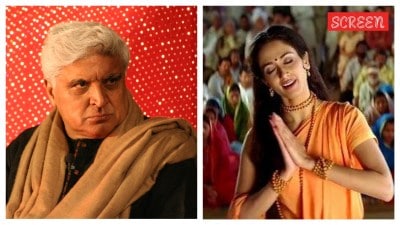
Veteran poet, screenwriter and lyricist Javed Akhtar recently expressed his disagreement with longtime collaborator and music composer AR Rahman over the latter’s claims that the Hindi film industry has become more communal in the past eight years. Akhtar claimed that the film industry has always been religion-agnostic and has picked the best person for the job.