6 min read

Journalism of Courage




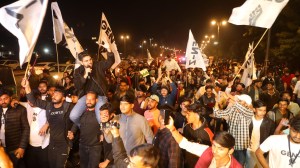
Anti-Globalisation8217;8217;, 8216;8216;Bush hater8217;8217;, 8216;8216;anti-business8217;8217;, 8216;8216;idealists8217;8217;. These are just some of the images of participants thrown up by the media at the World Social Forum held in Mumbai last month. It is easy to see where it got the idea from. Anti-Bush posters were everywhere at the grounds in Goregaon. Star speaker Arundhati Roy called for a boycott of organisations profiting from the 8216;8216;destruction of Iraq8217;8217;. Many of the views expressed were against globalisation.
Yet, what does one make of statements such as this one from Caspar Henderson of the Ford Foundation which supported the first three meetings of the WSF: 8216;8216;We value global civic dialogue around global problems8217;8217;. Or the fact that the most high profile international speakers such as former Irish President Mary Robinson and economist Joseph Stiglitz in their speeches reiterated the need to discuss not a dismantling of structural adjustment programmes but ways to regulate them? Or the fact that a whole marketplace had been created in the heart of the forum? Or that bottles of mineral water were in plentiful supply?
Pause for a moment to meet Meena Menon. Well known fiery labour leader from Mumbai and now also associated with a research association called Focus on the Global South, Menon8217;s itinerary over the last year Brazil, Europe, Brazil, Norway reads like a corporate honcho8217;s. 8216;8216;India is now being heard much more internationally,8217;8217; she says. Speaking of corporates check out the website of the Give Foundation and you will find it offering meeting places like 8216;8216;stock exchanges8217;8217; for donors to meet recipients; NGO databases like 8216;8216;financial information services8217;8217;, foundations to collect small contributions like 8216;8216;mutual funds8217;8217; or 8216;8216;small retail financiers8217;8217;. Laptops, corporate lingo, globetrotting and networking! Superficially at least, the lines between the business world and the development world appear to be blurring. And not everybody is happy with the change.
The current 8216;8216;Western8217;8217; model of development lacks the 8216;8216;spontaneity of the Jai Prakash and Narmada movements8217;8217; says Shankar Venkateswaran, executive director India, American-India Foundation. The increased availability of funds foreign funds to NGOs including religious organisations grew by 220 per cent between 1991-2001 has evoked a certain amount of disquiet within the development world not least for fostering an imbalance between NGOs.
Rita Sarin, country director of the Delhi-based Hunger Project, claims that visibility, presentation skills and a comfort level with English tend to attract more overseas funding. 8216;8216;I myself supported elite NGOs,8217;8217; she admits of her former job with a foreign donor.
Globalisation and emerging technology have further sharpened the divide. 8216;8216;Decisions that were taken at the national level are now taken at the global level creating a new caste system between the technology haves and have-nots,8217;8217; adds Venkateswaran.
The issue of foreign funding has always been a touchy one exercising ideologues as far apart as CPM8217;s Prakash Karat and the RSS8217;s Ashok Singhal. But if in the past the fears were about national security and priorities, today they are about the perils of corruption. In 1996, bureaucrat-turned-activist Bunker Roy complained that excessive foreign funding had enabled many voluntary organisations to build colossal empires and rendered them incapable of innovation.
John Samuel, a former grassroots activist who recently became one of the international directors of the UK-based ActionAid, however, has another perspective on the subject. The term 8216;8216;foreign funds8217;8217;, he claims, is a leftover of a 8216;8216;paranoid, Cold War regime8217;8217;. Agencies such as ActionAid and Oxfam, he points out, raise what he calls 8216;8216;solidarity8217;8217; money from ordinary, concerned 8216;8216;people8217;8217; round the world. As for accusations of high flying lifestyles. 8216;8216;Who isn8217;t flying around these days?8217;8217; he demands. 8216;8216;Journalists! Bureaucrats! Working in the development sector doesn8217;t make me any less middle-class!8217;8217; For the record though Samuel spends 20 days a month in the air and chooses to travel 8216;8216;cattle class8217;8217;. Back home Menon travels by public transport. In January, Samuel also spent a week on a remote island in Bangladesh, donating his wages to a library for poor local women. 8216;8216;Does that make it foreign funds?8217;8217; he asks jocularly.
The threat of money-induced complacency however looms large in other forms. According to estimates put out by the Delhi-based Participatory Research In India PRIA, foreign funding forms a mere 7.4 per cent of total receipts by the non-profit sector. But since the eighties the NGO sector has been awarded increasing recognition by the Government. CAPART, the agency responsible for NGO funding sanctioned Rs 330 crore to 7500 NGOs between 1987 and 1996 in addition to grants from other ministries. The development, it is widely acknowledged, has led to an explosion of bogus NGOs. 8216;8216;A source of life or a kiss of death?8217;8217; asks Rajesh Tandon, Chief Executive Director of PRIA summarising the dilemma over Government-NGO cooperation.
Within the development community itself there have been some efforts to tackle the negative fallout. The Credibility Alliance, a consortium of voluntary organisations, formed in February 2002, is one such initiative. Attempting to create a database of genuinely committed organisations, its proposals cover a whole range of subjects including management, financial accountability, recruitment and so on. 8216;8216;The aim is to generate transparency and accountability,8217;8217; says Anil Singh, a key figure.
Mumbai Resistance, the alternative that sprang up to the WSF, however accused the voluntary movement of losing its radical edge and its ability to criticise the establishment. Yet the process seems irreversible. Politician and women8217;s activist Subhasini Ali points out that 8216;8216;NGOs now realise they have to be involved with politics to make a change while political parties are realising they have to keep the social dimension in mind.8217;8217; Similarly Sumita Ghose, Senior Programme Officer with the Hunger Project recalls how an NGO would not sit at the same table with a corporate house. 8216;8216;But now you know you have to join hands,8217;8217; she says, 8216;8216;the problems are too vast.8217;8217;
The walls are breaking down. And raising dust along the way.