Journalism of Courage
 10 min read



The biggest comeback this year was not by any individual but by the most popular sport of the country. Sreesanth, who was a part of the disappointing West Indies World Cup campaign, and the Twenty20 triumph, recounts both experiences
LOOKING back, 2007 can be best described by two contrasting experiences at the Mumbai airport. First, when we returned from the World Cup in the West Indies and second, when we came home after the T20 triumph in South Africa. When we came back from the Caribbean, it was a tough time, probably the toughest I8217;ve experienced as a cricketer. Fans were booing us and there was an outcry that stretched from calling us names to shouting 8220;shame on you.8221; In fact, even as we thought8212;after a few days8212;that the furore had ended, I recall an incident while taking a flight to Vizag. Some guys recognised me at the departure lounge and said 8220;Sharam nahi aati, naak katwa di8221; Don8217;t you feel ashamed? We feel humiliated because of you. You can understand how it must have felt.
A few months later, landing at the same Mumbai airport, we just couldn8217;t believe our eyes. The city gave us the reception of a lifetime, a memorable moment that will remain etched in our hearts forever. We were returning as champions.
Today, in retrospect, I don8217;t really know whether we deserved all that. It was a priceless moment. I don8217;t even know whether we deserved that angry reception when we returned from the West Indies. These two scenarios taught me a lot. I will remember that catch of Misbah-ul Haq at short fine-leg for a long time. The moment I saw his movement, I could make out where he was actually intending to send the ball. In hindsight, it was mere anticipation. Rest is history.
As told to Swarup Kar Purkayastha
Sourav Ganguly
This former India captain made a historic return to international cricket, fighting all odds, and has achieved the distinction of playing his 100th Test.
Paras Mhambrey
Bengal coach when Ganguly played domestic cricket One evening in Mohali, long before Sourav actually made a comeback, a few members of the Bengal Ranji team were having a casual conversation. Sourav was also there so I happened to ask him to predict the World Cup 15. He made a list that included him as an opener. To be honest, at that point of time, it was a bit difficult to see Sourav wearing the India colours again. It is not as if he hadn8217;t been impressive in the domestic grind, but there were forces against him. At that time I was still getting to know Sourav at a personal level.
He always had a positive frame of mind. Only he knew how he was convinced that he would make a comeback. Seeing it happen, one has to admire his toughness. Given his international success, it wasn8217;t easy coming back to the domestic level. I believe he had stretched himself far beyond the boundaries of winning or losing. At that level, it was all about motivating himself and it becomes very difficult in the circumstances that he found himself in.
When he eventually came back, we all felt his half century against South Africa was incredible. Today, he8217;s the toast of the nation again. His is the story of a guy who, somewhere deep in his heart, knew he was capable of doing all that.
As told to K Shriniwas Rao
Prabhjot Singh
A member of the junior hockey world champion squad in 2001, a promising senior whose fortunes plumetted as Indian hockey slipped steeply. He later returned to the left wings for the Azlan Shah tournament in May this year to complete hockey8217;s Ganguly-esque comeback of the year. He was the highest goal-scorer in the Asia Cup.
Coach Joaquim Carvalho
His critics had literally shut the doors on Prabhjot last season, but after his sterling comeback this year, he gave the doubters no chance to point fingers. His return was gradual8212;scripted after we8217;d worked on his game in the domestic tournaments. There was a marked difference after he returned. Now he isn8217;t just a good attacking player, but can also defend well. Moreover, he was made to understand that he needed to space out his power-runs over intervals. The goal in the league stage against Korea Prabhjot brilliantly converted a Bimal Lakra cross at the Asia Cup was world class, and his performance again in the final, was outstanding.
The build-up to this, though, was gradual since he was going through a bad patch. He always had speed and skill, but his performance improved over Azlan Shah, Champions Challenge and finally, the Asia Cup. Earlier, when he was called up for the camp, he also had exams to attend, which he skipped to play hockey. I8217;d told him that if he doesn8217;t put in the work expected of him, he stands to lose on both fronts 8212; academics and on the field.
He8217;s an introvert, but has started involving himself more in team talks. I8217;d like him to fire on all cylinders at the Olympic qualifiers. Once past that hurdle, you8217;ll see a an even more dangerous Prabhjot.
As told to Shivani Naik
Narain Karthikeyan
The first Indian driver in a Formula One car with Jordan in 2005, a test driver for Williams a year later doing backroom duty, he roared back into competitive action clinching India8217;s first podium in A1 GP at the Zhuhai International Circuit, China on December 16.
Vicky Chandhok,
Former rally driver, and past president of FMSCI
It was probably the best year for Indian motorsport: with an Indian owning a F-1 team, a winner in the GP2 and an A1 winner. Motorsport needs an icon, and the A1 win in China will be credited to Narain Karthikeyan. It is gratifying to know that India did well, but the real glory belongs to Narain, who has earned it.
Narain was winning a race after almost three years. In a way, it was fulfilling. But it wasn8217;t a comeback for him in the strictest sense of the terms. Because of the limited opportunities in F-1, he had sidestepped to A1. China was important because a victory is hard in any class.
Psychologically it might not be the biggest boost for his F-1 ambitions, but within the A1 network it was great since the Indian team hadn8217;t done well before this and was not able to win.
As told to Shivani Naik
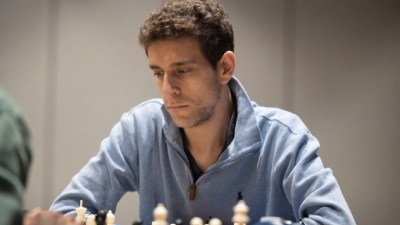
Viswanathan Anand
The FIDE World No.1 ranking for the very first time ever, undisputed world champion, 37-year-old Vishwanathan Anand returned to claim the absolute title seven years after he had first won in 2000.
Arvind Aaron, editor of monthly ChessMate
Anand had won the title in 2000, he completed his resume in 2007. The title at Linares was pivotal, but winning the absolute world title in Mexico City, made it a watershed year.
He8217;d waited for the No 1 spot for a long time, and it must8217;ve been very satisfying. I remember him saying he didn8217;t expect to at the beginning of the year.
He was the second-oldest competing in Mexico, and he8217;s worked to stay fit enough.
Anand seems to have comfortably settled sparring with his Georgian trainer.
The impact of his achievements will be witnessed in the summer when hundreds roll into summer training camps.
Anand8217;s faceoff with Vladimir Kramnik in October 2008 will be eagerly watched by the world and as such will be his biggest challenge in the follow-up year. As told toShivani Naik
Anup Sridhar
A breakthrough year for the 24-year-old from Bangalore, Anup Sridhar snapped the progress of world No 12 Shoji Sato at the Asian badminton semis and clinched his biggest career-victory over Olympic champ Taufik Hidayat to march into the quarters of the world event. Ranked 26 at the year8217;s end, it was an uphill climb for the current India No. 1.
Prakash Padukone, former All-England champ and mentor
It was a big year for Anup. The two big victories at the worlds were crucial as he was unseeded, and from here he looks to beon his way up.
A Top 20 finish would8217;ve been more satisfactory, and he has it in him to target Top 10 and achieve it. But he needs to work very hard.
His heel pain has hindered his progress, and he8217;s forced to change his shoe soles. But if he can remain injury-free next year, and beat a few Top 10 names, it8217;ll give him further confidence. Anup8217;s temperament has improved tremendously8212;he used to be very short-tempered as a junior, and I8217;ve seen him since 1994, when he came into the academy as a 11-year-old. Now he has matured, and it has shown in the results.
As told to Shivani Naik
Sania Mirza
Tennis8217; brightest dazzler in her breakthrough season of 2005, suffering from second-round blues and stinging criticism the following year, Sania Mirza cracked the Top 30 on the back of a rollicking hard-court season through July and August of 2007 to reach a career-high of 27. Starting the year at 66, she claimed five Top 20 players.
Enrico Piperno, Fed Cup coach
Rankings are not everything, but if Sania8217;s career were to be analysed by that parameter, she over-achieved in her first year, the correction came in the first half of 2006, and now she8217;s consolidated latest ranking of 31. Now, she belongs. That hard-court season was the turning point, with that string of wins over bettter-rated players at Stanford, San Diego and Los Angeles.
The injuries were a blessing in disguise, as she used the breaks well to work on her fitness.
Playing doubles has helped more than it8217;ll be credited, as she8217;s learnt to translate points coming to the net. Her serve has improved as well. Her resurgence started towards the second half of 2006. She worked on upper-body strength. For 2008, she should aim at the Top 20.
As told to Shivani Naik