5 min read

Journalism of Courage




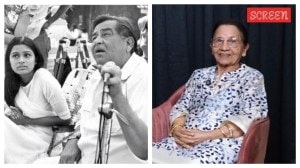
Kitu Gidwani in Swabhiman.
I think the official channel, primarily, has to be on the line of the public broadcasting format8230;.Our mistake, unfortunately, has been we have converted Doordarshan into a money-spinning media. That was never my purpose.quot; So spake a former Minister of Information and Broadcasting who just happens to be the present Prime Minister Taking Charge, DD1.
Either Doordarshan officials didn8217;t watch the PM or his words are falling on deaf ears. As of today, May 12, 1997, Doordarshan begins a spanking new era in commercial television. It introduces four daily, afternoon soaps: Aurat, Itihaas, Waqt ki Raftar and Aparajita now join Farz, Yug and Swabhimaan in the afternoon schedule. In order to accommodate these serials Doordarshan has spurned an old flame: the UGC. The University Grants Commission had a one hour programme slot between 1pm-2pm. This has been pre-poned to the early hours of the morning, when nobody in his or her right mind will ever wake up to watch it. Doordarshan knows that, UGC knows that too, but it doesn8217;t matter: if and when there is a possibility of making more money, Doordarshan will sell itself to the highest bidder without the slightest qualm.
Nothing new in this. Last year, DD8217;s commercial earnings were up by Rs 142 crores to a record Rs 572 crores. You8217;re supposed to be impressed; you8217;re supposed to congratulate it on its financial acumen, swoon at its magic, green touch. You8217;re not supposed to raise awkward questions. Like, excuse me, if Doordarshan is a public service broadcaster as it claims to be, then why is it in the business of only trying to maximise its profits? If it8217;s a public service broadcaster as it claims to be then how can it so casually convert a public service slot into an entertainment one?
Doordarshan will claim that it is still a public broadcaster. Fancy statistics will be produced to substantiate this claim: 13.3 per cent of transmission time on the national network is devoted to education, 22 per cent to current affairs, and 10 per cent on DD1 to agriculture and development to keep the humble farmers happy, you understand. In comparison, almost 35 per cent of national network time is spent on film-based shows, plays and serials. That8217;s good, that8217;s as it should be and never mind if women, children and youth programmes total a miserly 2.8 per cent all figures from Doordarshan8217;s yearbook, 1996.
Next, DD will refer to its own audience research to prove that UGC programmes aren8217;t watched. So why waste precious, afternoon space on something nobody watches? Instead, telecast serials about the killing fields of family warfare and impossibly complex man-woman relationships which viewers will, presumably, gobble up alongwith with lunch. It8217;s curious that DD should be introducing these serials just as children go on holiday. But why bother about them? They8217;ll watch anything as long as it is on the box. And didn8217;t you just read a story from Germany which said that any television, even bad television, was better for kids than no television at all?
To conclusively prove its point, Doordarshan will parade the commercial success of its other afternoon serials: Shanti, so successful its been transferred to a morning slot! and Swabhimaan, described in a promo as quot;a sizzling saga of our supercharged timesquot; if you understand what that means, you deserve to watch it. At some time or another, both have been rated amongst the top ten shows on DD1. Farz and Yug are a little more sedate which means they are not sizzling hot sagas of our supercharged times and hence a little less popular. But at least they8217;re sponsored!
Of course times are tough and Doordarshan needs more money to expand, upgrade and meet the competition from private TV channels. Still, somethings should remain sacrosanct. Undeniably, most UGC programmes are qualitatively poor. Unwatchable. The solution, however, does not lie in dismissing them to the wee hours of the morning, but to improve them. Why doesn8217;t Doordarshan spend some of the Rs 80 crores it has for commissioning programmes this year on the UGC or its equivalents? The success of the Discovery Channel should tell DD something: that viewers will watch educative, informative programmes with the right formats; that they don8217;t only want to watch men and women at each others throats or in each others arms.
In the same DD interview, the PM had said that he thinks independent channels should be offered to universities and local governments. So we can expect some changes in the Broadcast Bill which currently ignores these bodies. Unfortunately, waiting for the Broadcast Bill is like waiting for Godot. In the meanwhile, perhaps, the new Iamp;B minister, Jaipal Reddy could explain the PM8217;s philosophy to DD officials; that, or sanction them hearing aids.