3 min read

Journalism of Courage




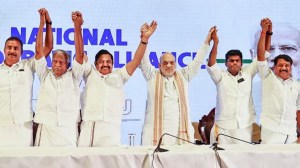
MUMBAI, June 29: Over a year and a half late though, the draft of the 9th Five Year Plan for 1997 to 2002 is expected to be finalised by August 1998. This assurance came from Union Minister of State for Planning Ram Naik, who said that the new draft was being re-tailored to suit the thrust areas of the National Agenda of the BJP-led coalition at the Centre.
In fact, the plan was finalised and released in March this year by Prof Madhu Dandavate, who was deputy chairperson of the Planning Commission in the UF government. The government, however, crumbled before the plan could be approved by the Cabinet and was shelved till the formation of a new government.
After assuming office, Prime Minister AB Vajpayee, had asked the Planning Commission to review the plan for suitably altering it to reflect the changed priorities. The National Agenda for Governance was the guideline for the new Planning Commission to make alteration in the draft, Naik said.
A task force on devolution of financial powers to states, setup under the leadership of Rajasthan Chief Minister Bhairon Singh Shekhawat, had already submitted its report suggesting measures for devolution of additional financial resources to the states and exploring alternative means of raising finance at the state levels. The report was currently being examined by the Reserve Bank of India, the Minister said. Yet another task force had also been set up to reduce the economic backlog of the North-Eastern states and Sikkim. The task force under the convenorship of KC Pant is in the process of finalising its proposal. The government had already decided to create a non-transferable central pool to improve funding pattern of developmental activities in the North-Eastern states, Naik pointed out.
Even after the finalisation of reports by the various task forces, the draft will have to cover quite a distance before settling down as the 9th Five Year Plan.
After the finalisation of the draft, the Prime Minister in his capacity as the chairperson of the PlanningCommission, would approve the plan before it could be placed before the Cabinet. The Cabinet of the 18-party coalition government has been facing too many pulls and pressure over and above the National Agenda.
After the Cabinet puts its seal, the plan document would finally go to the National Development Council for adoption. He pointed out that it was decided in the National Agenda to earmark 60 per cent of funds for public investment in agriculture, rural development and irrigation. It also underlined a major thrust on infrastructure, particularly, power generation.
The 9th Plan should reflect these priorities, Naik said.