Journalism of Courage
 4 min read



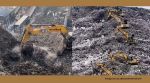
An Italian-Palestinian archaeological team has uncovered what it says are the long-lost gates to ancient Jericho in Palestine, the city where the Biblical Joshua fought his famous battle. It was one of two major finds by the team at the West Bank site, along with earlier ruins that could yield clues about daily life in 3000 BC.
8220;At this site, which is surrounded by several walls, we couldn8217;t manage to find the gateway,8221; said Lorenzo Nigro, one of the Italian academics in charge of the dig which is financed by La Sapienza University in Rome. 8220;We finally found it eight metres underground and we are convinced it is the only one,8221; he told reporters. 8220;It was built between 1900 and 1550 BC.8221;
The site, near the modern-day oasis town of the same name, has been under excavation for nearly a century and has revealed what experts say is one of the oldest known settlements in the world, dating from 8000 BC.
Archaeologists the world over have come in search of the gates of the ancient Jericho which Joshua,Moses8217; successor as leader of the Israelites, captured from the Canaanites. Erosion has destroyed the town of Joshua, but scholars generally believe the conquest of Palestine was somewhere around 1400 to 1250 BC.
Nigro8217;s team is also the first one decided on by the new Palestinian administration that has taken over in the former Israeli-occupied West Bank areas that were turned over to the Palestinian Authority. Nigro said the 8220;gateway is on the southeastern side of the site, in the direction of Jerusalem,8221; and could take at least three years to expose completely. 8220;It was built in a zone with difficult access and was protected by two towers with walls seven metres thick, and a base three-and-a-half metres wide,8221; he said.
The team8217;s other discovery was a dozen dwellings estimated to date from 3000 BC. 8220;Jericho is not the oldest stronghold in the world, but it was the first with fortified features, including eight-metre high towers, at a time when men were still hunters and ceramic did not yetexist.8221;
8220;We are talking about 10,000 years ago,8221; said Nigro.
Of the dozen or so dwellings, six have already been excavated to the point where they have revealed secrets about a community relatively unknown up to now. Among the most surprising finds, which must still be examined thoroughly, are beef bones and the remains of dozens of instruments apparently used to cook meat.
8220;We might be able to demonstrate that cows were not only used for milk but also kept so their meat could be consumed. This would be the first time that such a thing has been observed8221; in archaeological digs in Palestine, Nigro said.
The presence of cattle clearly played a part in the formation of the city and 8220;we must determine if they killed their cattle to eat them or to use their skins,8221; said Francesca Alhaique, a researcher at the dig.
Jericho, which lies 23 km northwest of Jerusalem just north of the Dead Sea in the Jordan Valley, was destroyed several times 8212; once burnt on the order of the pharaoh 8212; leaving largegaps in its known history.
The dig, a popular tourists site, has so far not turned up any evidence to substantiate the Biblical account of Joshua8217;s conquest of the town, when he was told to walk seven times around Jericho blowing the Ram8217;s horn and the walls would come tumbling down.