Journalism of Courage
 4 min read



Hrishikesh Mukherjee started his career with New Theatres, in 1945, as a laboratory assistant. He graduated in Science, with a distinction, from Calcutta University. He then moved on to edit Tathapi Bengali, his first independent assignment as editor, in 1947-48. In 1951, Mukherjee came to Bombay with his mentor, the late Bimal Roy. He edited all of Roy8217;s films till Madhumati. He also edited and wrote the scenario of Do Bigha Zameen besides working as a chief assistant director on that project. Mukherjee made his debut as producer and director in 1957 with Musafir.
The film was awarded the Certificate of Merit, National Award. His illustrious career spanning four decades had some soul-stirring films including Anadi, Anupama, Satyakam, Anand, Abhimaan, Namak Haram and comedies like Chupke Chupke and Golmaal arguably two of the best rib-ticklers Bollywood has produced.
The lesser-known fact about Mukherjee is that he also dabbled in television. The serials Hum Hindustani, Dhoop Chaon, Talaash,Rishte and Ujale Ki Ore are credited to him.
Kishore Kumar sang for the first time in 1948 for the film Ziddi. A Bombay Talkies production, it was directed by Shaheed Latif and the music was scored by Khemchand Prakash. The song: the now-famous Marne ki dooaae kyon mangoo, jeene ki tamanna kaun kare8217;
But Kumar had made his onscreen debut already. In 1946, he had acted in Shikari made by Filmistan and directed by Savak Vacha. Kishore Kumar8217;s first film as a music director, however, was 13 years later. In 1961, he scored the music for Jhumroo, directed by Shankar Mukherjee.
However as a director, he did not have to wait that long. He made his first film Door Gagan Ki Chaon Mein.
Born on August 4, 1929, he died on October 13, 1987. The son of Kunjbehari Ganguly, a barrister from Khandwa, in Madhya Pradesh, Kumar was regarded a paradox in the filmworld. He was a mix of tragedy and comedy so strongly intertwined it was impossible to separate one form the other. Singer, actor, music director,composer, comedian-satirist Kumar has no real parallel in Indian cinema. He participated in each area and his contribution becanme a separate industry, in itself. He was in his heydays India8217;s best-known and highest-priced male playback singer. As a performer, he initiated the era of disco dancing and gigantic live concerts today, all this is synonymous with modern India.
Lalita Pawar was born on April 28, 1915 in Indore in the temple of Ambe Maa. Which is why she was named Ambika and was popularly known as Ambu. Many of her earlier films even carried the credit of Ambu. She started her career in 1928 with Patitoddhar silent directed by N D Sarpotdar and ended it with Bhai 1997. Directed by Deepak Shivdasani, she played Pooja Batra8217;s grandmother. She was married to stunt film-maker G P Pawar, who directed most of her later silent and early sound films. One of her silent movies, Diler Jigar 1931, directed by G P Pawar, is among the last surviving silent films.
Music director Khayyamcomposed seven out of twelve songs for the film Heer Ranjha 1948. What is incredible about this is the fact that this was his first film as music director. But the film carried the credit Sharmaji-Varmaji. Strangely enough, the second half of the that duo was music director Aziz Khan or Aziz Hindi. Both Muslim film directors, they had nothing in their names that suggested their working title.
Later Khayyam Mohammed Zahur went solo and composed some memorable tracks like the ones for Footpath 1953, Phir Subah Hogi 1958, Kabhi Kabhi 1976, Trishul 1978, and Umrao Jaan 1981.
Phir Subah Hogi, 1958, directed by Ramesh Saigal was an adaptation of Dostoevsky8217;s Crime and Punishment. But the novel provided only the bare outline for this emotional plea for social justice. Set in Nehru8217;s Indian, the lead pair of the film were Raj Kapoor and Mala Sinha. The dialogue was written by D N Madhok.
The processing of the film Aasha 1957 tells an international tale. Produced and directed by M VRaman, the black and white processing was done at Famous Cine Laboratory, Tardeo. The colour process was split between Technicolour Process Limited, London 8212; the spool went through Ramnord Research Laboratories Ltd, Worli 8212; and Film Centre Tardeo, for the Gevacolor process. The film was partly in Bamp;W, partly in Gevacolor and partly in Technicolor!

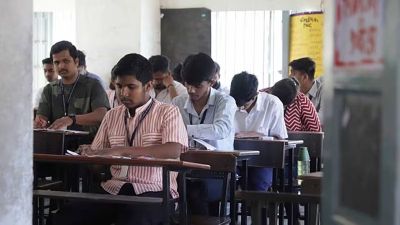
With nearly 18,000 post-graduate medical seats remaining vacant after two rounds of counselling, the cut-off for some of the categories has been reduced to zero percentile again. The NBEMS revised the cut-offs to 7 percentile for general category, 5 percentile for persons with disability belonging to general and EWS category, and zero percentile for SC, ST, OBC candidates.